Gold Needed One Catalyst to Break $4,400 – It Just Got Five
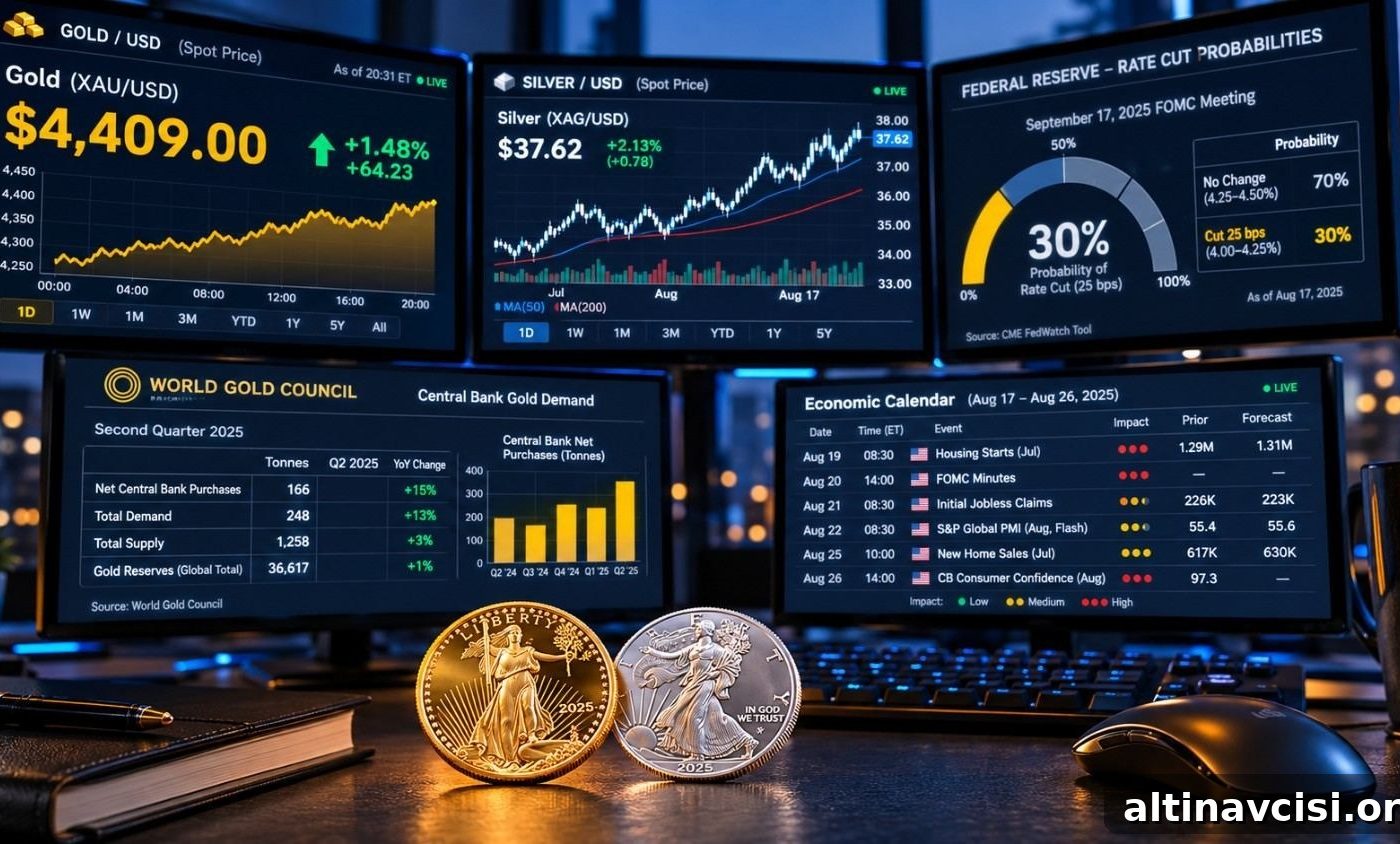
Gold is trading at $4,409 today and silver sits at $65.70. The relationship between Federal Reserve rate expectations and precious metals is shifting quickly. This Monday morning brought five separate developments from different corners of the market, and they all point in the same direction. Below is a concise, clear digest of what matters for gold and silver holders right now.
Is the September Rate Hike Dead? Goldman Sachs Now Says Yes.
On August 16, Goldman Sachs chief economist Jan Hatzius published a note concluding that a September rate increase from the Federal Reserve is “extremely unlikely.” That view gained traction after three softer-than-expected U.S. data releases last week: tame July consumer prices, a 0.6% decline in retail sales (the first monthly drop in eight months), and an 8% fall in consumer sentiment in August. Those data points pushed the market’s odds of a September hike down from roughly 55% a week ago to about 30% today.
The mechanics driving gold’s response are straightforward. Gold pays no interest, so its opportunity cost is linked to real yields. When markets price out rate hikes, real yields generally fall and holding gold becomes relatively cheaper. That chain of events—from a Goldman Sachs research note and weaker data to compressed real yields—helps explain why gold sits at $4,409 this morning.
The Edge Every Investor Needs
Smarter precious metals investing starts here. The Nuggets Newsletter delivers concise market insights, Fed updates, global trends, and educational content.
Subscribe to receive market alerts and analysis by email.
What Will Wednesday’s FOMC Minutes Reveal About Gold’s Next Move?
The Federal Reserve will publish minutes from its July 28–29 policy meeting this Wednesday at 2:00 p.m. ET. These minutes are the most important scheduled release for gold between now and the Jackson Hole symposium. Markets already know the Fed held rates in July at 3.50%–3.75%; the key question is how close the internal debate was between participants.
If the minutes show a dovish tilt—evidence that the committee leaned toward pausing further increases—that would reinforce the market’s growing expectation of a September hold and likely support a move toward $4,500 for gold. Conversely, a hawkish tone could push yields and the opportunity cost of holding gold higher, pressuring prices downward. Traders should treat Wednesday’s minutes as a binary event: the wording will either confirm the dovish path priced into markets or challenge it.
Why Are Silver and Gold Moving at Different Speeds Today?
Today silver is outperforming gold: silver is up about 1.54%, while gold is up roughly 0.74%. That divergence is meaningful and driven by two simultaneous forces.
First, the same repricing of rate-hike odds that lifts gold also lifts silver—lower expected hikes compress real yields, benefiting non-yielding metals. Second, the gold-silver ratio has narrowed from about 69 three weeks ago to roughly 67 today, indicating silver is closing part of its long-standing discount versus gold. Historically, the long-run ratio hovers around 60–65.
It is important to note that silver’s industrial role complicates interpretation. Solar panel manufacturers, for example, are working to reduce silver usage per cell to lower costs even as installations rise. That means today’s silver strength is driven mainly by the monetary bid rather than a sudden spike in industrial demand. Monetary-driven rallies can reverse more quickly than those underpinned by structural industrial deficits, so watch the ratio closely.
What Does This Week’s Economic Calendar Mean for Gold Before Jackson Hole?
Gold faces a busy schedule before Fed Chair Kevin Warsh speaks at Jackson Hole on August 27–29. Key data this week include: the Empire State Manufacturing survey (today), Housing Starts and Building Permits (Tuesday), Industrial Production (Tuesday), FOMC Minutes (Wednesday at 2:00 p.m. ET), the Philadelphia Fed report and Jobless Claims (Thursday), and preliminary (flash) PMIs on Friday.
Each release can either strengthen or weaken the case for a September hold. Markets currently price gold for that hold at $4,409. Because the Fed has said it will not pre-announce policy moves, the Jackson Hole keynote carries elevated informational value; what the chair says may influence expectations more than a typical conference speech. This week’s data will set the stage, and the Jackson Hole address may confirm or overturn that narrative.
Central Banks Bought 288.9 Tonnes in Q2 — Into Falling Prices. Now Gold Has Recovered Above Where They Paid.
Central banks added 288.9 tonnes of gold in the second quarter of 2026, according to the World Gold Council’s Gold Demand Trends Q2 report. That figure represents the strongest second quarter on record and a 62% year-over-year increase. Poland led purchases with 51 tonnes, followed by China with 33 tonnes. Crucially, much of this accumulation occurred while prices were falling by roughly 16%.
Since then, gold has recovered and now trades near or above the average prices at which those central banks accumulated reserves. A recent WGC central bank survey found a strong majority of reserve managers expect to increase gold holdings over the coming 12 months. When official institutions buy into price weakness and markets rebound, they tend to add to reserves rather than sell—creating a structural floor under prices rather than a short-term trade-driven bump.
What Should Gold and Silver Holders Watch This Week?
Two events will largely determine whether recent gains hold or reverse: Wednesday’s FOMC minutes and the Fed chair’s Jackson Hole speech on August 28. For gold, $4,500 represents near-term resistance, while $4,310 acts as immediate support. For silver, monitor the gold-silver ratio closely: if it compresses below 65, silver may be running ahead of its monetary support and could face a sharp pullback. If the ratio stays above 65 while gold advances, the structural argument for both metals remains intact.
In short, the same mechanism—rate expectations driving real yields—underlies every item discussed above. Economic releases provide the numbers; the Fed’s communications confirm or deny the interpretation. Watch both closely and treat the coming days as decisive for near-term precious metals direction.
Stay On Top of Gold & Silver Prices
Get concise market alerts sent straight to your inbox.
Current spot: Gold $4,409 • Silver $65.70
Sign up for timely updates and analysis to stay informed about market-moving events and data.
SOURCES
1. World Gold Council — Gold Demand Trends Q2 2026, gold.org
2. TradingKey — Gold May Break $4,500 as Fed Rate-Hike Expectations Continue to Cool, August 17, 2026
3. Yahoo Finance — Gold prices today, Monday August 17, 2026: Gold ticks up after lower retail sales report
4. IndexBox — Gold and Silver Price Forecast: FOMC Minutes, Economic Data in Focus
5. FXStreet — Silver price today: rises on August 17
6. NAI 500 — Gold Holds Steady Above $4,400 as Markets Await Fed Minutes and Housing Data Next Week
7. IndexBox — Central Bank Gold Purchases Hit Record 289 Tonnes in Q2 2026
8. CNBCTV18 / TradingView — Gold and silver prices on August 17, 2026
9. GoldSilver.com — Current gold and silver prices
Disclaimer: This article is for informational purposes only and does not constitute investment advice. Past performance is not indicative of future results. Always consult a qualified financial advisor before making investment decisions.
You May Also Like:
- Zero Tankers Crossed Hormuz on Sunday. Oil Hit $89. Gold Barely Moved.
- Gold Rebounds to $4,392 as Sentiment Crashes to 51 and Inflation Expectations Rise
- Gold Price and the September Fed Pivot: Five Data Prints Rewrote the Odds This Week
- The Fed’s September Math Just Changed. Here’s What It Means for Gold.
- Jackson Hole Is 14 Days Away. What Warsh Says Could Move Gold More Than Any Inflation Print.
- Gold Hit a Two-Month High. Then It Pulled Back. The PPI Data That Caused Both Moves Is What Matters.
Popular Topics
Picked from the archive
-
01
 Topics
Gold Prices Stabilize Amid Saudi-Iran Tensions
-
02
Topics
Why Gold Held Steady After Trump’s Economic Pressure on Iran
-
03
Topics
Oil Drops 11% as Gold Rises: What Investors Need to Know
-
04
Topics
3 Questions Investors Must Ask Before Buying Any Asset in 2026
-
05
Topics
Silver Surges Past $70 Amid Conflicting GDP Data
-
06
Topics
What’s Moving Gold and Silver Prices This Week
-
07
Topics
How FOMC Minutes and Jackson Hole Could Move Gold
-
08
Topics
Two Investors Ran Debt Math Separately and Chose 15 Percent Gold