Why Gold Held Steady After Trump’s Economic Pressure on Iran

Gold is trading around $4,506.64 today, down about 0.38%. That price remains slightly under Wednesday’s peak near $4,527, which was the highest level since early June. Two opposing forces are shaping the market: hawkish language from the Federal Reserve is limiting the upside, while a renewed escalation of economic pressure on Iran is providing support. Below are the five main developments to watch and how they interact with one another.
Why Did Trump Announce an “Economic D-Day” Against Iran?
Late Wednesday, President Trump used Truth Social to announce what he called an “Economic D-Day” against Iran, describing it as “the most crushing economic operation ever taken against any country.” The stated aim is to disrupt Iran’s shadow-banking networks, oil-smuggling routes and ship registries — the systems Tehran has relied on to move crude and money around U.S. sanctions. He warned that any country or entity that provides a financial lifeline to Iran — through swap lines, cash transfers, or front companies — could face severe economic consequences. The announcement intensifies a standoff that has already limited normal tanker traffic through the Strait of Hormuz since early March, and it came during the same week gold tested its highest levels in more than two months.
The Edge Every Investor Needs
Smarter precious-metals investing starts here. The Nuggets Newsletter delivers market insights, Fed updates, global trends, and educational coverage tailored for serious investors.
Why Did the UAE Cut Off Iran Entirely?
Hours before the U.S. announcement, the United Arab Emirates took decisive action of its own. The UAE — among Iran’s largest trading partners — declared it would suspend all trade, commercial exchange and financial transactions with Tehran until further notice. Officials said the move followed alleged Iranian ballistic-missile activity near UAE territory, a claim Iran denies. In 2024 bilateral trade totaled roughly $28 billion, with the UAE representing nearly one-third of Iran’s imports. Combined with the U.S. escalation, the UAE’s decision represents a separate and significant economic blow: a major regional economy is formally distancing itself from Iran, which increases pressure beyond external sanctions alone.
Why Is Oil Jumping as the Squeeze Tightens?
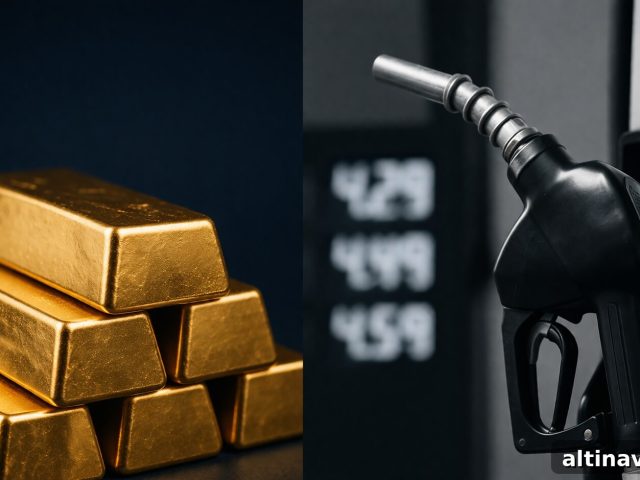
Oil prices reacted immediately to the news. Brent crude climbed more than 2% to approach $94 a barrel, while WTI rose roughly 2.5% toward $86 a barrel. At one point Brent touched about $95.40. Both benchmarks reached their strongest levels since late July. Rising energy prices are a clear inflationary input: higher crude raises production and transportation costs across many sectors. That upward pressure on inflation matters directly to the Federal Reserve’s policy calculus because persistent energy-driven inflation could justify keeping interest rates elevated for longer. In short, economic pressure in the Middle East can push energy costs higher, which in turn affects the inflation metrics the Fed watches — and that dynamic links geopolitical developments to precious-metals markets.
Why Is Gold Giving Back Some of Wednesday’s Rally?
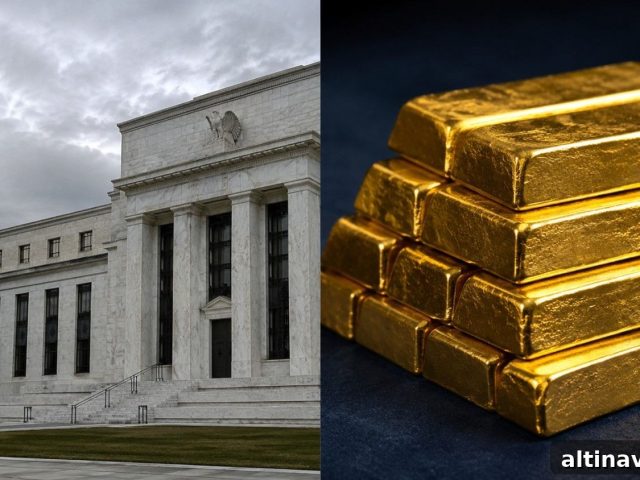
Wednesday’s surge to roughly $4,527 was largely driven by a U.S. Treasury announcement that expanded buybacks of long-dated debt. That action pushed the 10-year Treasury yield down to about 4.65% from a recent 20-month high near 4.75%. When yields fall, gold’s opportunity cost drops, which helped fuel the sharp move higher. Thursday’s modest pullback reflects different forces: hawkish language in the Federal Open Market Committee minutes signaled that some policymakers remain open to additional tightening if inflation stays elevated. That prompted profit-taking after a rapid rally. Both influences are active: Treasury operations and Fed rhetoric are tugging in opposite directions on the same trading day. Meanwhile, a broader structural reality persists — U.S. national debt recently exceeded $40 trillion — a long-term factor that doesn’t change because of a single policy memo.
Why Is Silver Holding Its Ground as Jackson Hole Becomes the Tiebreaker?
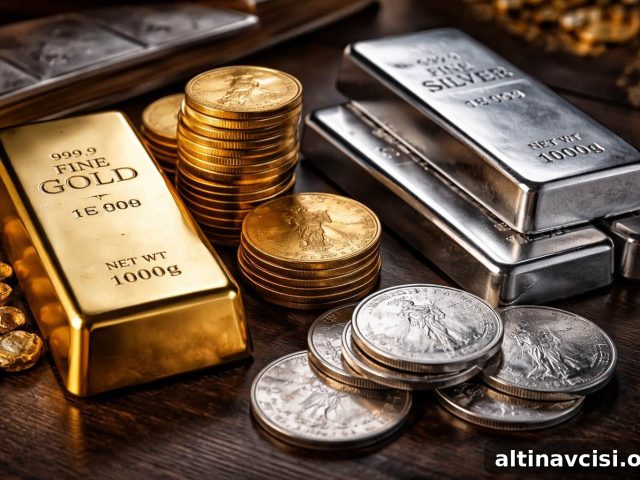
Silver is trading near $68.02 today, up roughly 1.4%, while gold eased. That divergence narrowed the gold‑to‑silver ratio to about 66.26, down nearly 1.8%. Silver’s price action reflects not only monetary forces but also strong industrial demand and ongoing supply constraints. Industry reports show several consecutive years of global supply deficits for silver, a condition that supports upside over time. With the Fed’s tone now in focus and fresh geopolitical risk in play, attention is turning to the Jackson Hole Economic Symposium (August 27–29). Federal Reserve Chair Kevin Warsh’s remarks there will be closely watched: his stance on inflation and policy risks could determine which influence — hawkish Fed policy or geopolitical-driven inflation — dominates the next market move. The June personal consumption expenditures (PCE) inflation report, due August 26, will arrive just before the symposium and may shape perceptions even further.
None of these developments alter the structural case for owning physical gold and silver. This week alone illustrates multiple persistent pressures: the U.S. national debt has crossed the $40 trillion threshold, the Treasury is actively managing yields through buybacks, and sanctions-related escalation is already pressuring energy prices upward. Those are not short-lived headlines but underlying drivers that have been supporting demand for sound-money assets for months.
Stay On Top of Gold & Silver Prices
Sign up to receive timely market alerts and price updates by email.
SOURCES
1. CNBC — U.S. government debt passes $40 trillion mark for the first time. 2. CNN — Iran latest; oil prices climb after U.S. threats of economic pressure. 3. Fortune — Price action in global oil markets. 4. TradingView — Coverage of gold price moves. 5. CNBC — Coverage of the U.S. announcement on Iran. 6. The Washington Post — Reporting on UAE suspension of trade with Iran. 7. GoldSilver — Live gold and silver price charts.
Disclaimer: This article is informational only and does not constitute investment advice. Past performance is not indicative of future results. Consult a qualified financial advisor before making investment decisions.
You May Also Like:
- Gold’s Pullback Isn’t About ETFs. It’s About a Treasury Buyback.
- The Fed Just Confirmed a 9-3 Split. Then It Said Something Bigger.
- Gold and Silver Are Climbing Today. The Textbook Says They Shouldn’t Be.
- Gold Jumped 1.9%. Silver Jumped 2.7%. The Fed Hasn’t Said a Word Yet.
- The Long Bond Hit a 19-Year High. Inflation Expectations Didn’t Move.
- FOMC Minutes Tomorrow. Jackson Hole in Nine Days. Here Is What Gold Needs From Both.
Popular Topics
Picked from the archive
-
01
 Topics
Iran Rejects Talks as Gold and Silver Prices Slide
-
02
Topics
Use the 50-Day Moving Average to Read Gold and Silver Trends
-
03
Topics
Gold Prices Near $4,000 as Job Cuts Reach 20-Year High
-
04
Topics
Five Key Reports Shift Gold Prices and September Fed Pivot Odds
-
05
Topics
Gold Price Support Shifts After Ceasefire Violation
-
06
Topics
Gold Slumps 14% in March as Inflation Lingers
-
07
Topics
Gold vs Silver: How to Balance Risk and Role in Your Portfolio
-
08
Topics
Gold Radar: 5 Hidden Signals Your Price Chart Misses