Oil Drops 11% as Gold Rises: What Investors Need to Know

Key Takeaways
- Oil plunged more than 10% on Friday after Iranian Foreign Minister Abbas Araghchi announced the Strait of Hormuz was open “in line with the ceasefire in Lebanon.” At the same time, gold climbed 1.5% — a rare movement that suggests gold’s rise is driven by monetary factors rather than geopolitics.
- The sudden oil drop reduced inflation expectations and pushed market-implied end-2026 rate expectations below 3.50% for the first time since early March — the environment gold needs to advance further.
- Gold’s structural support — roughly $1 trillion in annual US interest payments, 17 months of central bank net buying, and a constrained Federal Reserve — remained unchanged on Friday. The geopolitical premium shifted out of oil; the monetary premium remained in gold.
- Silver finished Friday at $79.60, while the gold-to-silver ratio hovered near 61 — among its tightest readings in over a month.
On Friday, Iranian Foreign Minister Abbas Araghchi announced that the Strait of Hormuz was fully open to commercial shipping, linking the move directly to the Israel-Lebanon ceasefire by saying the passage “is completely open for the remaining period of ceasefire.” Markets reacted immediately: oil prices collapsed, equities rallied, bond yields fell, and precious metals moved — but not uniformly.
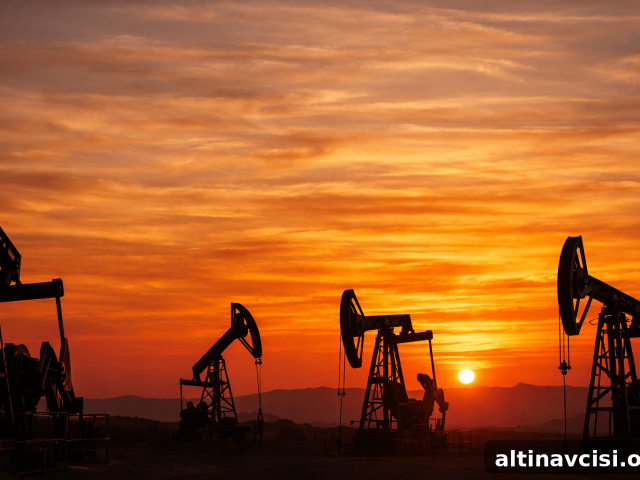
Brent crude and West Texas Intermediate (WTI) experienced sharp declines, with WTI falling more than 10% intraday. European natural gas prices also tumbled as traders priced out a major supply disruption. Yet gold rose 1.5% on the same session. That divergence — oil down, gold up on the same catalyst — is telling: the war premium rapidly left oil, while a monetary premium continued to support gold.
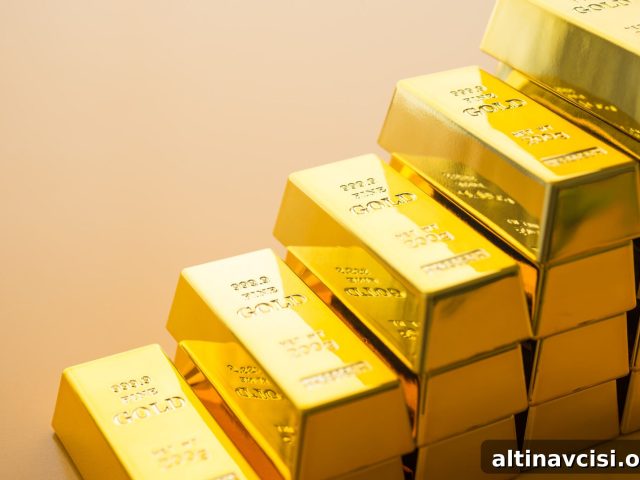
By the close, gold traded up to $4,868 per ounce and silver settled at $79.60, marking silver’s fourth consecutive weekly gain. The gold-to-silver ratio ended the day around 61, near its tightest reading in more than a month. Those levels reflect momentum backed by structural drivers rather than temporary geopolitical risk.
Why Did Oil Crash 11% on Friday — and What Does It Have to Do With Gold?
To make sense of Friday’s moves, consider the context. Since February, Iran had limited commercial shipping through the Strait of Hormuz, the narrow waterway that normally carries about 20% of global oil and natural gas flows. That restriction removed roughly 10 million barrels per day from effective supply, producing an energy supply shock and a “war premium” embedded in oil prices. Brent surged 10–13% after the disruption began and energy-driven inflation expectations rose.
When Araghchi declared the strait open, markets immediately repriced the supply picture. WTI and Brent fell sharply, natural gas retreated, and risk assets rallied on the prospect of lower energy costs and easing inflation. That war premium dissipated within hours.
Gold, however, did not follow oil into a decline. Instead, it rose. The market signal was clear: oil and gold were reacting to the same news for different reasons. Oil’s move reflected reduced geopolitical risk and restored supply flows. Gold’s move reflected a changing monetary outlook driven by lower inflation expectations and lower real yields.
The Edge Every Investor Needs
Smarter precious metals investing starts here. The Nuggets Newsletter delivers market insights, Fed updates, global trends, educational videos, and more.
If the War Premium Left, Why Is Gold Still Rising? The Real Yield Mechanism Explained.
This is the central question many reports overlook. The answer lies in yield economics. Gold produces no interest, coupon, or dividend, so its main competitor is interest-bearing assets — especially US Treasury bonds. High real yields make bonds more attractive relative to gold; falling real yields reduce the opportunity cost of holding gold, improving gold’s appeal.
For weeks, the Iran-related oil shock pushed inflation expectations higher, making rate cuts less likely and keeping real yields elevated. That dynamic was a headwind for gold. Friday’s oil crash reversed that chain: energy prices tumbled, inflation expectations dropped, and Treasury yields compressed. The 10-year Treasury yield declined toward 4.23%, and market-implied end-2026 rate expectations slipped below 3.50% — levels not seen since before the Hormuz blockade.
Put simply, the chain runs: lower oil → lower expected inflation → lower expected interest rates → lower real yields → lower opportunity cost for holding gold → higher gold prices. The geopolitical premium exited oil; a rate-cut premium flowed into gold. That explains why gold rose on a risk-on day when oil plunged.
You Don’t Need a Crisis. You Need the Math.
Serious investors focused on sound money grasp this dynamic intuitively. Friday offered a concise, market-confirmed example. Gold’s structural support is tied to fiscal and monetary realities rather than temporary conflicts. The US federal government is now paying roughly $1 trillion annually in interest — an amount larger than the entire defense budget. The Federal Reserve’s policy rate sits at 3.50–3.75%, with limited flexibility without broader market disruption. Meanwhile, global central banks have been net gold buyers for 17 consecutive months. None of these structural factors changed on Friday.
What did change was the geopolitical premium in oil. Gold’s monetary appeal remained intact. That combination reinforces the view that gold’s current rally has durable underpinnings.
What Does This Mean for Gold Prices Next?
Most immediate coverage will focus on the oil crash itself, but the important takeaway is how energy prices and inflation expectations interact with Fed policy expectations. If the Hormuz ceasefire holds and energy prices continue to decline toward pre-crisis ranges, the March CPI overshoot (3.3% in March) may be seen as temporary. That would give the Federal Open Market Committee more cover to hold rates steady and could increase the likelihood of rate cuts later in the year.
In that scenario, gold would likely do more than hold near $4,800: it could resume a push toward $5,000. Conversely, if the ceasefire falters and shipping disruptions reappear, energy-driven inflation and rate risk could return — but Friday’s lesson remains. Gold rose through de-escalation, on a risk-on day, while oil fell sharply. That indicates the floor under the market is monetary, not merely geopolitical. Long-term holders should focus on that distinction.
What to Watch
The Federal Reserve enters a blackout period ahead of its April 28–29 meeting, meaning markets will trade primarily on incoming data and diplomatic developments rather than Fed commentary. Key items to monitor:
- The 10-year Treasury yield — watch for further compression below 4.2%.
- Oil prices — any move back toward the pre-crisis range materially alters the inflation outlook.
- The April Personal Consumption Expenditures (PCE) reading — the Fed’s preferred inflation gauge and the next major indicator of whether March’s CPI spike will fade.
Gold closed the week at $4,868, marking its fourth straight weekly gain. Silver finished at $79.60. The oil-gold divergence underscores why this momentum may have structural legs rather than being purely tactical.
SOURCES
Al Jazeera — Hormuz reopening live coverage, April 17, 2026
NBC News — Live updates on Iran and the Hormuz reopening, April 17, 2026
The Washington Times — Statement from Abbas Araghchi, April 17, 2026
Wikipedia — 2026 Strait of Hormuz crisis (overview)
Trading Economics — Silver spot price data, April 17, 2026
Federal Reserve — H.15 Selected Interest Rates
US Bureau of Labor Statistics — March 2026 CPI
Congressional Budget Office — FY2026 interest payment estimates
World Gold Council — Central bank gold buying statistics
US Energy Information Administration — Strait of Hormuz oil flow analysis
By the GoldSilver Editorial Team — helping investors understand sound money since 2005. This article is for informational purposes only and does not constitute financial, investment, or tax advice. Always consult a qualified financial advisor before making investment decisions.
You May Also Like:
- $1 Trillion in Debt Interest Is Why Gold Keeps Climbing
- 5 Signals That Say Gold’s Bull Case Just Got Stronger
- The Largest Gold ETF Outflow Ever — But China Disagrees
- Silver Market Deficit 2026: Six Years and Getting Worse
- Is the Petrodollar Ending? What the Iran War Means for Gold
- France’s Gold Repatriation Is Done. Germany Is Next
- Gold/Silver Ratio Hits 61.1 — Silver’s Turn to Run
- Silver Holds Near $80 as Iran Ceasefire Revives Rate-Cut Bets
- The Fed Goes Silent in 3 Days — What That Means for Gold
Popular Topics
Picked from the archive
-
01
 Topics
Money Manager Sues Fed Chair Powell to Force Public Rate Talks
-
02
Topics
Kansas City Fed President Urges Steady Rates Amid High Inflation
-
03
Topics
Industrial Demand Sends Silver and Platinum 28% Ahead of Gold
-
04
Topics
Swiss Precious Metals Association Warns on 39% US Gold Tariffs
-
05
Topics
Gold Pulls Back as US and China Sign New Trade Deal
-
06
Topics
Gold Drops on Trade Optimism; Dollar, Fed Cuts Lend Support
-
07
Topics
Gold Price Today: Why This Week Could Spark a Rally
-
08
Topics
Why Gold Is Outperforming Nvidia in 2025