COMEX Registered Gold Drops Under 15M Ounces; Inventory Rebounds

Gold opened this morning near $4,427 per ounce and silver around $66.30. Both metals are still reacting to last Friday’s hawkish remarks by Kevin Warsh and to weekend strikes in the Strait of Hormuz. Beyond the headline price moves, a quieter but persistent theme is emerging across five corners of the market: global storage, clearing, and settlement systems are being tested by rising demand for physical gold and silver. Below is a clear view of how that strain is showing up — from COMEX vaults to private storage and household holdings.
Is COMEX Actually Running Low on Deliverable Gold?
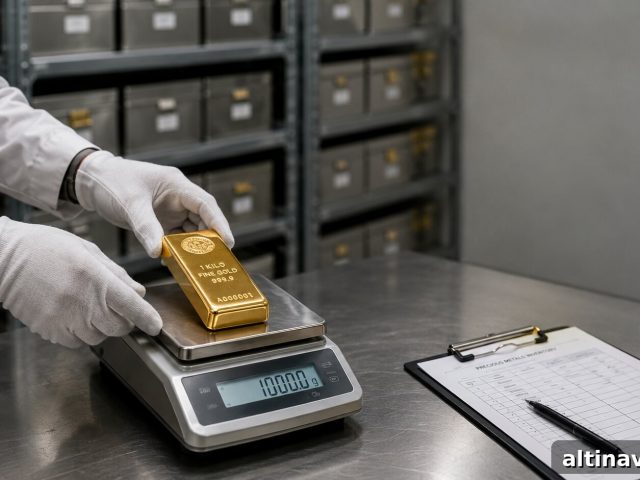
COMEX registered inventory — the gold formally set aside for delivery against futures contracts — went through a meaningful drawdown earlier this year. On January 8 it stood at about 19.18 million ounces and then declined steadily, dipping below 15 million ounces on June 24. As of August 27 the registered total has been rebuilding and was roughly 14.88 million ounces. That level is still towards the lower end of the recent range: roughly the 30th percentile over the past eight months. Open futures positions still exceed deliverable ounces by approximately three to one, and nearly 9,000 delivery notices — representing close to 900,000 ounces — were called in just the last month. In short: registered gold fell by nearly a quarter over eight months, it is now refilling, and demand continues to pull metal back toward delivery. The same delivery dynamics have been visible in COMEX silver’s recent first‑notice day activity for the sister metal.

The Edge Every Investor Needs
Receive concise, timely insights on precious metals markets, central-bank actions, and global flows.
Subscribe for market updates and analysis delivered by email. (Form removed for privacy and performance.)
Why Are Private Vaults Running Out of Room?
The surge in demand for allocated, client‑owned storage is forcing private vault operators to expand. High‑net‑worth investors and institutional buyers are increasingly converting “paper” claims into physical holdings — a shift that requires segregated bars, individual ownership records, independent audits, and full insurance. Those requirements make scaling more complex than simply stacking metal in a communal vault. Financial‑center operators from Switzerland to Singapore report capacity constraints: some firms are scouting new facilities and others say multiple locations must expand simultaneously to meet demand.
On the supply side the logistics are fundamental rather than technical. Gold and silver occupy little space and well‑designed vaults can function for generations, but the administration of fully segregated, insured metal — with the legal clarity investors expect — is what becomes scarce during surge periods. The same trend is visible in U.S. corporate reporting: security and logistics firms have noted growth in precious‑metals custody as a driver of revenue, reflecting real client demand for safe, individually titled storage.
Why Are Hong Kong, Singapore, and Dubai Racing to Build Gold Hubs?
Asia accounts for roughly 70% of global physical gold demand, yet the benchmark price remains predominantly set in London and New York. Jurisdictions across the region are investing to capture more of the infrastructure that supports pricing, settlement, and custody. Singapore is positioning itself as a neutral, well‑regulated hub and plans to open vaulting services to foreign central banks and sovereign funds. Hong Kong leverages deep connections to mainland Chinese demand and is developing clearing systems aligned with international standards. Dubai and Shanghai are also building capacity with different strategic advantages. As settlement and vaulting migrate closer to the regions that consume the metal, pricing dynamics could gradually shift to better reflect where physical flows actually occur.
How Much Gold Do German Households Actually Own Now?
A recent study tracking Germans’ total gold wealth — including bullion, gold‑linked securities, central bank reserves, and jewelry — put the 2026 total around €1.4–€1.5 trillion, roughly double the 2024 figure. About 55% of German households now own gold in some form, and 92% of current owners say they are satisfied with that choice. Interestingly, the share of households that bought gold in the past year ticked down slightly, from 17% in 2024 to 15% in 2026. The dramatic increase in aggregate gold wealth therefore reflects price appreciation of existing holdings more than a mass surge of new buyers. That pattern is a useful comparison for investors in other countries assessing whether their allocations reflect similar conviction.
Did Gold’s Rally Actually Resume, or Was Friday a Warning?
Analysts at major precious‑metals firms are debating whether recent upside momentum has resumed or if last Friday’s hawkish policy signals and new geopolitical tensions mark a pause. Some firms had expected a period of sideways consolidation before a sustained move higher; recent breakouts suggested the rally might have restarted, but renewed rate‑tightening expectations and geopolitical risk pushed prices lower to start the week. The coming days of market data and warehouse reports will help clarify whether this is a temporary pullback inside an ongoing rally or the continuation of a restrained trading range.
What to watch: daily COMEX warehouse reports to see whether registered inventory rebuilds can keep pace with delivery demand; Singapore’s planned October expansion of institutional vaulting as a test of Asia’s hub strategy; and price action this week to determine whether gold holds its recent lows or resumes the breakout.
Stay On Top of Gold & Silver Prices
Receive timely market alerts and analysis to your inbox.
Subscribe to short, actionable updates on precious metals. (Interactive forms removed for performance.)
SOURCES
1. COMEX registered inventory and daily warehouse reports (CME Group data).
2. COMEX vault inventory dashboards and consolidated vault reporting.
3. Reporting on vault capacity and private vault demand in Europe and Asia.
4. Corporate disclosures and earnings calls discussing precious‑metals custody demand.
5. Analysis on jurisdictional competition to become regional gold hubs in Asia and the Middle East.
6. Research on household gold holdings and national surveys of ownership and wealth.
7. Weekly market commentary from major precious‑metals refiners and analysts.
Disclaimer: This article is for informational purposes only and does not constitute investment advice. Past performance is not indicative of future results. Consult a qualified financial advisor before making investment decisions.
You May Also Like:
- Gold Isn’t Falling on a Hawkish Fed. Here’s Why.
- Gold and Silver Sink as Hawkish Policy and Geopolitical Risks Rattle Markets
- Five Forces Moving Precious Metals Markets This Week
- Treasury and Market Liquidity Dynamics: What Investors Should Watch
- What First Notice Day Reveals About Paper Claims vs. Physical Silver
- Five Institutional Signals in Gold Beyond Today’s Price
- Historical Reactions to Hawkish Fed Speeches and What They Mean Now
Popular Topics
Picked from the archive
-
01
 Topics
Gold Holds After CPI and PPI Miss: Market Impact Explained
-
02
Topics
Why Foreign Selling of US Debt Is Driving Gold Prices Higher
-
03
Topics
10% of Gold Sent Abroad, 9% Brought Back Home
-
04
Topics
Why Silver Prices Are Up Today: Iran Deal Alters Fed Policy
-
05
Topics
Gold Price Surge Drives Producers to Seek Larger Share
-
06
Topics
No Tankers Crossed Strait of Hormuz; Oil Tops $89, Gold Flat
-
07
Topics
Why Gold Held Steady After Trump’s Economic Pressure on Iran
-
08
Topics
Gold Gains as Job Growth Slows and Global Expansion Weakens