Gold Gains as Job Growth Slows and Global Expansion Weakens
Daily News Nuggets | Today’s top stories for gold and silver investors
January 9th, 2026
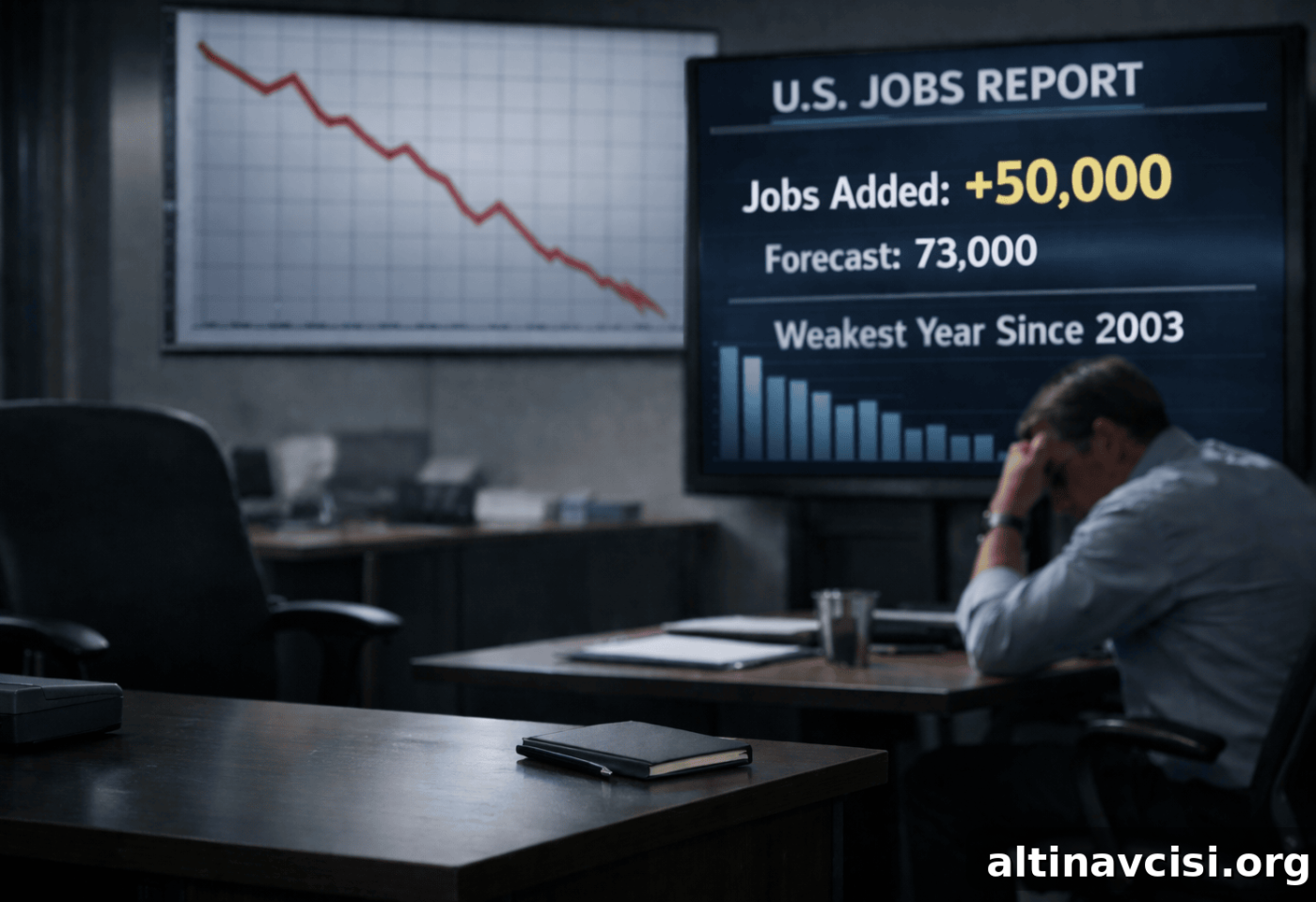
U.S. Job Growth Slows Sharply in December
The U.S. economy added just 50,000 jobs in December, well below Wall Street’s forecast of 73,000. That result caps a disappointing employment year: 2025 saw only 584,000 jobs added, the weakest annual gain since 2003. The unemployment rate held roughly steady, but the underlying momentum clearly cooled heading into the new year.
This shift matters because the labor market has been the Federal Reserve’s last reliable pillar. Slower hiring reduces the Fed’s need to keep policy restrictively tight, increasing the chance of eventual rate reductions. At the same time, it raises the risk that growth is weakening faster than anticipated, which could weigh on corporate earnings and consumer spending.
When job growth softens and recession risk rises, investors often seek assets less tied to corporate profits and cyclical growth. That dynamic tends to lift interest in precious metals—particularly gold—as a form of portfolio insurance rather than a short-term trading idea.

The Financial System Isn’t Safer — And You Know It
As risks rise, learn why gold and silver remain key assets for preserving wealth in 2026 and beyond.
U.S. Housing Starts Sink to Lowest Level Since Pandemic
U.S. homebuilding activity fell again, with housing starts dropping to their lowest pace since May 2020, according to updated government data. Builders are stepping back amid elevated mortgage rates, rising construction costs, and softer demand.
Starts declined roughly 4.6% last month to about 1.25 million units, well below economists’ expectations. Multifamily projects showed the largest slowdown, while single-family starts were slightly higher but still below trend. Permits for future construction remain muted, signaling limited upside in the near term.
A prolonged weakness in housing can ripple through the broader economy by reducing related spending on goods and services and weighing on GDP growth. For precious metals investors, a slowing housing sector is another data point reinforcing a cautious macro backdrop.
Gold Notches Weekly Gain as Traders Reprice the Fed Path
Gold finished the week with a notable gain as investors digested a string of softer economic indicators and adjusted expectations for interest-rate policy. Markets are increasingly pricing a slower pace of Fed tightening—and a shorter window for restrictive policy—based on the latest data.
What stands out is the metal’s resilience. Even with bond yields elevated, gold has maintained demand, suggesting that buying is driven not only by expectations for rate cuts but by broader uncertainty: policy risk, uneven growth, and a mix of inflation signals. In such an environment, gold often benefits from its role as a hedge and a store of value.
Traders and long-term investors alike are treating gold as insurance—an asset that can protect capital when economic outcomes become less certain and traditional risk assets face pressure.
China’s December Inflation Data Underscore Weak Domestic Demand
China’s December inflation numbers showed mixed signals. Consumer prices rose modestly—CPI climbed about 0.8% year-over-year—driven in part by food costs and seasonal spending, marking the strongest monthly reading in nearly three years. However, underlying demand remains weak.
Over 2025 as a whole, consumer inflation was essentially flat, well under Beijing’s roughly 2% target. At the same time, producer prices continued to fall, with the PPI down around 1.9%, extending a multiyear period of factory-gate deflation. Those trends point to persistent softness in manufacturing pricing power and business demand.
Economists attribute the mixed picture to structural challenges including excess industrial capacity, a long-running property downturn, and cautious consumer sentiment. The data increase the likelihood that Chinese authorities will continue to use monetary and fiscal measures to support activity and combat disinflationary pressures.
Stay On Top of Gold & Silver Prices
Receive key market alerts and price updates directly to your inbox.
China Signals Steady Gold Demand Despite Economic Headwinds
Chinese state media report that gold continues to play a strategic role in China’s financial system, even as the country navigates slower growth and stress in its property sector. Household demand remains firm, and central bank accumulation appears to be a long-term strategic policy rather than a short-lived trade.
China’s purchases are often motivated by resilience: a weaker currency, geopolitical uncertainty, and concerns over dollar exposure all support the use of gold as a neutral reserve asset. That steady Asian demand can provide structural support for global gold prices, helping to absorb supply when Western investor interest moderates.
For global markets, the implication is clear: gold pricing is increasingly influenced by dynamics outside the U.S. and Europe. Persistent buying from Asia can act as a stabilizing force during periods of uncertainty in other regions.
You May Also Like
- Silver Slips on Index Rebalancing as Jobs Data Looms
- Gold & Silver: Return Drivers, Not Just Crisis Hedges
- Gold and Silver Outlook: Fed Policy, Inflation, and Global Supply
- Gold, Silver Climb as Venezuela Shock Ripples Through Markets
- Silver Breaks $70 as GDP Numbers Tell Two Stories
Popular Topics
Picked from the archive
-
01
 Topics
Treasury Yields Flat Amid Jobs Slump and Trump Policy Chaos
-
02
Topics
HSBC Survey: Gold Allocations Surge from 5% to 11%
-
03
Topics
Silver Price Nears $50: Will It Break Its All-Time High?
-
04
Topics
Treasury Secretary Urges Fed Rate Cut After Revised Jobs Report
-
05
Topics
Record-High Gold Prices: What New Investors Should Do
-
06
Topics
Gold Price 3,767 USD: Fed Rift Deepens as China Eyes Share
-
07
Topics
Silver Price Hits Highest Level Since 2012 as Demand Surges
-
08
Topics
Recession Risk Has Tripled, New Warning Sign Shows