Gold vs Savings Account: Which Investment Beats Inflation Now?

Key Takeaways
- A savings account keeps cash safe and liquid. Gold preserves long-term purchasing power. They serve different purposes.
- As of May 2026, the U.S. Consumer Price Index rose 4.2% year-over-year (BLS). The national average savings rate is roughly 0.38% (FDIC). That implies a real return on a typical savings account of about −3.8% per year.
- High-yield savings accounts can pay up to about 4.20% APY (FDIC/NerdWallet). That can roughly match moderate inflation, but rates are variable and fall when the Federal Reserve cuts.
- From 2000–2025, gold returned roughly 10–11% nominal annually (World Gold Council / LBMA). Its annualized real return above inflation since 1971 has been about 4% per year (World Gold Council).
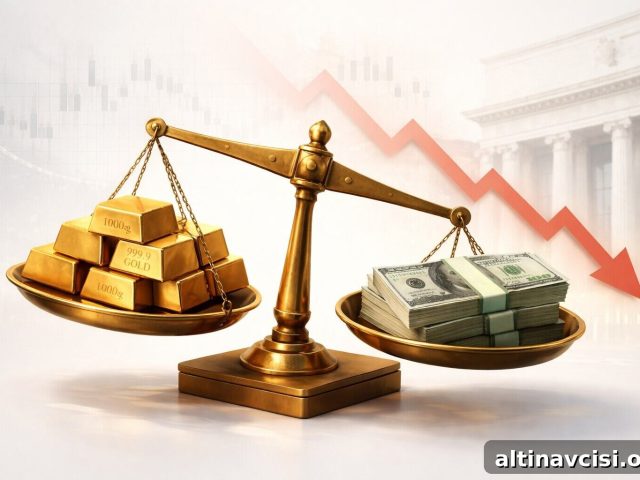
- Choosing between gold and a savings account is rarely an either/or decision. It is about matching each asset to the job you need done.
Why Your Savings Account Is Losing Ground — Even When It Looks Safe
When people ask “gold vs savings account,” they usually mean “which is safer?” A savings account is safe in the narrow sense: principal stability, immediate access, and FDIC insurance up to $250,000. Those are valuable features for liquidity and emergencies.
But safety of principal is not the same as protection of purchasing power. If the interest you earn is lower than the rate of inflation, your dollars buy less over time even though your nominal balance grows.
In May 2026 the U.S. Consumer Price Index increased 4.2% year-over-year (BLS). The national average savings rate sits near 0.38% (FDIC). A saver earning the average rate while inflation runs at 4.2% experiences a real return of roughly −3.8% annually. The account balance rises, but its buying power declines.
This is not a sudden failure; it’s the predictable result of holding cash-denominated assets when inflation exceeds their yield. Recognizing this dynamic helps you choose the right place for each portion of your savings.
What $100 Became: Gold vs. Savings vs. Inflation (2000–2025)
Indexed to $100 in January 2000 | Gold: LBMA annual average | Savings: national avg. ~0.5% APY compounded | CPI: BLS data
Sources: World Gold Council / LBMA (gold); U.S. Bureau of Labor Statistics (CPI); FDIC national average savings rates. Past performance does not guarantee future results.
What Does a Savings Account Actually Do?
A savings account has one clear job: keep liquid cash safe and accessible while paying modest interest. It performs this role well, which is why financial planners recommend keeping three to six months’ expenses in a savings account for emergencies.
Savings accounts are also appropriate for short-term goals with a two- to three-year horizon — a down payment, a car purchase, or a wedding. These needs require dollar certainty; you cannot risk a large near-term decline in value when you must spend the money.
The problem arises when savers treat a low-yield savings account as a long-term store of wealth. That is not what it was designed to do.
The Knowledge That Changes Everything

Two essential guides — free. Learn why gold matters and how fiat currencies have historically behaved.
Access details and download instructions are available via the original publisher. (Form removed in this version.)
Why a Savings Account’s Yield Is Not Yours to Control
Savings rates generally track the Federal Reserve’s policy rate with a lag and typically at a lower level. When the Fed raised rates repeatedly between March 2022 and July 2023, savings yields rose slowly and by less. When the Fed cut rates in 2025, savings yields declined as well. High-yield accounts now paying around 4.20% APY are attractive, but those yields are variable and tied to Fed policy rather than your personal purchasing-power needs.
A deeper point: central banks manage macroeconomic outcomes, not individual purchasing power. The Fed’s 2% inflation target has been exceeded for an extended period, and the institution setting monetary policy is not obligated to preserve each saver’s real return. That gap matters for long-term savers.
What Does Gold Actually Do?
Gold pays no interest or dividends and cannot be spent directly for everyday expenses without conversion. Those are real limitations. But gold’s strength lies elsewhere: as a long-term preserver of purchasing power.
Gold is a physical asset with no counterparty risk. Its supply cannot be increased at will by a single government the way currency can be printed. When a currency loses value through monetary expansion, more units of that currency are generally required to buy the same fixed quantity of gold — which is why gold tends to hold value in nominal terms when currencies weaken.
What the Long-Run Data Actually Shows
Since the end of dollar-gold convertibility in 1971, gold’s nominal price has risen dramatically from fixed historical levels. Over multi-decade horizons, gold has delivered positive real returns. For example, gold’s annualized real return since 1971 has been in the neighborhood of 4% per year, and its average nominal return from 2000–2025 was roughly 10–11% per year (World Gold Council / LBMA).
Performance is uneven. Gold can surge during high-inflation periods or when monetary expansion accelerates, but it can also have long stretches of flat or declining prices. Entry point and holding period matter: gold has historically been a reliable long-run store of purchasing power, not a guaranteed short-term trade.
What Does the 25-Year Return Comparison Actually Show?
If you invested $10,000 in an average savings account in January 2000 and left it at low historical rates, the nominal balance would have grown only modestly; adjusted for inflation, it would have lost purchasing power. If instead you had allocated the same $10,000 to gold at the 2000 LBMA average price (~$279/oz), that holding would have grown substantially by 2025. This illustrates the difference between short-term liquidity and long-term purchasing-power preservation.
That comparison is not a recommendation to put all wealth into gold. It is a demonstration of how different assets address different financial goals.
What Is the Real Interest Rate, and Why Does It Predict Gold’s Performance?
The real interest rate — nominal interest minus inflation — is a powerful indicator for gold. When real rates are negative, the opportunity cost of holding gold (which pays no yield) falls, making gold more attractive. With a Fed policy range near 3.50%–3.75% and CPI around 4.2% (as of mid‑2026), real short-term rates are marginally negative, reducing the advantage of holding cash.
Historically, gold has performed best when real yields are low or negative. Conversely, when real rates are strongly positive, gold tends to face headwinds, as it did through much of the 1980–2000 period.
How to Use the Real Rate Framework
Use the real-rate framework to assess gold’s relative attractiveness. Negative real rates support gold; positive real rates favor yield-bearing assets. Serious allocators monitor TIPS yields, breakeven inflation rates, and central-bank signals to decide sizing and timing.
How Should You Actually Use Gold and Savings Together?
Gold and savings accounts serve different roles and should coexist in a balanced plan. Consider the job each asset performs and allocate accordingly:
Savings accounts are for: liquid emergency funds (three to six months), short-term goals (under three years), and money you must keep at a known dollar value.
Gold is for: long-term purchasing-power preservation (decade-plus horizons), wealth held outside the banking system, generational transfers, and reserves meant to protect against currency debasement.
There is no one-size-fits-all split. Many advisers suggest starting with 5%–15% of investable assets in physical gold or gold-equivalent instruments. That can provide meaningful protection without concentrating too much in a non‑yielding asset.
Which Asset Should You Choose? Three Questions to Answer First
1. What is your time horizon for this money?
If you need funds within three years, keep them in a savings account for dollar certainty and liquidity. If you are saving for retirement or a goal ten years away, gold’s long-term record becomes relevant.
2. What is the real return on your savings right now?
Subtract current CPI from your account’s APY. With CPI at 4.2% (May 2026) and the national average savings rate near 0.38%, the typical savings account shows a real return near −3.8%. If your real return is negative, your purchasing power is eroding over time.
3. Do you hold gold outside the banking system?
Physical gold has no counterparty risk and sits outside any single banking system. Central banks around the world were net buyers of gold in 2025, reflecting its role as a reserve asset. Holding physical gold outside banks is a distinct way to diversify monetary exposure.
What Is the Bottom Line on Gold vs Savings Account?
Put simply: keep a savings account for liquidity, emergencies, and short-term dollar needs. Use gold for long-term purchasing-power protection. Right now, with inflation exceeding average savings yields, cash balances can lose buying power over a decade or a retirement horizon. Gold has historically preserved purchasing power over multi-decade periods, though it can be volatile in the short run.
Most people benefit from holding both: cash for near-term needs and a measured allocation to gold for long-term protection.
Stay On Top of Gold & Silver Prices
Get important market alerts sent to your inbox.
Subscription form removed. Visit the original publisher for subscription options.
People Also Ask
Is gold a better investment than a savings account?
It depends on the purpose. For short-term liquidity and guaranteed access, a savings account is superior. For preserving purchasing power over ten years or more, gold has historically been stronger. The right choice depends on the time horizon and the role this money must play.
Does gold actually protect against inflation?
Over long horizons, gold has often outpaced inflation and acted as a durable store of value. In shorter windows, especially when real interest rates are strongly positive, gold can underperform. It is more accurate to view gold as a long-term inflation hedge rather than a short-term inflation trade.
Should I move my savings account money into gold?
Not without first preserving liquidity. Keep emergency funds and near-term cash in liquid accounts. Consider allocating a portion of long-term savings — commonly 5%–15% of investable assets — to gold for purchasing-power protection, depending on your goals and risk tolerance.
What is the difference between real return and nominal return for savings?
Nominal return is the stated interest rate on your account. Real return equals nominal return minus inflation. If inflation exceeds your nominal yield, your real return is negative and your purchasing power declines over time.
How much gold should I own compared to savings?
Allocation depends on your liquidity needs, time horizon, and overall financial plan. Many advisers suggest 5%–15% of investable assets in gold or equivalent instruments as a starting point. Adjust based on personal circumstances and conviction about monetary risks.
SOURCES
1. U.S. Bureau of Labor Statistics — Consumer Price Index Summary, May 2026 (CPI)
2. Federal Deposit Insurance Corporation — National average savings rates, June 2026
3. Federal Reserve Board — Selected interest rates (H.15); FOMC statements and balance sheet reports (H.4.1)
4. World Gold Council — Gold returns historical data; Gold Demand Trends, Full Year 2025; research on gold as an inflation hedge and portfolio diversifier
5. London Bullion Market Association — PM Fix historical prices
Disclaimer: This article is for informational purposes only and does not constitute financial or investment advice. Consult a qualified financial adviser before making investment decisions.
You May Also Like:
- Seigniorage: The Hidden Tax on Every Dollar You Hold
- Gold: Risk Weight, Funding Penalties, and Regulatory Questions
- Research on Gold’s Historical Price Floors and Drivers
- 23 Questions to Ask Before Choosing a Gold Storage Provider
- How Institutional Forecasts and Models Affect Investment Decisions
Popular Topics
Picked from the archive
-
01
 Topics
World Bank Predicts Precious Metals Prices to Rise 42% This Year
-
02
Topics
Gold Price Forecast: Oil Futures Diverge From Stocks
-
03
Topics
Gold Weekly: $9T Swing, Trump Fed Nominee, Record Premiums
-
04
Topics
How Stagflation Sparks Both Drivers of Silver
-
05
Topics
What’s Driving Gold Demand from Washington, D.C. to Mumbai
-
06
Topics
Dollar Steady as Markets Price 79% Odds of September Rate Cut
-
07
Topics
Gold Price Tops $5,500 Amid Accelerating Metals Rally
-
08
Topics
Central Banks Favor Gold Over the Dollar: Impact on Your Savings