What the Fed’s 3-Day Silence Means for Gold Prices
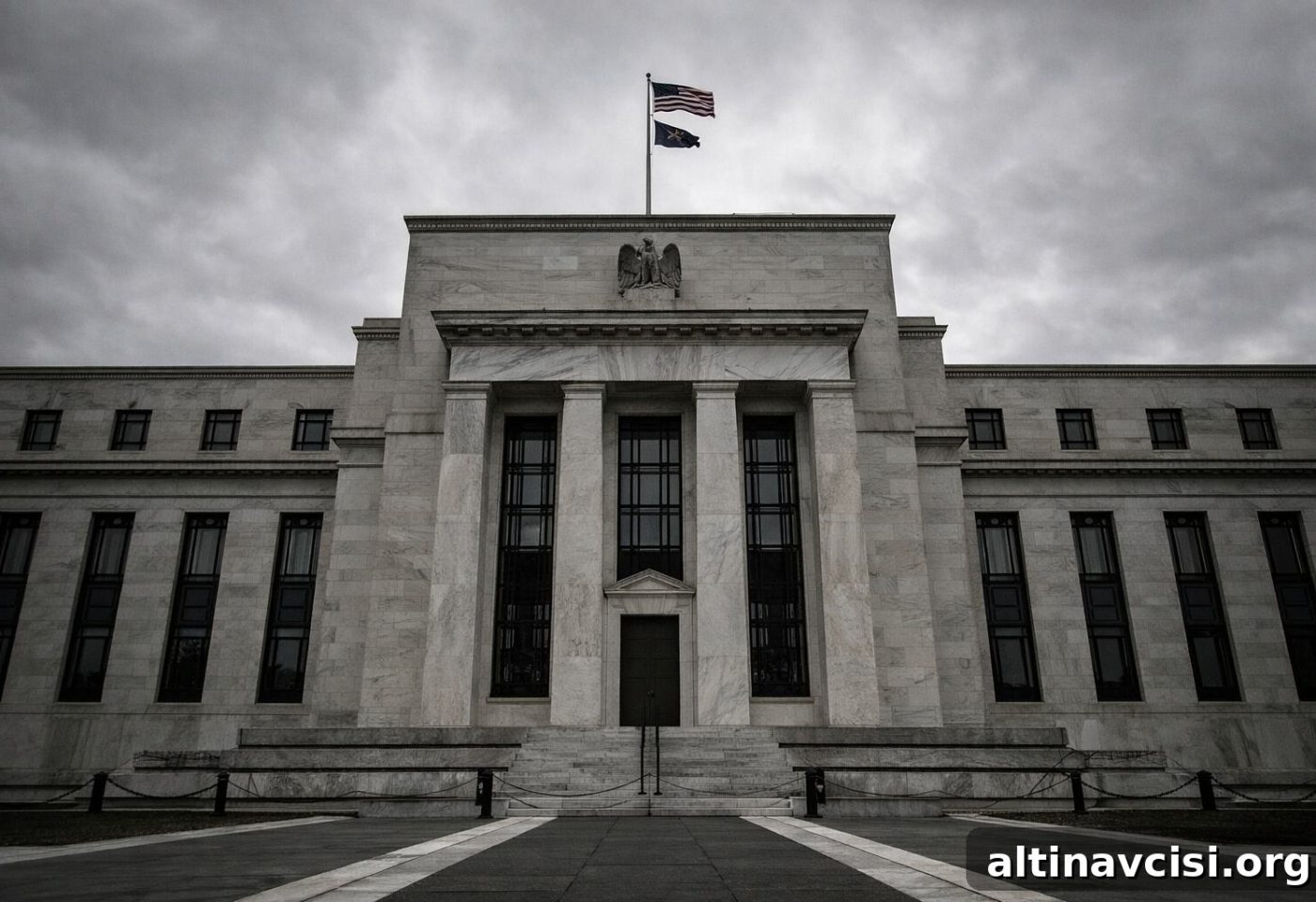
At midnight ET on April 18, the Federal Reserve begins its FOMC blackout period. For 12 days, through April 30, Fed officials will not speak publicly about monetary policy: no speeches, interviews, or off-the-cuff comments that might influence markets. In a market that has traded heavily on expectations for interest-rate moves over the past seven weeks, that enforced silence matters.
What Is the FOMC Blackout Period?
Eight times a year the Fed imposes a communications blackout ahead of each scheduled Federal Open Market Committee (FOMC) meeting. Beginning the second Saturday before the meeting, Fed officials and staff refrain from public commentary on monetary policy. That restraint remains in place until the day after the committee announces its decision. For this cycle the blackout runs April 18–30, with the rate decision scheduled for April 29.
The intent is straightforward: avoid an offhand remark from a regional Fed president or staffer that could move markets in the days before a major decision. Let the data and the official policy statement shape expectations.
That discipline usually makes sense. But current market and geopolitical conditions are far from usual.
Why Does the April 2026 Blackout Matter More Than Usual?
Three dynamics make this blackout especially consequential for gold and related markets. First, expectations for Fed rate cuts have collapsed to nearly zero. Second, economic data now points to stagflation: inflation is hotter than the Fed wants while growth remains weak. Third, the fragile US–Iran ceasefire could shift rapidly — and markets will have no Fed voice to help interpret developments for 12 days.
The Edge Every Investor Needs
Smarter precious-metals investing starts with clear, timely analysis. Our Nuggets newsletter delivers market insights, Fed updates and global trends to help you stay informed.
Have Rate-Cut Expectations Already Collapsed?
Yes. Before the Iran conflict intensified, futures markets priced roughly 58 basis points of cumulative Fed cuts in 2026 — the equivalent of more than two cuts. Those expectations have evaporated: the market now places a very high probability on the Fed holding rates at the April 29 meeting. Odds of any cut this year have fallen substantially in recent weeks.
Gold’s price is sensitive to the expected path of real rates: when rate-cut odds rise, gold’s opportunity cost falls and its price typically benefits. The opposite has played out recently. Gold trading around $4,760 remains about 10% below the level seen before the conflict began, reflecting the reversal in cut expectations.
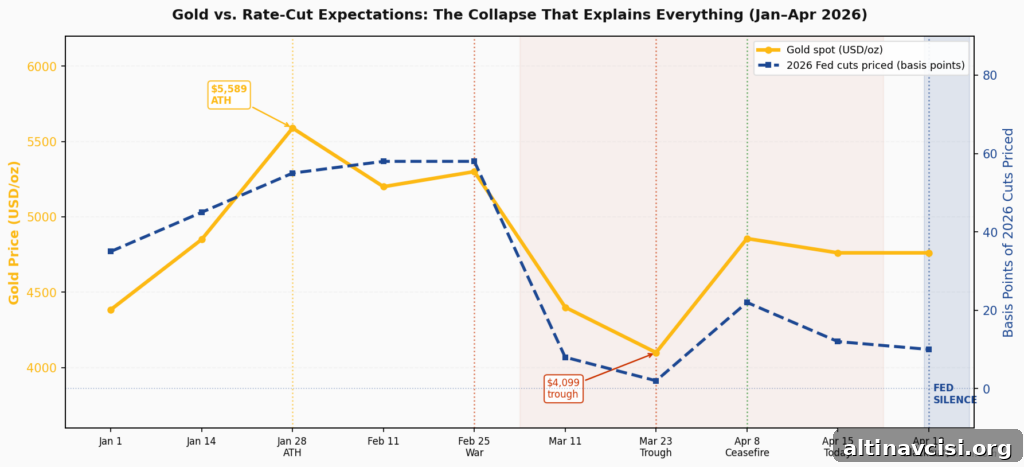
Gold price vs. Fed rate-cut expectations, Jan–Apr 2026: gold fell as markets pushed projected cuts from ~58 bp toward zero after the Iran conflict began.
Is Stagflation Now Confirmed?
The data points are worrying. March CPI came in at 3.3% year-over-year, the highest since May 2024, while a downward revision to Q4 GDP put growth at a weak 0.5%. That combination — inflation running too hot to allow cuts and growth too soft for hikes — captures the essence of stagflation. The Fed now faces an unenviable trade-off documented in official data, not just forecasts.
When surprises like March CPI arrive while the Fed can speak, officials can help frame the outcome and influence market reactions. During the blackout, comparable surprises will be digested solely by market participants without Fed commentary, increasing potential volatility.
Is the Iran Ceasefire Still in Place?
Officially, the two-week truce brokered in early April remains active. In practice, the ceasefire is fragile: talks have stalled at times and military moves, such as port blockades, have raised tensions. A durable truce would relieve pressure on oil markets, ease some inflation fears and help revive rate-cut expectations — a positive for gold. A breakdown, by contrast, would likely push oil above $100 per barrel again, strengthen arguments for tighter policy and prolong gold’s consolidation.
Regardless of direction, these geopolitical moves will unfold while the Fed is muted, leaving markets to absorb events without central-bank commentary.
What Should Investors Watch During the 12-Day Blackout?
Three things deserve attention:
- Oil prices. Brent near $100 is roughly the market’s current balance point. If oil rises above about $105, recession and rate-hike fears can return and pressure gold. If oil falls below roughly $90, rate-cut expectations could resurface, giving gold a tailwind.
- The ceasefire and geopolitical developments. Renewed strikes, disruptions to shipping through the Strait of Hormuz, or a collapse of talks would push energy prices higher and create headwinds for gold. Genuine diplomatic progress would reverse that dynamic quickly.
- Incoming economic data. Key releases — such as the import-price index and China’s industrial figures — will influence market assessments of inflation and activity. With no Fed commentary available, markets will price those data points without official context.
Does the Blackout Change the Structural Case for Gold?
No. The long-term structural drivers that have supported gold remain intact. Central banks have purchased gold at elevated rates for several consecutive years. The United States continues to carry a large interest burden on its debt. The dollar’s dominant share of global reserves has been gradually declining. Those multi-year forces do not pause for a 12-day Fed communications window.
Gold’s January record near $5,589 reflected those broad structural trends. The recent pullback to about $4,760 reflects a specific, temporary mechanism: an oil-driven inflation shock that pushed markets to abandon near-term cut expectations. When that mechanism eases — whether through diplomatic progress, a peak in oil prices, or a Fed policy pivot — the structural support for gold should reassert itself.
In short, the blackout is a timing-related technicality that removes one short-term stabilizer at an unusually unstable moment. Investors should be aware of it and monitor the key variables, but it does not by itself change the longer-term case for gold.
SOURCES
1. Philadelphia Fed — FOMC Blackout Period Calendar
2. CME Group — FedWatch Tool
3. CNBC — Coverage on gold and market reaction after failed peace talks and Iran blockade
4. State Street Global Advisors — Monthly Gold Monitor, April 2026
5. Fox Business — Coverage of Fed projections for 2026 rate moves
6. TradingEconomics — Gold price chart and historical data
7. GoldSilver.com — Gold price forecasts and market commentary
8. FinancialContent — Coverage of oil shocks and March CPI data
9. GoldSilver.com — Analysis on stagflation and gold markets
10. FinancialContent — PPI and energy cost coverage
11. Federal Reserve — Beige Book publications
12. World Gold Council — Gold demand trends
13. OnlineGold.org — Central bank gold reserve additions in 2025
14. CNBC — Coverage of the US–Iran ceasefire and market effects
15. Euronews — Market reaction to renewed talks and oil moves
16. IMF — Currency Composition of Official Foreign Exchange Reserves (COFER)
By the GoldSilver Editorial Team — helping investors understand sound money since 2005. This article is for informational purposes only and does not constitute financial, investment, or tax advice. Always consult a qualified financial advisor before making investment decisions.
You May Also Like
- Gold Is Down 10% From Its War-Peak — and Still Up 46% in a Year
- Gold Outranks the Dollar at Central Banks — What It Means for Your Savings
- Hormuz Blockade Sent Gold Down 2%. Here’s Why That’s Bullish
- Gold Jumps 2% as Trump Plans Iran War Address
- $88 Billion a Month: Why U.S. Debt Is Driving Gold Prices
- CPI Hits 3.3%, GDP Stalls — Is Stagflation 2026 Here?
- War Risk, Stagflation Signals, and a $6,300 Gold Target
Popular Topics
Picked from the archive
-
01
 Topics
Tariffs Boost Gold Prices Despite Weekly Drop Ahead of US Jobs
-
02
Topics
Could Trump’s Trade Wars End a Century of US Dollar Dominance?
-
03
Topics
Gold Tops $5,300 as Fed Meeting Sends Dollar Tumbling
-
04
Topics
Gold vs Silver: Which Metal Fits Your Portfolio?
-
05
Topics
Gold Prices Rise as Dollar Slips Ahead of Fed Rate Decision
-
06
Topics
How to Allocate Gold Between Stocks and Bonds
-
07
Topics
Gold Weekly: $9T Swing, Trump Fed Nominee, Record Premiums
-
08
Topics
Digital vs Physical Gold: What Do You Really Own?