Digital vs Physical Gold: What Do You Really Own?

The debate between digital gold and physical gold is more relevant than ever. Modern investors can either hold a gold coin in their hand or own exposure to gold through a mobile app. Both track the same underlying asset, but what you actually own — and the rights, risks, and costs tied to that ownership — can be very different. Here’s what you should know before you choose.
What Is Digital Gold?
Digital gold is an umbrella term for several investment formats: gold ETFs, mutual funds, futures contracts, and online platforms that sell fractional ownership of vaulted bullion. These platforms let you buy, track, insure, and store gold through an app or web portal. Some provide audited, insured storage and let you monitor your value in real time.
Not all digital gold is identical. Some products, such as certain ETFs, represent a claim on a fund that may not be fully backed by physical metal. Other digital bullion services offer allocations of actual physical bars or coins stored in professional vaults. The first question to ask is whether your digital holding represents a specific, identifiable physical asset or a general claim on pooled metal.
What Is Physical Gold?
Physical gold means tangible metal you can hold: coins, bars, or rounds. These items are valued for their recognized purity and weight, and for the simplicity of outright ownership. When you possess physical gold, no counterparty stands between you and your asset. No platform can freeze your account, no fund manager can make decisions for you, and no bank’s solvency is required for your metal to retain its intrinsic value. That direct ownership is the core appeal of physical gold.

The Financial System Isn’t Safer — And You Know It
As systemic risks grow, many investors see gold and silver as assets that can preserve value in turbulent times.
Is Digital Gold Backed by Physical Gold?
This is the question most investors forget to ask. The key distinction is between allocated and unallocated gold. Allocated gold means specific bars or coins are assigned to you and held in a vault on your behalf; your name is linked to identifiable metal. Unallocated gold means you hold a general claim against a pooled holding, which can be used by the custodian for other purposes. In insolvency, unallocated holders may be treated as unsecured creditors rather than owners of particular metal.
Some digital platforms back holdings with fully allocated physical metal in audited, insured vaults, so a digital balance reflects a real claim on specific metal. Many ETFs and other paper-gold instruments, however, may operate on an unallocated or partially allocated basis or use derivatives to track the price. Always review the product prospectus and look for independent audit documentation before assuming full physical backing.
Key Differences: Digital Gold vs Physical Gold
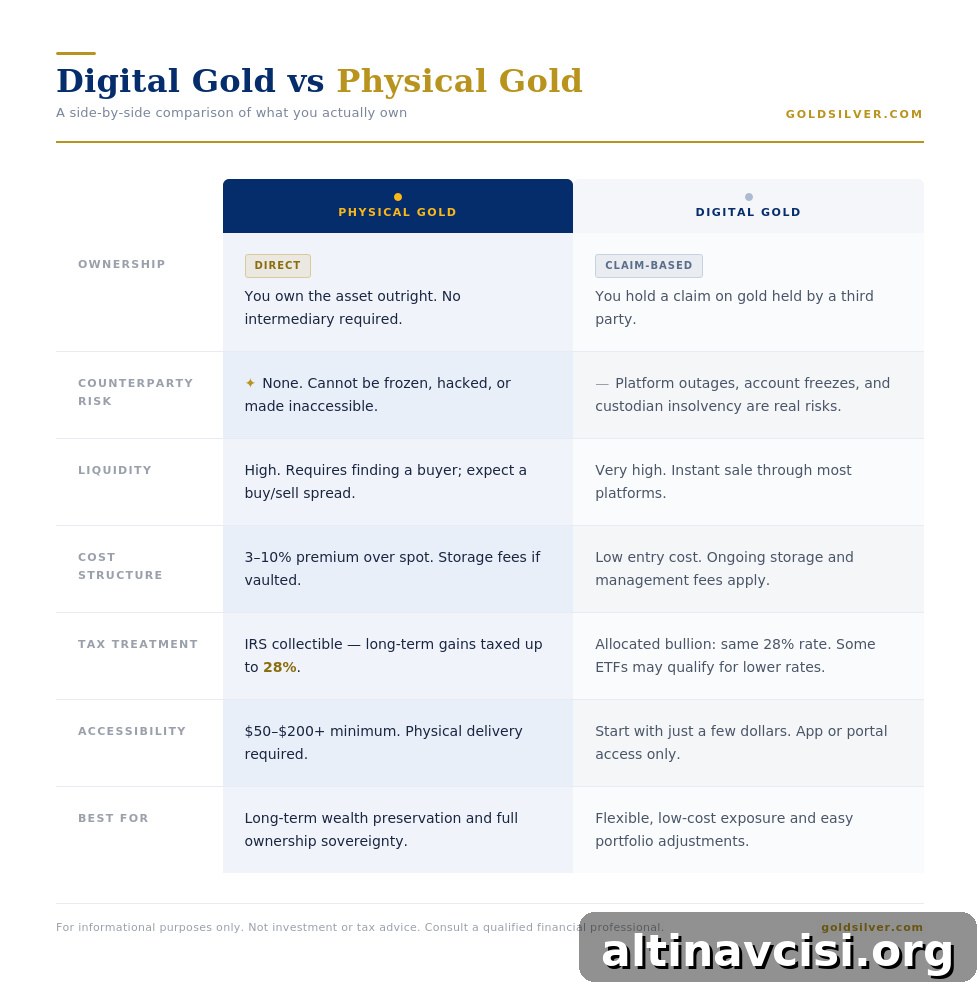
Ownership and Control
Physical gold gives you direct, unencumbered ownership. Digital gold gives you a claim on a fund, a platform, or a custodian, and that claim’s strength depends on the provider’s solvency and operational practices. Whether a digital product is allocated or unallocated determines how real your ownership is.
Liquidity
Digital gold is generally more liquid: you can typically buy or sell instantly on a platform, subject to spreads and fees. Physical gold requires finding a buyer or dealer, and you’ll usually face a bid-ask spread — buying near retail and selling closer to wholesale.
Costs
Physical gold carries upfront premiums over spot — often 3% to 10% — plus storage and insurance if you vault it. Digital gold often has lower entry costs and fractional purchase options, but recurring storage and management fees can erode returns over time. For long-term holders, those ongoing fees matter.
Accessibility and Minimum Investment
Digital platforms typically allow purchases for just a few dollars, making gold accessible to many investors. Physical gold requires a larger minimum tied to the smallest available coin or bar and involves shipping or local pickup, with associated costs.
Is Your Gold Investment Taxed at the Right Rate?
Taxes on gold can be surprising and costly if overlooked. Physical gold — and digital positions that represent allocated bullion — are often classified as collectibles for tax purposes, which in some jurisdictions can mean higher long-term capital gains rates than standard stock gains. Other digital gold products, such as certain commodity ETFs structured differently, may be taxed under alternate rules that split gains between long-term and short-term treatments. Because tax treatment depends on product structure and jurisdiction, review the offering documents and consult a qualified tax professional before investing.
Do You Own Your Digital Gold, or Are You Just a Creditor?
The most dangerous risk with digital gold is custodian insolvency. Platform outages and hacks make headlines, but a failing custodian can leave clients scrambling in bankruptcy proceedings. If your gold is held unallocated, you are effectively a creditor to the custodian rather than the owner of specific metal. In crises, that distinction becomes critical. Physical gold in your possession avoids this exposure: it cannot be frozen, hacked, or locked behind a failed platform.
Red Flags to Watch For
Not all digital gold providers are equal. Before trusting a platform, watch for these warning signs:
- No independent audit certificates. Reputable services publish regular third-party audits that verify vault holdings match outstanding digital balances.
- Custodians in unregulated offshore jurisdictions. Jurisdiction affects legal protections and recourse if problems arise.
- No option for physical delivery. If a platform won’t let you redeem digital holdings for actual metal, question the strength of your ownership claim.
- Vague storage disclosures. If terms don’t clearly state that your gold is allocated and segregated, assume it may not be.
Which Is the Better Investment?
Physical gold should be the foundation for long-term wealth preservation. Its main advantages are direct ownership, absence of counterparty risk, and independence from the financial system. Digital gold—when backed by fully allocated, audited physical metal—can complement physical holdings by lowering the entry barrier, enabling fractional exposure, and offering faster liquidity for tactical moves.
Treat digital gold as a complement, not a replacement. Many prudent investors start with direct physical ownership and then layer in vetted digital products for flexibility and liquidity, rather than relying solely on digital exposure.
Stay On Top of Gold & Silver Prices
Sign up for timely market alerts and watch key price movements for gold and silver.
People Also Ask
What is the key difference between digital gold and physical gold?
Physical gold is a tangible asset you own outright with no counterparty risk. Digital gold is a claim on gold held by a fund or platform, so your ownership depends on that third party’s solvency and practices.
Is digital gold backed by actual physical gold?
Sometimes. Some platforms back digital holdings with fully allocated metal stored securely. Others use derivatives or hold only a fraction of the metal their shares represent. Always verify the product’s backing and audited records.
Is digital gold safe compared to physical gold?
Digital gold offers convenience but introduces platform and counterparty risks: accounts can be frozen, platforms can be hacked, and custodians can fail. Physical gold you control avoids these risks and is generally safer against systemic disruptions.
What are the tax implications of digital gold vs physical gold?
Tax treatment varies by product structure and jurisdiction. Allocated physical bullion is often taxed differently from paper-gold products. Review the offering documents and consult a tax professional to understand the specific implications for your situation.
Which is better for long-term investment: digital gold or physical gold?
Physical gold generally better serves long-term wealth preservation because of direct ownership and lack of counterparty risk. Digital gold is useful for accessibility and flexibility. A balanced approach often combines both.
This article is for informational purposes only and does not constitute investment or tax advice. Consult a qualified financial professional before making investment decisions.
You May Also Like:
- Bank Safety Deposit Box vs. Gold Vault Storage: Where Is Your Gold Actually Safer?
- Is Gold in a Bubble? What a High Price Forecast Tells Us
- Gold vs Stocks & Bonds: What the Data Really Suggests
- Silver Price Crash History: What Happens After the Biggest Drops
- Gold IRA vs Physical Gold: Which Is Best for Your Portfolio?
- When Should You Sell Gold and Silver? (And What to Buy Next)
- Could the US Revalue Its Gold Reserves to Pay Down Debt?
Popular Topics
Picked from the archive
-
01
 Topics
Gold Price Drops Below 50-Day Moving Average
-
02
Topics
Gold Rally Consolidation Signals Continued Upside
-
03
Topics
Hong Kong Plans New Global Gold Trading Platform
-
04
Topics
Gold Price Falls 0.5% Ahead of Fed Appointment
-
05
Topics
Gold Price Nears $4,000 as U.S. Data Confidence Falters
-
06
Topics
JPMorgan Predicts Gold Could Top $5,400 by 2027
-
07
Topics
US-EU Deal Sets 15% Tariffs; China Truce to Continue
-
08
Topics
EU Rushes to Avert Trump’s 30% Tariff Deadline