JPMorgan Predicts Gold Could Top $5,400 by 2027

Daily News Nuggets | Today’s top stories for gold and silver investors
December 19th, 2025
Gold and Silver Poised for a Breakout Year
Gold is set to close 2025 having rallied more than 60%, marking its strongest year since 1979 and reaching over 50 record highs during the year. Silver has risen even more dramatically, roughly doubling to trade above $66 per ounce at peak levels. These gains reflect a potent mix of factors: record central bank purchases, renewed investor interest in precious metal ETFs after several years of outflows, geopolitical tensions, persistent inflation pressures, and a weaker U.S. dollar increasing safe-haven demand. In silver’s case, rising industrial demand—especially for solar panels and electronics—combined with supply constraints helped amplify the advance.
For investors focused on inflation and geopolitical risk, the precious metals rally has underscored their value as crisis hedges. As markets reassess portfolios, gold and silver have come into sharper focus for asset allocation and wealth preservation strategies.

JP Morgan Predicts Gold Could Top $5,000 by Late 2026
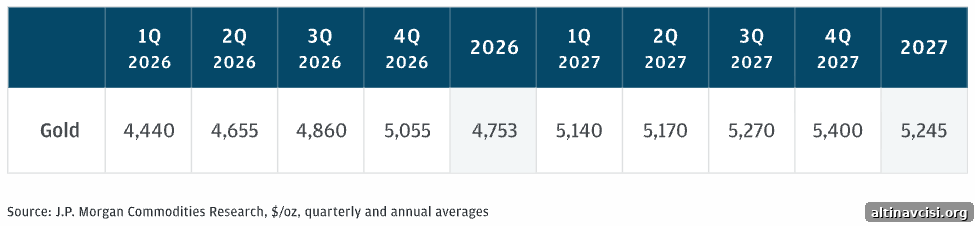
JP Morgan released a bullish forecast calling for gold to reach roughly $5,055 by the end of 2026, with a potential climb toward about $5,400 by late 2027—implying another near-term upside of around 25% from current levels. The bank points to continued central bank buying, estimated near 900 tonnes in the current year, and sustained ETF inflows (about 310 tonnes year-to-date) as primary drivers. These flows reflect broader reserve diversification trends away from dollar assets and renewed investor appetite for tangible stores of value.
Natasha Kaneva, JP Morgan’s head of Global Commodities Strategy, summarized the view by emphasizing a persistent structural bull case for gold. For many investors, this endorsement from a major Wall Street firm adds conviction to the thesis that precious metals will remain central to risk-management and diversification plans amid tariff disputes, geopolitical volatility, and inflation uncertainty.
World Gold Council Outlines Three Scenarios for 2026
Following gold’s strong 2025 performance, the World Gold Council lays out three potential paths for 2026:
- Baseline: Rangebound trading if current conditions largely persist.
- Moderate: Modest gains of 5–15% in a slower upward trajectory.
- Bullish: A 15–30% rally should global risks escalate materially.
The WGC highlights that slower global growth, accommodative monetary policy, and continued geopolitical tension are more likely to support gold prices than to undermine them. At the same time, it notes a credible bearish route: if reflationary policies succeed in prompting stronger economic growth, gold could see corrections of 5–20% as yields rise and the dollar strengthens. Central bank buying and recycling flows are identified as key wildcards; shifts in either could swing market direction and volatility.
Overall, the WGC’s outlook signals that volatility is likely in 2026 and that gold’s role as a portfolio hedge will remain prominent for investors considering longer-term risk management.
White House Highlights Lower Inflation; Economists Advise Caution
The White House touted a November inflation reading of 2.7%—below the 3.1% forecast—and framed it as evidence of falling prices and improved household purchasing power. However, December’s CPI printed slightly higher at 2.9%, extending a modest recent uptick that has kept the Federal Reserve cautious about moving ahead with rate cuts.
Economists emphasize that while headline inflation appears to have moderated, core inflation measures—excluding volatile food and energy—remain above the Fed’s 2% target in many readings. The mixed signals could delay expected rate reductions, supporting a scenario of higher-for-longer interest rates that tends to weigh on risk assets and support the dollar.
Experts Question the “Too Good to Be True” November CPI Reading
November’s unexpectedly soft inflation report drew skepticism from several economists. Headline CPI at 2.7% and core at 2.6% beat estimates, triggering market rallies, but some analysts argue the result may have been influenced by data disruptions caused by a government shutdown. The Bureau of Labor Statistics was forced to rely on methodological assumptions to fill gaps left by missing October data, and those assumptions were not fully transparent.
Michael Gapen, Morgan Stanley’s chief U.S. economist, suggested the BLS may have carried forward prices in certain categories—effectively assuming zero change—which distorted some components, especially housing and rent metrics. Stephanie Roth of Wolfe Research warned that the Fed is likely to give less weight to the November reading because of these technical quirks. Wells Fargo and others expect a bounce in the December CPI that could remind investors why the Fed has preferred a cautious approach to cutting rates.
In short, inflation data this season presents conflicting messages. Policymakers and markets will be watching subsequent prints closely to determine whether price pressures continue to ease or if the earlier decline was largely a data anomaly.

The Financial System Isn’t Safer — And You Know It
As risks mount, learn why gold and silver are expected to remain central to portfolio defense in 2026 and beyond.
Popular Topics
Picked from the archive
-
01
 Topics
Gold Price Drops Below 50-Day Moving Average
-
02
Topics
Gold Rally Consolidation Signals Continued Upside
-
03
Topics
Hong Kong Plans New Global Gold Trading Platform
-
04
Topics
Gold Price Falls 0.5% Ahead of Fed Appointment
-
05
Topics
Gold Price Nears $4,000 as U.S. Data Confidence Falters
-
06
Topics
US-EU Deal Sets 15% Tariffs; China Truce to Continue
-
07
Topics
EU Rushes to Avert Trump’s 30% Tariff Deadline
-
08
Topics
Gold-Backed Crypto Tokens Surge as Investor Demand Spikes