How to Allocate Gold Between Stocks and Bonds
Key Takeaways at a Glance
- Gold has led across timeframes in the latest trailing-returns snapshot: roughly 54% year-to-date and similar 1‑year performance, with double‑digit annualized returns over 3, 5, 10 and 20 years.
- Over a 20‑year horizon, gold’s annualized return in the dataset is comparable to or higher than broad U.S. equities, while bonds and many commodities have lagged.
- Structural shifts—especially sustained central bank buying, geopolitical fragmentation, and persistent inflationary forces—have altered the traditional investment landscape.
- A 5–15% strategic allocation to gold has historically improved portfolio resilience by reducing drawdowns and volatility while helping preserve purchasing power.
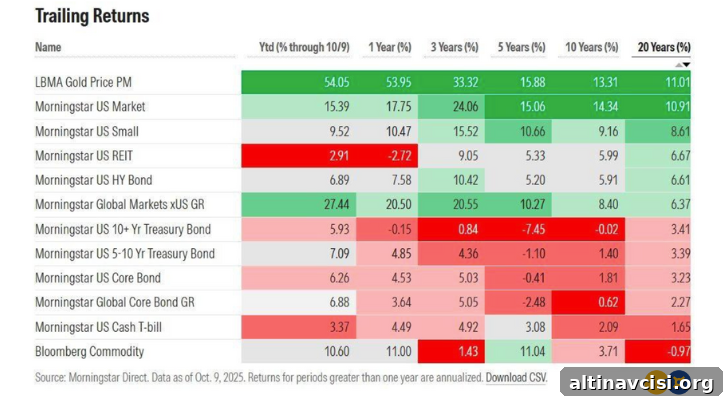
For decades, the simple investing playbook was clear: stocks for growth, bonds for stability, and gold as a rare form of insurance. That tidy division is shifting. Recent data from Morningstar shows gold performing at the top of the leaderboard across nearly every measured timeframe. Through October 9, 2025, gold posted roughly 54% year‑to‑date gains and sustained double‑digit annualized returns across multiple longer horizons. Over 20 years, its returns now compare favorably with U.S. equities in the same dataset, while bonds and many commodities trail behind.
This is not just a transient surge. Several structural changes have moved gold into a different regime: central banks have become consistent buyers, institutions are reallocating, and inflation dynamics have weakened the conventional case for relying solely on dividend‑paying assets. As those forces persist, the role of gold is evolving from emergency insurance toward that of a strategic reserve asset for central banks, institutions, and individual portfolios alike.
What the Numbers Actually Tell Us
The Morningstar trailing-returns snapshot highlights gold’s strength across horizons:
- Short term: About 54% year‑to‑date and similar 1‑year gains, driven by safe‑haven demand, central bank accumulation, and episodes of dollar weakness.
- Medium term: Low‑to‑mid‑teens annualized returns over 3 and 5 years, even as real interest rates have moved higher at times.
- Long term: Low‑double‑digit annualized returns over 10 and 20 years—numbers that beat or match broad U.S. equity returns in the dataset while bonds and many commodities underperformed.
Why this matters: gold has delivered equity‑like returns while offering diversification benefits more like bonds. In periods where inflation erodes the value of income assets and equities face stress, an asset that behaves independently can materially improve a portfolio’s resilience.
Why Gold Stopped Playing by the Old Rules
If gold’s recent price action feels counterintuitive—reaching new highs while interest rates rise—you’re not alone. The textbook expectation that higher yields always pressure gold is becoming incomplete. Three broad, structural drivers explain the shift:
1. Central banks became persistent buyers
Many central banks, especially in emerging markets and parts of Asia, have been steadily increasing gold reserves. Their motive is diversification and reducing dependence on any single currency. Unlike retail traders, these official buyers accumulate strategically and are less price‑sensitive, which supports a foundational demand floor that did not exist to the same degree in prior decades.
2. Geopolitical and economic fragmentation
Trade tensions, sanctions, and reshoring of supply chains have made global economic relationships less predictable. When international systems fragment, assets that are not a liability for any counterparty—like physical gold—gain attractiveness as neutral stores of value.
3. Inflationary pressures have become more persistent
Large fiscal deficits, energy transitions, and structural changes in global trade contribute to longer‑lasting inflation risks. In environments where growth slows but prices remain elevated, gold has historically outperformed while traditional income assets and equities often struggle.
Bottom line: Gold’s role is shifting from purely episodic crisis insurance to a strategic reserve component within diversified portfolios.
The Portfolio Math: How Much Gold Should You Own?
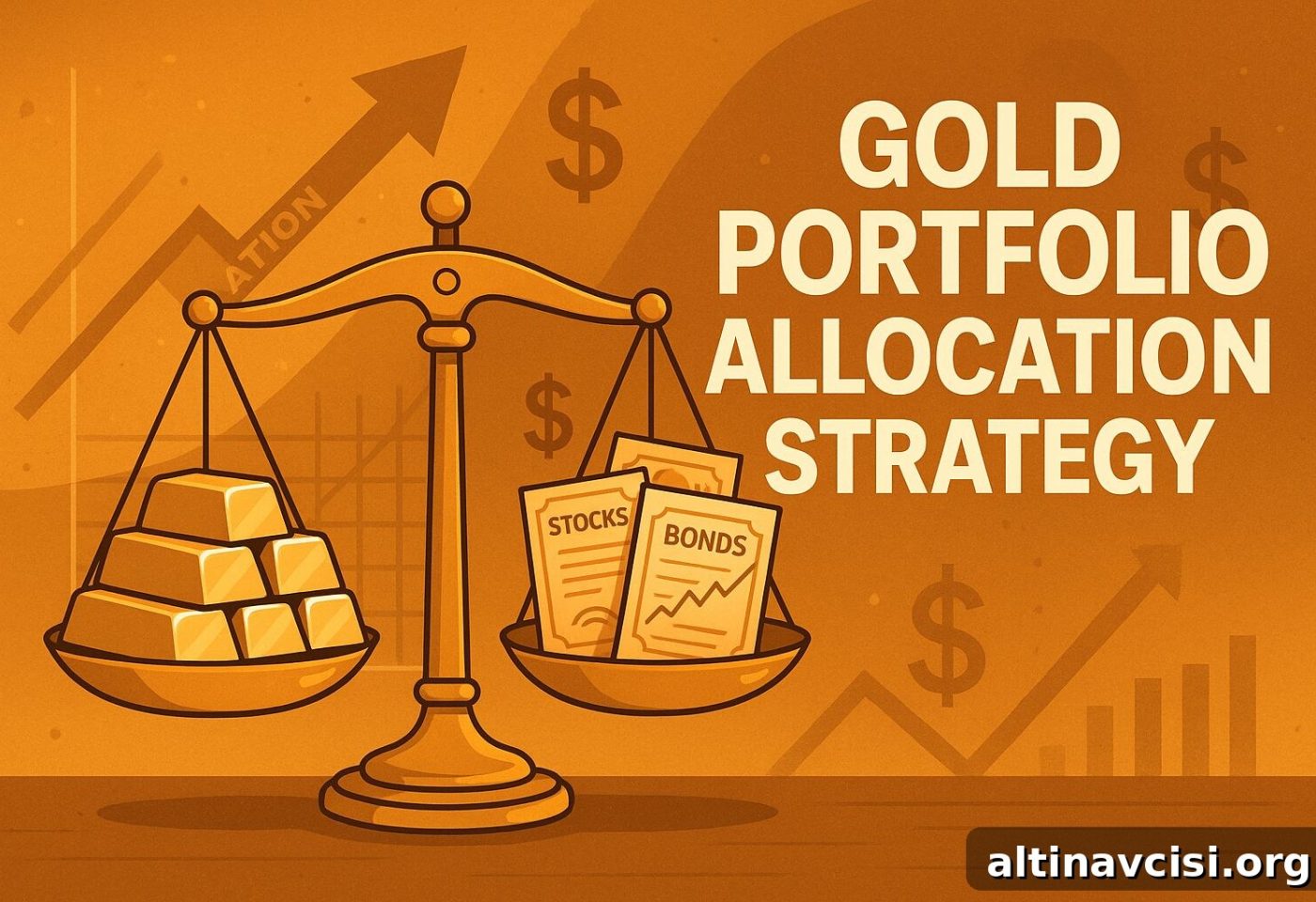
You do not need to allocate the majority of your portfolio to gold to gain meaningful benefits. Historical results indicate that a 5–15% allocation to gold can improve risk‑adjusted returns compared with a traditional 60/40 mix, particularly during periods of elevated inflation or equity stress.
Institutional commentary has moved the conversation toward higher allocations. For example, in September 2025 Morgan Stanley’s Chief Investment Officer Mike Wilson publicly suggested a larger strategic role for gold, arguing that bonds may no longer serve as reliable protectors against inflationary shocks. That perspective has prompted calls to rethink the old 60/40 framework.
Here are practical allocation guidelines by investor objective:
- Conservative (5% gold / 95% traditional): Keeps portfolio behavior largely unchanged while adding measurable downside protection.
- Balanced (10% gold / 90% traditional): Historically improves risk‑adjusted returns without fundamentally altering portfolio character.
- Defensive (15% gold / 85% traditional): Maximizes resilience, which can be especially valuable for investors nearing or in retirement.
Whatever allocation you choose, rebalance annually and focus on the long‑term role the gold sleeve plays—preservation and resilience, not short‑term speculation.
How to Own Gold the Right Way
How you own gold affects the benefits you receive. The main options include physical bullion, allocated vaulting, tax‑advantaged accounts that allow precious metals, and exchange‑traded products. Each has tradeoffs in terms of counterparty exposure, liquidity, storage costs, and tax treatment.
Physical bullion—coins and investment‑grade bars—provides direct ownership and eliminates many counterparty risks. For liquidity and ease of resale, stick with widely recognized sovereign coins and popular bar sizes.
Secure storage is important. Home storage can complicate insurance and resale; segregated, insured vaulting gives clearer title and smoother liquidity when selling is necessary.
Tax‑advantaged options such as IRAs that permit precious metals can be useful for certain investors, but ensure custodians and depositories meet relevant regulatory requirements.
Keep fees transparent: look for clear premiums on purchases, competitive storage fees, and minimal hidden spreads. When you buy, prioritize simplicity, reputable counterparties, and secure storage so your allocation performs its intended role.
Investing in Physical Metals Made Easy
People Also Ask
Did gold really beat stocks over the last 20 years?
According to recent trailing-return data referenced above, gold’s 20‑year annualized performance is comparable to or higher than broad U.S. equity benchmarks in the same dataset. That suggests gold can be a credible core holding rather than only crisis insurance.
How much gold should I have in my portfolio?
A commonly recommended range is 5–15%, adjusted for risk tolerance, time horizon, and income needs. That sleeve historically improves diversification and reduces portfolio drawdowns during stress periods.
Why is gold rising even with higher interest rates?
Three structural forces explain this: sustained central‑bank buying, geopolitical fragmentation, and persistent inflation risk. Together they have supported gold’s price even amid periods of rising real yields.
What’s the best way to own gold—physical bullion or ETFs?
ETFs offer convenience and ease of trading but carry fund and counterparty risks. Physical bullion—coins and bars—provides direct ownership and avoids many of those counterparty exposures. Weigh liquidity, storage, fees, and tax treatment when choosing.
Is now a good time to buy gold or should I wait?
Timing a perfect entry is difficult. Many investors phase into a target allocation over time and rebalance annually. A disciplined 5–15% allocation seeks long‑term resilience rather than short‑term market timing. Dollar‑cost averaging and a clear plan tend to produce better outcomes than trying to pick short‑term highs or lows.
Get Gold & Silver Insights Direct to Your Inbox
Join investors who receive expert analysis, market updates, and curated offers every week.
Popular Topics
Picked from the archive
-
01
 Topics
Russia Moves to Seize Top Gold Mining Company from Billionaire
-
02
Topics
Goldman Sachs Predicts Tariffs Will Slow Growth to 1.1% by 2025
-
03
Topics
How to Open a Precious Metals IRA with GoldSilver
-
04
Topics
UBS $3,800 Gold Forecast: What It Means for Precious Metals
-
05
Topics
Treasury Secretary Questions Federal Reserve’s Spending and Role
-
06
Topics
Gold Has Matched Stock Returns Since 1971: Why It Matters
-
07
Topics
Tariffs Hit Crypto, Gold Holds 4,100, Silver Squeeze Deepens
-
08
Topics
Treasury Yields Flat Amid Jobs Slump and Trump Policy Chaos