Gold, Stocks and Bonds Rally Defies Market Logic
Daily News Nuggets | Today’s top stories for gold and silver investors
October 21st, 2025
Goldman Sachs: “Everything is Weird” in the Markets
Markets are behaving unusually: stocks, long-duration government bonds and precious metals are all rising together. That synchronized move breaks decades of typical correlations that investors have relied on. Historically, equities and bonds move in opposite directions during major rallies and gold often strengthens when stocks falter. This year, however, the S&P 500, long-dated Treasuries and gold have climbed to fresh highs in parallel, creating a rare and disorienting backdrop for portfolio managers and retail investors alike.
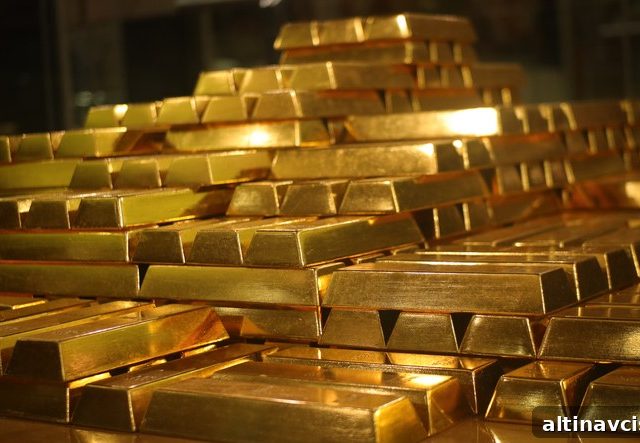
The S&P 500 has risen roughly 15% year-to-date, bond yields have fallen as traders bid up long-term Treasuries, and gold recently reached a new peak near $4,381 an ounce. Surprisingly, the VIX — the market’s measure of expected equity volatility — remains subdued even as geopolitical friction and a partial government shutdown have made headlines. Goldman Sachs trader Bobby Molavi has summed up the environment bluntly: “Everything is weird,” noting that established correlations appear to be “thrown out the window.”
Several forces are helping to sustain the unusual alignment. Retail participation in markets remains strong, corporate spending on artificial intelligence projects continues to support earnings and investor appetite, and central banks’ actions are shaping expectations for future rates. While the simultaneous ascent of these asset classes can keep markets climbing through layers of concern, it also raises the risk that, if sentiment shifts, a broad unwind could prove sudden because traditional hedges are less effective when everything moves in the same direction.
Gold and Silver Pull Back, But Buyers Aren’t Retreating
After reaching a record, gold eased roughly 2% during a recent intraday dip, while silver fell as much as 6% as traders took profits. The pullback was largely technical — many indicators suggested prices were overbought — and profit-taking is a normal part of such rallies. Importantly for precious metals markets, dip buyers quickly returned, indicating that many investors view the retreat as a buying opportunity rather than the start of a longer-term reversal.
The underlying supply-and-demand picture remains supportive. Market expectations for rate cuts are firming, central banks continue to add to official holdings in many regions, and geopolitical uncertainty persists. For investors who missed the initial rally, the temporary price weakness has created an entry point. Short-term volatility may persist, but the broad thesis supporting gold and silver — lower real rates, safe-haven demand and central bank buying — has not meaningfully changed.
Friday’s Inflation Report Could Signal the Fed’s Next Move
Economists expect the September Consumer Price Index to show inflation running near 3.1% year-over-year. That level is broadly consistent with market expectations that the Federal Reserve may proceed with a modest quarter-point rate cut at its next meeting. The path of U.S. monetary policy matters greatly for precious metals because lower interest rates reduce the opportunity cost of holding non-yielding assets like gold and silver.
That means the recent pullback in precious metals should be read as consolidation ahead of the next potential leg higher, assuming the inflation data aligns with expectations. One complicating factor is the ongoing government funding lapse; while key statistical agencies typically continue to release major reports during short funding gaps, traders have adopted a cautious stance until official numbers are confirmed. In short, markets are pausing for the data, and the CPI print could be the catalyst that determines whether the metals resume their upward trend.
Rare Earths Are the New Oil — and the West Is Scrambling
Beijing’s tighter controls on rare-earth exports have highlighted how dependent Western manufacturers remain on a small number of suppliers for critical minerals. Rare-earth elements are integral to electric vehicle motors, wind turbines, precision defense systems and many consumer electronics. China currently accounts for a very large share of global production and nearly all of refining capacity, creating vulnerability for manufacturers and nations that lack domestic sources.
The result is an urgent push to diversify supply chains and develop domestic production and processing capacity. Companies and governments are accelerating plans to mine and refine critical minerals at home or with allied partners, and some exploration and junior mining stocks have jumped on related announcements. Yet analysts caution that building out these facilities and supply chains takes time: many projects that receive fast-track approvals still face multi-year development cycles, meaning the current exposure is unlikely to disappear overnight.
Markets appear to be pricing in a longer-term shift toward resource nationalism. If that reality persists, rare earths could join oil, semiconductors and steel as strategic commodities that nations will prioritize securing domestically or through trusted partners. The transition will be costly and gradual, and in the near term it raises the premium placed on commodities and companies involved in critical-mineral supply chains.
Tariff Exemptions Underscore Limits of Reshoring
The recent decision to exempt certain categories of imports from tariffs — covering 45 groups of goods that the U.S. cannot realistically produce at scale due to climate or resource constraints — reflects a pragmatic adjustment to trade policy. Exemptions span agricultural products and selected electronics, recognizing that reshoring has practical limits. Policymakers have signaled that some exemptions will be permanent for existing trade partners, while other measures may be temporary as sector-specific approaches are reworked.
For investors, the exemptions are a reminder that policy shifts often produce unintended inflationary pressures and that global supply chains remain deeply interconnected. Where economic experiments to force rapid self-sufficiency falter, safe-haven and tangible assets such as gold retain their role in diversified portfolios. The combination of persistent inflationary forces, geopolitically driven supply risks and a changing monetary cycle helps explain why many investors continue to allocate capital to precious metals and other real assets.
Investing in Physical Metals Made Easy
Explore secure, straightforward ways to add physical gold and silver to a balanced portfolio.
Note: This summary synthesizes market developments and does not constitute investment advice. Investors should conduct their own research or consult a financial advisor before making allocation decisions.
Popular Topics
Picked from the archive
-
01
 Topics
Harvard 51B Endowment Sells Tech, Buys Gold and Crypto
-
02
Topics
Tariff-Driven Inflation Clouds Fed’s September Rate Decision
-
03
Topics
Investors Flock to Gold Amid Trade Tensions and Weak Jobs Data
-
04
Topics
ETF Inflows Propel Gold Demand to Highest H1 Levels Since 2020
-
05
Topics
Russia Taps $1B Chinese Gold Market Amid Geopolitical Shift
-
06
Topics
Gold Has Matched Stock Returns Since 1971: Why It Matters
-
07
Topics
BIS Warns Fed Faces Impossible Choice as Tariffs Risk Inflation
-
08
Topics
India Gold Demand Drops Further Amid Soaring Asian Prices