Gold vs Bitcoin: Which Hard Asset Will Shield Your Wealth?

Gold and bitcoin are both promoted as hard assets—scarce, non-sovereign, and insulated from fiat debasement—but they behave very differently under stress. Gold reached an all-time high of $5,589 per ounce in January 2026 after setting 53 records throughout 2025. Bitcoin peaked at $126,198 in October 2025 and currently trades near $82,000, about 35% below that high. Treating them as the same asset class is a common investor mistake.
What Actually Makes an Asset “Hard”?
A true hard asset cannot be inflated away by governments or central banks. Its supply is constrained, it does not depend on a counterparty promise, and it preserves purchasing power over time. Both gold and bitcoin clear that definition in design: one by geology and millennia of monetary use, the other by code and an explicit supply cap. But design and track record are different things.
Gold has been used as money for over 5,000 years. Above-ground supply grows at roughly 1–2% per year through mining, a steady long-term rate. Bitcoin was intentionally designed with gold as a model: supply capped at 21 million, predictable issuance, and halvings that cut new supply roughly in half about every four years. No government controls bitcoin, and the “digital gold” label is both intentional and partially justified.
The practical question, however, is whether an asset has held value when it mattered most. Historical performance under stress—how an asset behaves during sharp market dislocations—separates a proven monetary asset from a speculative store-of-value claim.

Your Gold Buying Guide Many investors overpay when buying gold — and again when selling. This guide explains what to own and why, so you can avoid common mistakes.
How Volatile Is Bitcoin Compared to Gold?
Bitcoin is substantially more volatile than gold. Historical data show bitcoin’s volatility at roughly four times that of gold, with multiple drawdowns exceeding 70% across its short history. Gold’s larger drawdowns have usually been limited to the 20–30% range. As of recent research, bitcoin’s annualized volatility sits around 52% versus gold’s 15.5% [NYDIG Research].
The difference becomes evident during market stress. In major S&P 500 downturns since bitcoin’s debut, gold returned an average of about +4.7% while bitcoin averaged losses near 35%. Gold has a history of rising or holding ground when equities fall; bitcoin has not yet been a consistently dependable safe haven [State Street Investment Management].
Bitcoin’s volatility has moderated as the market matures: realized volatility fell from triple-digit extremes in earlier cycles to the low 50% range by Q1 2025. Over the 2014–2024 decade, bitcoin delivered average annualized returns near 54%, making it one of the best-performing major assets. Still, for investors focused primarily on capital preservation rather than aggressive growth, bitcoin’s risk profile differs markedly from gold’s.
Which Is a Better Inflation Hedge — Gold or Bitcoin?
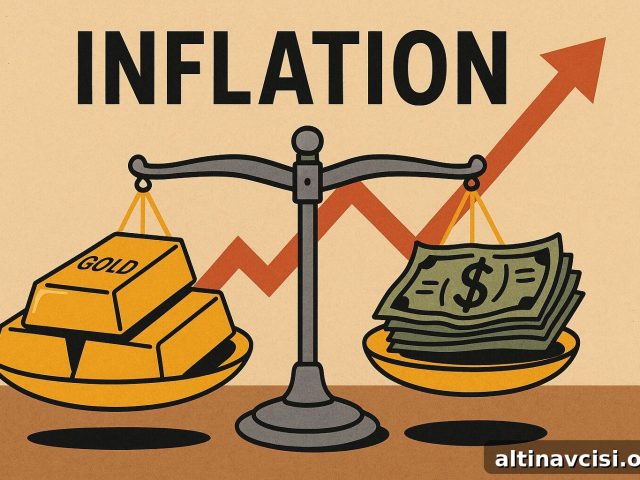
Gold’s record as an inflation hedge spans centuries; bitcoin’s track record spans roughly 15 years and is mixed. In the 2022 inflation episode, bitcoin fell more than 60% while gold remained relatively flat. That behavior aligns more with a risk-on asset than with a reliable inflation hedge.
Gold’s 2025 performance reinforced its inflation-hedging narrative: LBMA gold hit 53 new all-time highs during the year, averaging $3,431/oz for the year, a 44% increase year-over-year. Central banks purchased 863 tonnes in 2025, well above the prior-decade annual average of 473 tonnes. No central bank reported holding bitcoin in reserves [World Gold Council].
Bitcoin’s inflation-hedge argument rests on fixed supply and the expectation that fiat debasement will boost demand for scarce digital assets. That remains a plausible long-term thesis, but it has not yet been proven across multiple inflationary cycles, and institutional reserve managers are not yet treating bitcoin the way they treat gold.
Is Bitcoin a Reliable Store of Value?
A store of value must preserve purchasing power and remain liquid when needed. Gold meets both requirements consistently; bitcoin’s record is more mixed. Over long horizons bitcoin has produced extraordinary returns, but over short and medium horizons it has proven unreliable for preserving nominal value. For example, investors who bought bitcoin near the November 2021 peak waited years to reclaim their initial dollar investment, while gold buyers in the same period generally retained purchasing power.
Liquidity differences matter at scale. Selling 100,000 BTC—worth several billion dollars at current prices—could move the market sharply given average daily trading volumes. An equivalent-sized gold transaction would represent a much smaller share of daily turnover and is likely to have a far smaller price impact. When large amounts of capital need a rapid move to safety, gold typically absorbs demand more smoothly [Morningstar].
Bitcoin also faces risks that gold does not: exchange failures, regulatory pressure, software vulnerabilities, and theoretical future threats to cryptography. These are relatively low-probability events but not impossible.
Gold vs. Bitcoin: Pros, Cons, and Real Numbers
Gold’s strengths include a market capitalization north of $30 trillion, universal recognition, 5,000 years of monetary use, no technological dependency, and strong structural demand from central banks. Central bank purchases have risen significantly in recent years; in 2024 they bought 1,086 tonnes, and forecasts from major banks anticipate elevated prices into 2026–2027 [J.P. Morgan Global Research].
Gold’s drawbacks are straightforward: no yield, storage and insurance costs for physical holdings, slower settlement for large transfers, and limited upside compared with high-beta assets.
Bitcoin’s strengths include high historical returns and code-enforced scarcity. It is fast to transfer, divisible, and borderless—features that appeal to investors willing to tolerate volatility. In 2024 bitcoin returned roughly 121% for the calendar year versus gold’s ~27% [CoinGecko].
Bitcoin’s weaknesses include high volatility, custodial and technical risks, an unproven track record across full economic cycles, and a market cap near $1.6 trillion—only about 5% of gold’s—making it more vulnerable to concentrated selling.
Which Is Better for Long-Term Wealth Preservation?
For preserving existing wealth—protecting purchasing power—gold is the more defensible choice. Its long history, institutional adoption, and consistent crisis-period behavior give it an edge bitcoin, at roughly 15 years old, cannot yet match. For growing wealth and accepting volatility for higher potential returns, bitcoin has outperformed traditional assets over the past decade.
A practical approach is to combine both assets rather than choose one. Research from September 2025 showed that adding a measured bitcoin allocation to a portfolio that already included gold improved returns while reducing overall drawdown risk. In that framework, gold anchors capital preservation while bitcoin supplies asymmetric upside—but position sizing is critical. Many advisors favor a larger gold allocation with a smaller, disciplined bitcoin position [State Street Investment Management].
The macro drivers powering gold’s recent bull market—persistent inflation, dollar debasement, central bank diversification away from the dollar, and geopolitical fragmentation—remain in place. Bitcoin may eventually earn a complementary role in monetary portfolios, but that case is still being built. Gold’s monetary role, by contrast, is long established.
Stay On Top of Gold & Silver Prices
Receive timely market alerts directly to your inbox.
People Also Ask
Which is a better hedge against inflation: gold or bitcoin?
Gold has a long, documented history as an inflation hedge and is actively purchased by central banks. Bitcoin’s fixed supply supports an inflation-hedge argument, but its performance during the 2022 inflation spike—losing more than 60%—raised doubts. For proven inflation protection, gold has the stronger historical record.
How do gold and bitcoin compare in terms of volatility and risk?
Bitcoin’s annualized volatility is around 52%, about four times gold’s 15.5%. Bitcoin has seen drawdowns exceeding 70%, while gold’s largest losses have typically been in the 20–30% range. During S&P 500 stress periods, gold has historically returned on average +4.7% while bitcoin averaged losses near 35%.
Is bitcoin a reliable store of value compared to gold?
Bitcoin has produced exceptional long-term returns but has been unreliable over short-to-medium horizons. Gold has preserved purchasing power more consistently across decades and centuries. On store-of-value criteria—stability and liquidity—gold remains the clearer choice.
What are the advantages and disadvantages of investing in gold vs. bitcoin?
Gold offers centuries of proven wealth preservation, institutional demand, deep liquidity, and low volatility, but no yield and storage costs. Bitcoin provides code-enforced scarcity, digital portability, and high return potential, yet comes with far higher volatility, technical and custodial risks, and a shorter track record.
Which asset is better for long-term wealth preservation: gold or bitcoin?
For strict wealth preservation, gold is the stronger choice due to its long history, central bank demand, and crisis-period behavior. Bitcoin offers higher upside but at risk levels that conflict with conservative wealth-protection goals.
Gold and Bitcoin Both Have a Role — Just Not the Same One
Both assets oppose fiat debasement, but they bring different strengths. Gold is a defensive, battle-tested monetary asset trusted by institutions and supported by central bank demand. Bitcoin is a speculative complement offering asymmetric upside if you can tolerate volatility. For investors prioritizing protection of purchasing power, physical gold should serve as the foundation. Bitcoin can be a smaller, higher-risk allocation within a diversified portfolio.
The macro forces behind gold’s recent strength—inflation, dollar debasement, central bank diversification, and geopolitical fragmentation—remain active. Bitcoin may gain a larger monetary role over time, but for now gold’s position is better established.
SOURCES
1. World Gold Council — Gold Demand Trends: Q4 and Full Year 2025
2. World Gold Council — Central Banks: Gold Demand Trends Full Year 2025
3. J.P. Morgan Global Research — Gold Price Predictions and Outlook
4. Morningstar — Gold vs. Bitcoin: Why the Safe-Haven Debate Is Shifting in 2025
5. NYDIG Research — Comparing Bitcoin and Gold
6. State Street Investment Management — Can Bitcoin and Gold Co-Exist in a Portfolio? (September 2025)
7. BlackRock iShares — Bitcoin Volatility Guide: Trends & Insights for Investors
8. World Gold Council — Gold Demand Trends: Full Year 2024
9. World Gold Council — Central Banks: Gold Demand Trends Q1 2025 (2024 figure revised to 1,086t)
10. CoinGecko — Bitcoin vs Traditional Assets Over 10 Years
Disclaimer: This article is for informational and educational purposes only and does not constitute investment advice. Consult a qualified financial adviser before making investment decisions.
You may also like:
- Why Central Banks Sell Gold — And What It Means for Prices
- Why Gold Deserves a Permanent Spot in Your Portfolio
- Silver vs. Gold: A Clear 5-Year Investment Guide (2026–2031)
- $5,500 Gold by Q1 2027? The Central Bank Risk Driving It
- Why Gold Stabilizes — and Silver Amplifies
- COMEX Silver Coverage Ratio: Is Your Paper Silver Real?
- What the Gold Price Per Ounce Really Tells You
- The Gold Inflation Paradox Most Investors Miss
Popular Topics
Picked from the archive
-
01
 Topics
Why Metals Led Markets in 2025 and What It Means for 2026
-
02
Topics
Wall Street Whiplash: Stocks Rally on CPI, Plunge on PPI Shock
-
03
Topics
US Treasury Yields Rise Ahead of Major Bond Auction
-
04
Topics
Markets Slash ECB Rate-Cut Odds After Trade Deal Eases Tariff Fears
-
05
Topics
3 Questions Investors Must Ask Before Buying Any Asset in 2026
-
06
Topics
Gold vs Cash: How Inflation Destroys Dollar Purchasing Power
-
07
Topics
U.S. Gas Prices Fall to 12-Month Low Despite Heat; Storage Up 6%
-
08
Topics
Gold Price 3,767 USD: Fed Rift Deepens as China Eyes Share