Gold vs Cash: How Inflation Destroys Dollar Purchasing Power
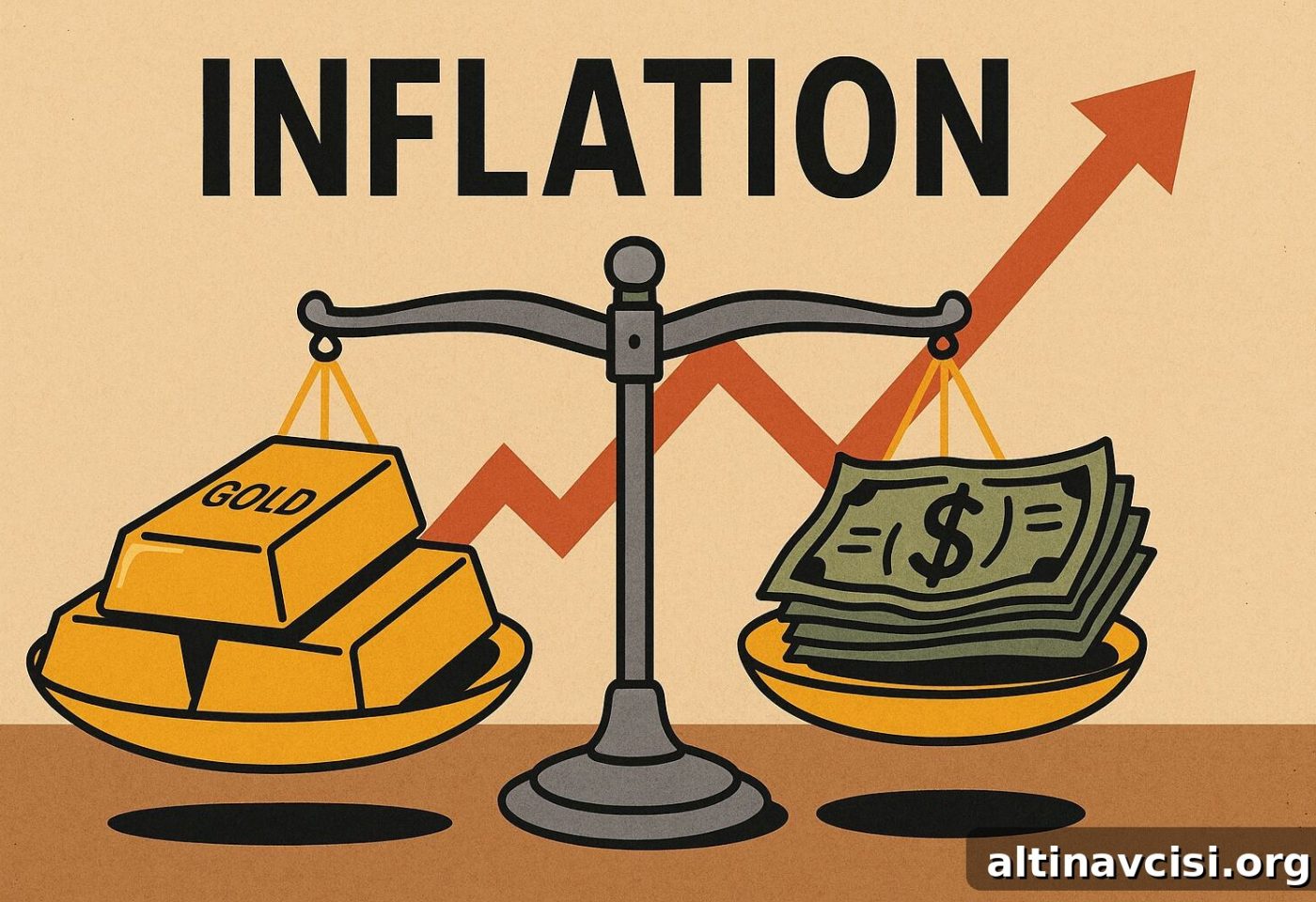
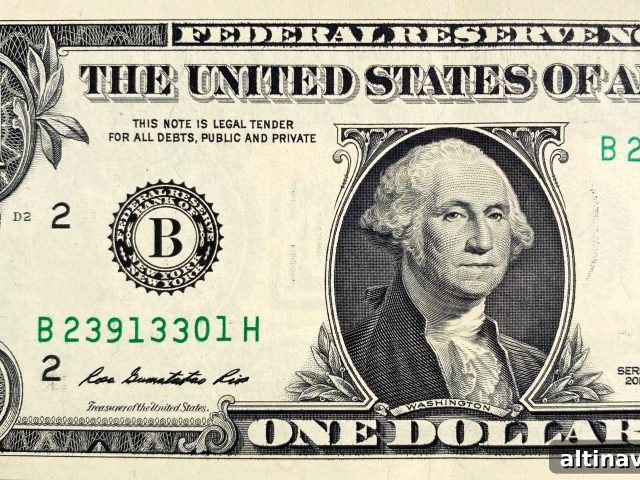
For many investors, the choice between gold vs cash seems straightforward: cash offers familiarity, liquidity, and a sense of safety, while gold feels like an alternative for uncertain times. But in an economy where inflation is present — and in the one we are entering — holding too much cash carries a hidden cost. The balance in your bank account may look stable, yet the real value of that money can quietly erode year after year.
This article explains why cash loses purchasing power, how inflation changes long-term returns, and why gold has historically been one of the most reliable ways to protect real wealth.
The Illusion of Safety: Why Cash Isn’t What It Used to Be
Cash feels safe because the number in your account rarely moves dramatically. What does move is what that money can buy. Inflation can be subtle and gradual, but its cumulative effect is powerful. Even modest inflation reduces purchasing power significantly over time.
A few examples help make the point:
- $100,000 kept entirely in cash can lose roughly $3,000 in purchasing power each year at a 3% inflation rate.
- At a 7% inflation rate—levels we’ve experienced in recent years—purchasing power can be cut in half in about 10 years.
- Retirees or long-term savers who maintain large cash cushions may lose tens of thousands of dollars in real value without ever spending the money.
The dollar doesn’t collapse overnight; it suffers steady erosion. Over decades, that erosion can be dramatic.
By contrast, gold has often moved in the opposite direction to the dollar.
A 50-Year View: Cash Down, Gold Up
If you compare long-term trends for gold vs cash, the pattern is clear: the U.S. dollar has lost a large portion of its purchasing power since the early 1970s, while gold has appreciated substantially over the same multi-decade span.
Historically, the U.S. dollar has lost nearly 90% of its purchasing power since the early 1970s, while gold has risen by thousands of percent over that period.
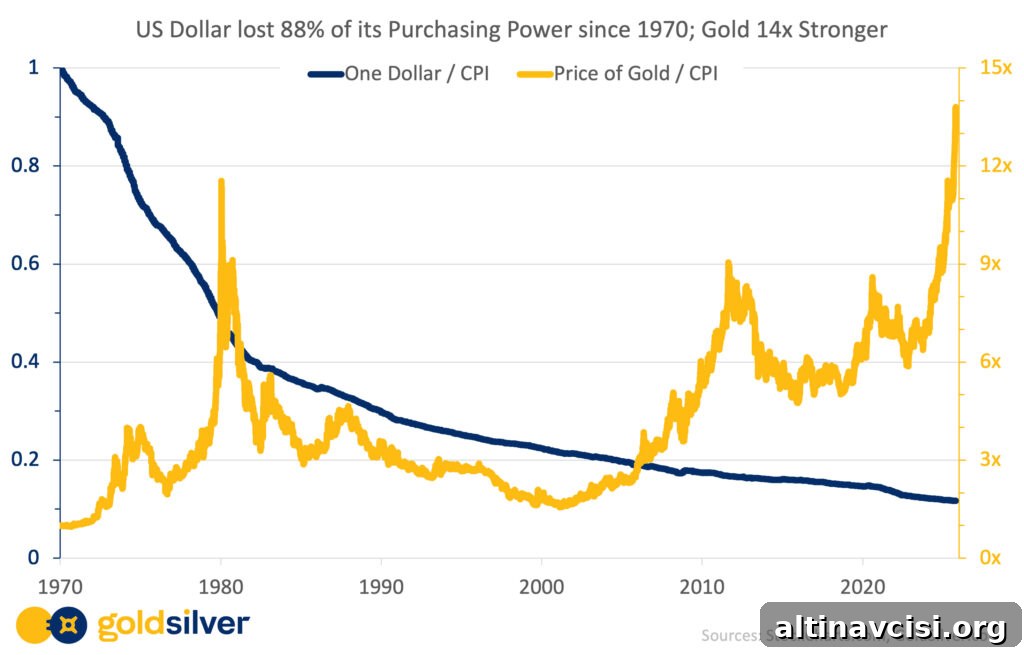
That does not mean gold outperforms cash in every market or that cash should be abandoned. Instead, it highlights a simple reality:
Gold preserves what inflation destroys.
Whenever inflation has risen sharply—from the 1970s era to more recent periods—gold has tended to outperform cash, not because gold magically becomes intrinsically more useful, but because the dollar’s purchasing power declines.
Why Cash Burns Value in an Inflationary Environment
Three main forces work against cash holders over time:
1. Inflation Reduces Real Returns
Even higher-rate savings accounts and money-market funds often fail to keep pace with inflation over the long run. For example, a 5% nominal return in an environment with 6% inflation is still a negative real return.
2. Currency Dilution
When governments borrow heavily and expand the money supply, each unit of currency can lose purchasing power. Greater supply of money typically means each dollar is worth less in real terms.
3. Limited Hedge Against Systemic Risk
Geopolitical shocks, financial crises, and monetary instability do not generally increase the value of cash; in many cases they reduce confidence in currencies and therefore their real value.
Because of these forces, long-term savers—especially retirees and conservative investors—can be among the most exposed to purchasing-power erosion.
Why Gold Holds Its Value
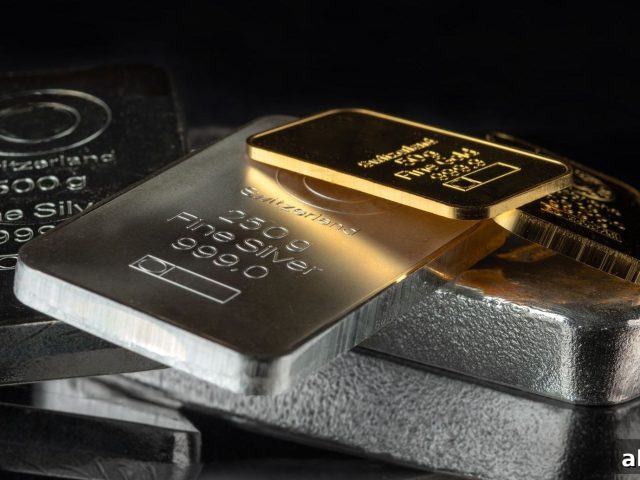
Gold is a physical, tangible asset that does not rely on promises from banks or governments. Its monetary qualities include:
- Scarcity
- Global acceptance
- No counterparty risk
- A long historical record as a store of value
Gold does not depend on corporate earnings, central bank policy, or a government guarantee to maintain its role as a store of value. Historically, it shows several attractive characteristics:
- Low correlation with stocks and bonds
- Strong relative performance during inflationary periods
- Stability when systemic risk rises
- Resilience when real interest rates fall
Put simply, gold tends to perform best when currencies, including the U.S. dollar, lose ground.
Real-World Example: A Cart Full of Groceries
Picture walking into a grocery store with $20 in 1990—you could buy a full basket of essentials. With $20 today, you would likely buy only a couple of items. If you had stored that same value in gold instead of cash, you would have preserved nearly the same purchasing power over thirty years.
That illustrates gold’s core role: it’s not primarily a vehicle for quick gains, but rather a tool for protecting purchasing power over time.
Why More Investors Are Shifting Out of Cash Today
- Persistently high inflation
- Rising government debt levels
- Uncertain monetary policy
- Geopolitical volatility
- Long-term weakening trends for some currencies
These factors have led many investors, particularly those nearing retirement, to reconsider how much cash they hold. Cash remains essential for liquidity, emergencies, and tactical opportunities, but as a long-term store of value it is historically one of the weaker choices.
Gold serves the opposite purpose: insurance for purchasing power, designed to hold value through decades of economic change.
So What’s the Right Balance?
There is no single allocation that fits every investor. Most financial professionals recommend including gold as part of a diversified portfolio—not as a replacement for necessary cash, but as a hedge against inflation and monetary risk.
Few guiding principles are useful:
- Cash is for liquidity and short-term needs.
- Gold is for preserving long-term purchasing power.
If your objective is to keep your money useful 10, 20, or 30 years from now, history suggests relying on dollars alone is risky.
In an Inflationary World, Holding Only Cash Is the Real Risk
Over long periods, inflation penalizes cash savers and rewards holders of assets that cannot be printed or diluted. Gold has proven for centuries to be a reliable option for preserving purchasing power.
This is not speculation or hype; it is based on historical data, monetary mechanics, and simple arithmetic.
If your priority is preserving the purchasing power you’ve worked to build—for yourself, your family, and future generations—gold remains one of the few assets specifically suited for that purpose.
Investing in Physical Metals Made Easy
Learn practical ways to include precious metals in a diversified plan that balances liquidity, security, and long-term preservation of wealth.
People Also Ask
Is gold better than cash during inflation?
Historically, gold has maintained purchasing power better than cash during periods of inflation, which is why many investors consider it a long-term hedge against rising prices.
Does cash lose value over time?
Yes. Even low inflation steadily reduces the real value of cash, meaning the same amount of dollars buys less over time. That slow erosion is why savers often diversify into assets that have preserved value historically.
Why do investors choose gold instead of holding dollars?
Investors choose gold because it is scarce, globally recognized, free of counterparty risk, and tends to perform well when currencies weaken or when inflation rises.
Is it risky to keep too much cash in savings?
Keeping large amounts of cash is low risk in terms of day-to-day volatility, but it carries long-term risk to purchasing power due to inflation.
Should retirees hold gold instead of cash?
Retirees typically keep some cash for liquidity and short-term needs but use gold to protect long-term purchasing power and offset risks faced by fixed-income portfolios.
Get Gold & Silver Insights Direct to Your Inbox
Subscribe for market analysis, timely updates, and curated insights to help preserve purchasing power.
Note: This article is for informational purposes only and should not be considered investment advice. Past performance does not guarantee future results. Always research thoroughly or consult a qualified financial professional before making investment decisions.
Popular Topics
Picked from the archive
-
01
 Topics
Dollar Steadies After Jobs Data Shock Sends 90% Odds of Fed Cut
-
02
Topics
Consumer Confidence Hits 4-Month High as Inflation Eases
-
03
Topics
Gold Price Falls Below $3,340 Ahead of Fed Comments
-
04
Topics
Global Oil Prices Steady as Travel Demand Rises, Sanctions Loom
-
05
Topics
Silver Prices Eye Record Highs as Fed Signals Rate Cuts
-
06
Topics
AI Bubble Fears Surge as Gold Price Falls Below 4,000 USD
-
07
Topics
Tariff-Driven Inflation Clouds Fed’s September Rate Decision
-
08
Topics
10-Year Treasury Yield Rises After Tariff News, Services Data