Market Update: Gold Steady, Shoppers Cautious, Nvidia Scrutinized

Daily News Nuggets | Today’s top stories for gold and silver investors
November 19th, 2025
Gold Treads Water Ahead of Fed Minutes
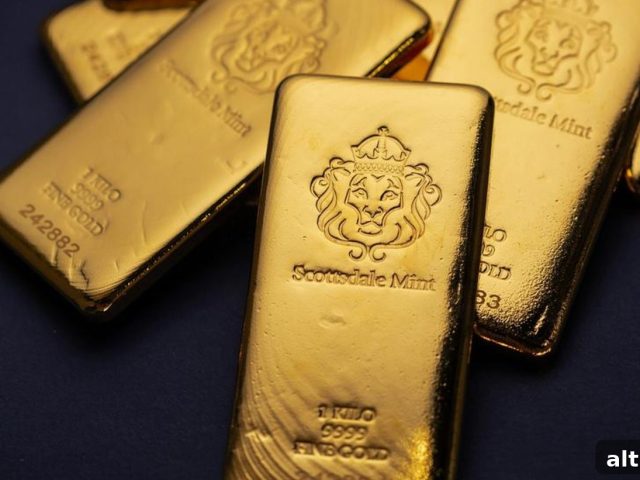
Gold is trading near $4,100 per ounce as investors wait for two key catalysts: the Federal Reserve’s October meeting minutes and a delayed September jobs report. After bouncing off the $4,000 level earlier this week, bullion finds itself balanced between renewed safe-haven demand and a firmer U.S. dollar. Market expectations for a December rate cut have cooled — odds now sit near 46%, down from about 63% last week — and that shift is keeping a lid on upside momentum.
Recent data showed unemployment claims at a two-month high, a sign that the labor market may be softening. That makes the upcoming jobs release and the Fed minutes especially important: any dovish language or softer employment figures could push gold back toward $4,200, while stronger-than-expected labor readings or hawkish Fed commentary would likely weigh on prices. For now, gold appears range-bound — not cheap enough to trigger aggressive buying, nor weak enough to prompt broad liquidation.
China’s Quiet Gold Supremacy Play
China continues to narrow the gap with the United States in accumulated gold holdings as part of a deliberate strategy to diversify away from dollar-denominated assets. Official Chinese reserves are reported at 2,303 tonnes, but some external estimates — including those by major global banks — suggest the nation’s true reserves could be significantly higher, perhaps as much as 5,500 tonnes. Whether official or estimated, the trend is clear: China is strengthening its gold position.
The effort extends beyond buying bars. Beijing has expanded the Shanghai Gold Exchange to emphasize physical delivery, loosened some investment rules, and developed offshore storage capacity in Hong Kong. Analysts argue this infrastructure buildup supports a long-term shift toward hard assets that are less vulnerable to political or financial sanctions. With reported U.S. Treasury holdings by foreign actors having declined from roughly $1.3 trillion to around $759 billion in recent years, China’s pivot toward gold reflects a broader rebalancing of reserve strategies.
Holiday Spending Likely to Take a Hit
Retail forecasts point to a more cautious holiday season for American consumers. The National Retail Federation projects average spending of about $890 per person on gifts, food, and decorations, down from last year’s $902. A combination of tariffs, higher prices, and an ongoing government shutdown is straining household budgets and encouraging shoppers to look for ways to stretch dollars further.
Bank of America describes the consumer picture as a “Tale of Two Wallets”: higher-income households continue to spend relatively freely, while lower- and middle-income consumers are shopping earlier, hunting bargains, and shifting purchases to discount retailers and big-box chains. Pre-Black Friday promotions and aggressive discounts are already shaping behavior, with many shoppers favoring in-store deals, value retailers, and secondhand or discount alternatives.
Trump’s $2,000 “Tariff Dividend” Faces Math Problem
President Trump has proposed sending $2,000 checks to Americans funded by tariff revenue, a proposal that economists and budget experts say does not add up on the numbers presented. Total tariff revenue for the most recent fiscal year was about $195 billion, while independent estimates suggest a single round of $2,000 checks to all Americans would cost roughly $600 billion. That shortfall leaves unanswered questions about how the plan would be financed without adding to the deficit or cutting other spending.
Some administration officials have suggested the benefit could be delivered in the form of tax cuts rather than direct checks, but either approach would still raise questions about sustainability and distribution. Markets recognize the political appeal of such proposals, and even speculative fiscal promises can become a factor investors must price in, adding another layer of uncertainty to the economic outlook.
Nvidia’s $24B AI Investment Spree Raises Eyebrows
Nvidia has deployed roughly $23.7 billion into AI-related companies this year through nearly 60 deals, outpacing last year’s pace in just ten months. The company recently announced a partnership with major cloud and AI players valued at up to $10 billion, further expanding its footprint across the AI ecosystem. While supporters call these investments strategic bets on future demand, some investors and analysts are raising concerns about so-called “circular investments.”
Critics argue that Nvidia is, in effect, financing customers who then purchase Nvidia hardware, blurring the lines between investment and demand creation. Questions center on whether such financings are being used to seed long-term customers or to temporarily boost chip sales. Nvidia’s leadership maintains the investments are distinct from revenue and that supporting the next generation of large-scale AI companies is prudent, but regulators and market participants are watching closely as the company’s AI-related balance sheet activities continue to grow.
Investing in physical metals made easy — learn secure storage and buying options.
Popular Topics
Picked from the archive
-
01
 Topics
Japan Election Promises and Tariff Fears Rattle Bond Market
-
02
Topics
Switzerland Seeks US Pledge to Keep Gold Tariff-Free
-
03
Topics
Trump’s Global Trade Timeline: From July to Labor Day
-
04
Topics
Gold Price Falls Below 50-Day Moving Average
-
05
Topics
Will U.S. Sanctions on India’s Russian Oil Backfire?
-
06
Topics
US-China Trade Talks in London Aim to Ease Export Controls
-
07
Topics
Why Gold Moves Differently from Stocks and What It Means
-
08
Topics
Gold, Silver Prices Hold Steady Ahead of Jackson Hole Summit