American Gold Buffalo Coin: Guide to the U.S. Mint’s Pure Gold
Key Takeaways
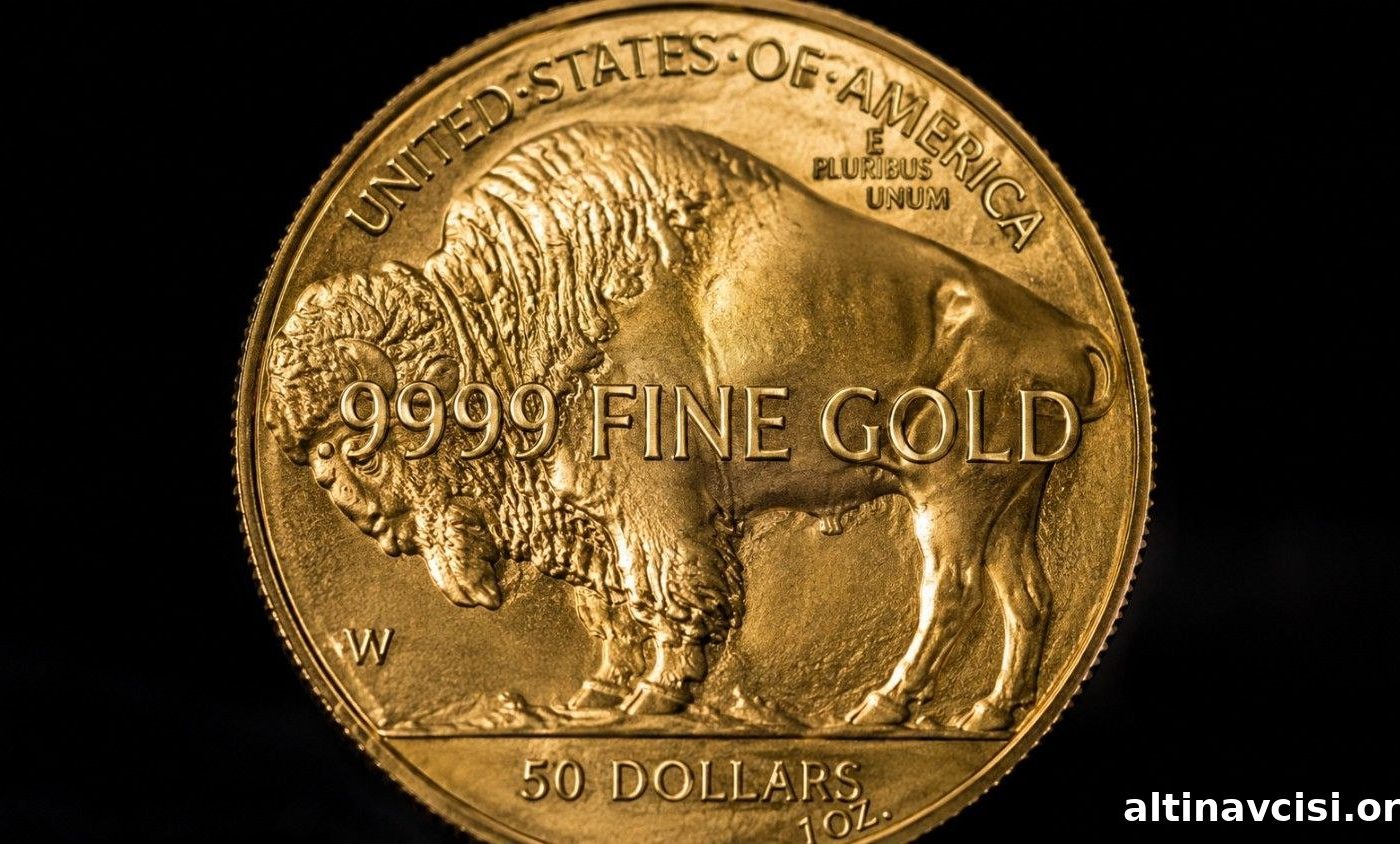
- The American Gold Buffalo is the U.S. Mint’s first and only .9999 fine (24-karat) gold bullion coin, introduced in 2006 under the Presidential $1 Coin Act of 2005.
- It is assigned a $50 face value as legal tender and is backed by the U.S. government for its weight and purity.
- The Buffalo meets the IRS fineness requirement for gold IRAs on its own merits under IRS Section 408(m)(3).
- Bullion strikes of the Buffalo are produced only in the 1 oz denomination; other U.S. Mint bullion coins, such as the American Gold Eagle, are also available in fractional sizes.
- With .9999 purity, the Buffalo contains a higher proportion of pure gold per coin than the 22-karat Gold Eagle, a key consideration for investors focused on maximum intrinsic metal content.
In 2006 the U.S. Mint released the American Gold Buffalo, its first 24-karat gold bullion coin. Unlike the American Gold Eagle, which is struck in 22-karat gold, the Buffalo is produced at .9999 fineness—matching the purity standards long used by other major sovereign mints. The Buffalo remains the only U.S. Mint coin marketed as .9999 fine gold in standard bullion form, and it was developed to respond to investor demand for pure gold coins from a domestic issuer.
To understand the Buffalo’s role in the market, it helps to consider the problem the Mint sought to address. International buyers and investors who preferred coins at the highest possible purity were choosing foreign issues such as the Canadian Gold Maple Leaf and the Austrian Philharmonic over the domestically produced Eagle. Those coins were widely accepted at .9999 fineness; the Buffalo was the U.S. Mint’s answer—a fully American bullion coin that met the international purity standard.
Why Did the U.S. Mint Create the American Gold Buffalo?
Congress authorized the American Gold Buffalo through the Presidential $1 Coin Act of 2005. The Mint created the coin to retain investors who were purchasing foreign pure-gold coins instead of the domestic Gold Eagle. At the time, pure 24-karat gold coins represented a large share of global demand, and the Buffalo aimed to provide an American option that matched that preference.
The first Buffalo coins were struck at the West Point Mint on June 20, 2006, with public sales beginning shortly after. Demand was strong from the start, reflecting market interest in a U.S.-produced coin with .9999 fine gold content.
The Knowledge That Changes Everything

Two concise guides to help you understand why gold matters and how fiat systems behave under stress. Download them to learn core principles and practical considerations for buying and holding precious metals.
To request these guides, contact the publisher or visit the resources section on this site.
What Are the American Gold Buffalo’s Specifications?
Key specifications:
- Purity: .9999 fine gold (24-karat)
- Weight: 1 troy ounce (31.1 grams)
- Diameter: 32.7 mm
- Thickness: 2.95 mm
- Face value: $50 (U.S. legal tender)
- Mint: West Point Mint for bullion strikes; proof versions may bear the “W” mintmark
- Design: James Earle Fraser’s Buffalo Nickel motifs — a Native American profile on the obverse and an American bison on the reverse
Fraser’s Native American portrait was composed from multiple models, including well-known chiefs such as Iron Tail and Two Moons. The bison motif is often associated with Black Diamond, a bison once housed at the Central Park Zoo; the image has appeared on U.S. coinage prior to the Buffalo’s introduction.
How Does the American Gold Buffalo Differ From the American Gold Eagle?
Both coins are produced by the U.S. Mint and each contains one troy ounce of gold. The crucial distinction is metal composition. The American Gold Eagle is a 22-karat coin (91.67% gold) alloyed with silver and copper to increase durability. The American Gold Buffalo is .9999 fine gold with no intentional alloys, so its entire weight represents pure gold.
This difference matters in three practical ways:
- International and institutional acceptance: Some buyers and institutions prefer or require coins at .9999 fineness; the Buffalo meets that expectation directly.
- IRA eligibility: The IRS requires a minimum fineness (typically .995) for gold held in certain IRAs; the Buffalo meets this standard without exception.
- Denominations and flexibility: The Buffalo is offered only as a 1 oz bullion coin, while the Eagle is available in fractional sizes (1/2 oz, 1/4 oz, 1/10 oz) for investors who want to buy in smaller increments.
Is the American Gold Buffalo IRA-Eligible?
Yes. The American Gold Buffalo’s .9999 fineness exceeds the IRS minimum for precious metals in self-directed IRAs under IRS Section 408(m)(3). Most custodians accept bullion-strike Buffalo coins for IRAs; proof editions are frequently excluded. Remember that IRA-held coins must be stored in an approved depository rather than at home, to remain compliant with IRS rules.
What Premium Does the American Gold Buffalo Carry Over Spot?
Dealer premiums for the Gold Buffalo vary with market conditions, production volumes, and the coin’s year of issue. Contemporary market ranges often put bullion Buffalos in a similar premium band to current-year Eagles, though the Buffalo commonly carries a modestly higher premium due to its higher purity and relatively lower annual mintage. Premiums can widen sharply during periods of elevated demand or constrained supply.
Who Is the American Gold Buffalo Best Suited For?
The Buffalo is well suited for investors who prioritize maximum pure gold content per coin and prefer a domestic sovereign coin that meets international purity standards. It is a good choice for gold IRAs where fineness clarity matters and for long-term holders who anticipate selling through institutional or international channels.
By contrast, investors who want flexibility to accumulate in smaller increments, or who prioritize the widest retail liquidity at the lowest possible premium, may prefer the American Gold Eagle because of its fractional sizes and broader retail recognition.
Both coins are government-backed and free of counterparty risk; choosing between them depends on whether an investor values purity and parity with global bullion standards or prefers fractional denominations and domestic liquidity.
Stay On Top of Gold & Silver Prices
Get important market alerts sent to your inbox.
Sign up for email alerts and market commentary via the subscription form on this site.
People Also Ask
What is the American Gold Buffalo coin?
The American Gold Buffalo is a one-troy-ounce .9999 fine (24-karat) gold bullion coin produced by the U.S. Mint since 2006. It carries a $50 face value and is struck at the West Point Mint for bullion releases.
How does the American Gold Buffalo differ from the American Gold Eagle?
The Buffalo is .9999 fine gold with no alloy additions. The American Gold Eagle is 22-karat (91.67% gold) and includes copper and silver to increase durability. Both coins contain one troy ounce of gold, but the Eagle is offered in multiple fractional sizes whereas the Buffalo bullion is available only as a 1 oz coin.
Is the American Gold Buffalo eligible for a gold IRA?
Yes. The Buffalo’s .9999 fineness exceeds the IRS minimum requirement for precious metals IRAs under IRS Section 408(m)(3). Investors should confirm custodian acceptance of specific coin types and remember that IRA-held coins must be stored in an approved depository.
When did the U.S. Mint first produce the American Gold Buffalo?
The first Gold Buffalo coins were struck at the West Point Mint on June 20, 2006, and became available to the public shortly thereafter.
What is the face value of the American Gold Buffalo coin?
The coin carries a $50 face value as U.S. legal tender, though its market value is determined by the spot price of one troy ounce of .9999 fine gold plus any dealer premium.
SOURCES
1. United States Mint — American Buffalo coin program and specifications.
2. IRS Section 408(m)(3) — rules and fineness requirements for precious metals in IRAs.
3. Industry reporting and numismatic references covering the 2006 introduction and minting history.
4. Market pricing and premium data from bullion dealers and industry price aggregators.
Disclaimer: This article is for informational purposes only and does not constitute investment advice. Past performance is not indicative of future results. Consult a qualified financial advisor before making investment decisions.
You May Also Like:
- The Fed Printed $7 Trillion. Velocity Kept It Quiet. That’s Changing.
- Most 401(k)-to-Gold-IRA Rollovers Lose 20% Immediately. Here Is Why — and How to Avoid It.
- Gold Just Climbed to a 7-Week High. One Number Changed Everything.
- The Jobs Report Did What Iran Couldn’t: Move Gold and the Fed in the Same Direction.
- China Has Been Buying Gold for 20 Straight Months. Now It’s Moving It.
- Trump’s Polysilicon Tariff Just Hit Silver’s Biggest Industrial Customer.
- Gold Rallied 6% This Week. Tomorrow One Number Decides Whether It Holds.
Popular Topics
Picked from the archive
-
01
 Topics
Central Banks Favor Gold Over the Dollar: Impact on Your Savings
-
02
Topics
Record Gold ETF Outflow Sparks Debate as China Disagrees
-
03
Topics
Is Gold Still a Safe Haven in War? Investor Insights
-
04
Topics
Gold Near $4,330 as 70% Rate-Hike Odds Rise, China Intervenes
-
05
Topics
Jobs Beat, Ceasefire, Deficit: Impact on Gold Prices
-
06
Topics
Silver Price Spikes to $69.85, FOMC Erases Gains
-
07
Topics
Banks Forecast Gold Over $5,400 After Greenland News
-
08
Topics
Why Gold Climbed After an 8% Oil Spike — What’s Different