Why Gold Prices Rose While the World’s Top Gold Miner Slumped
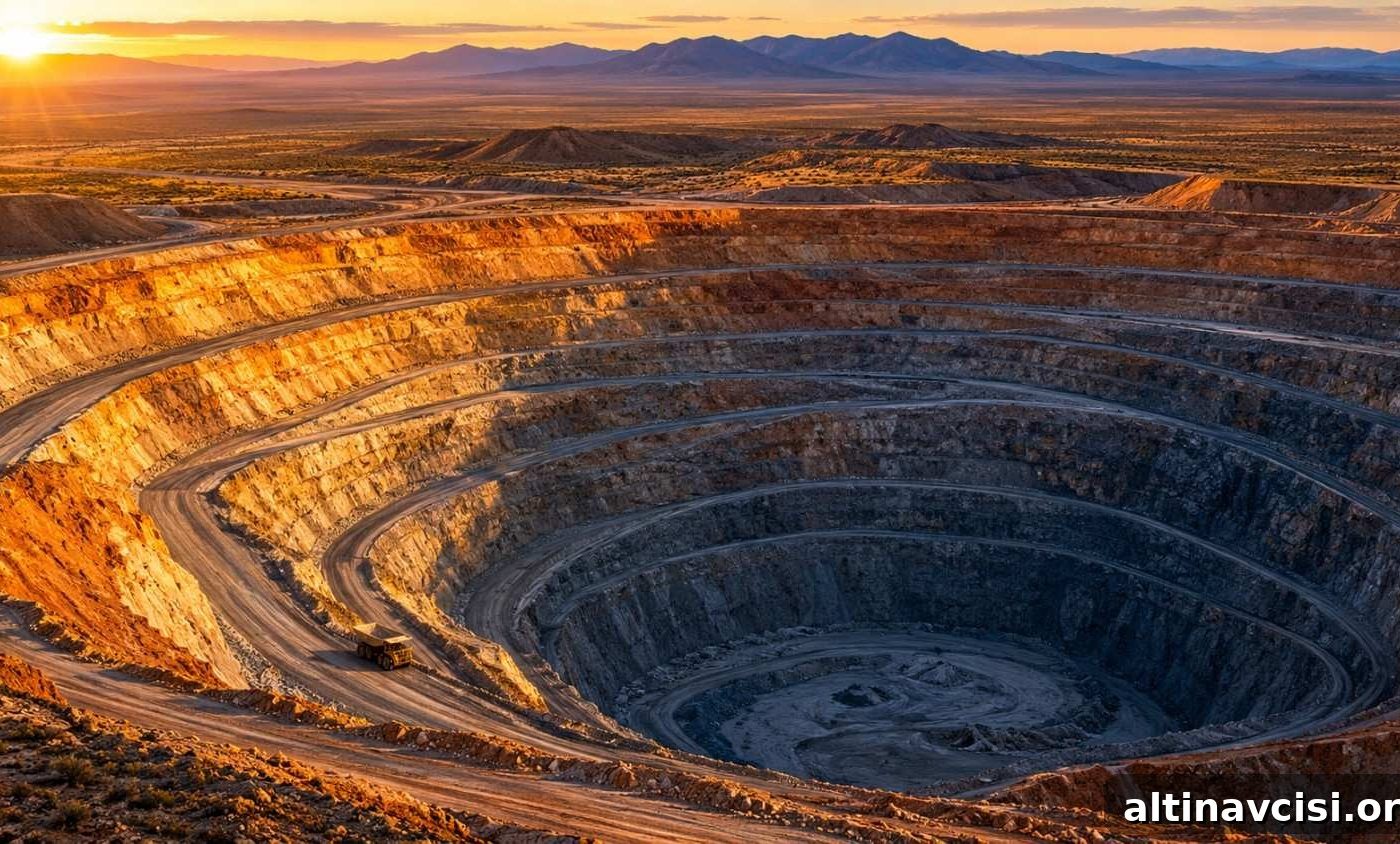
Tuesday’s trading illustrated an essential lesson for precious-metals investors: the market price of physical gold and the stock price of a gold producer are different animals. On August 11, spot gold climbed to $4,363 per ounce after an intraday high near $4,435 — its strongest level since early June. Yet Barrick Mining, operator of the world’s largest gold complex, fell about 6–7% the day before after reporting second-quarter results. The same underlying metal moved higher while a major gold-stock declined.
That divergence traces directly to the Barrick–Newmont deal announced on August 10. The transaction restructured ownership of the Nevada Gold Mines joint venture and added previously excluded assets to the partnership. How the market interpreted the deal — and what it didn’t disclose — helps explain why owning a bullion ounce is not the same as owning an equity claim on future ounces.
Gold Spot Price vs. Barrick Mining Stock — July–August 2026
Barrick indexed to 100 at July 13 open | Gold in USD per troy ounce
Gold spot (USD/oz) — left axis
Barrick (NYSE: B) — indexed, right axis
Barrick index = closing price relative to July 13, 2026 (100 = $38.20). Illustrative data based on reported market prices.
goldsilver.com/price-charts/gold/
What Is the Barrick–Newmont Nevada Gold Mines Deal?
On August 10, Barrick Mining and Newmont announced a roughly $1.95 billion agreement that changes the ownership of Nevada Gold Mines, the largest gold-mining complex by annual production. As part of the arrangement, Newmont will pay Barrick cash, contribute previously excluded projects to the joint venture, and resolve outstanding disputes between the two companies. The deal brings Barrick’s Fourmile project and Newmont’s Mike and Fiberline projects into the joint venture, increasing the combined resource base to nearly 100 million ounces of gold. Newmont also agreed to support Barrick’s planned North American assets IPO, which Barrick’s CEO indicated the company aims to complete by year-end.
The Edge Every Investor Needs
Smarter precious metals investing starts here. The Nuggets Newsletter delivers market insight, Fed updates, global trends, and educational resources tailored to active metal investors.
Why Did Barrick Stock Fall If the Deal Was Announced as a Win?
The biggest investor concern centered on Fourmile, Barrick’s high-grade development project in Nevada that analysts have historically valued separately from the rest of the asset base. Barrick management described the deal package as being worth roughly $4 billion when considering the cash payment, contributed properties, dispute resolution, and reduced IPO friction costs. During the company’s earnings call, analysts pressed for a detailed, itemized explanation of that figure; management declined to provide a line-by-line disclosure.
Analysts noted that without clear disclosure of Fourmile’s specific value, it becomes difficult to model the combined assets and to judge whether Barrick received fair compensation. In the absence of transparent numbers, investors often fear the seller may have conceded value. That uncertainty, when combined with other pressures — including higher operating costs from fuel and royalty charges that compressed margins — drove Barrick’s shares sharply lower, even though the underlying operating results were strong: Q2 production near 796,000 ounces, revenue up 44% year-over-year to $5.29 billion, and $1.5 billion returned to shareholders in the quarter.
What Is Nevada Gold Mines, and Why Does It Matter?
Nevada Gold Mines is the world’s largest gold-mining operation by annual production, delivering roughly 2.6 million ounces in 2025 from a mix of underground and open-pit mines across major districts such as Carlin and Cortez. The joint venture’s combined resource base — now approaching 100 million ounces — represents decades of possible production. That long-term potential is why asset-level valuations like Fourmile carry such weight: a small shift in resource assumptions or expected costs can materially affect investor expectations about future cash flow and returns.
What Does the Barrick North American IPO Mean for Gold Investors?
Barrick’s planned North American IPO would list a minority stake in a newly formed company holding Barrick’s North American assets, including Nevada Gold Mines, Pueblo Viejo, Fourmile, and nearby exploration acreage. Buying shares in that public company would give investors equity exposure to the business that owns mining rights and operations — not direct ownership of the metal itself. Equity ownership exposes investors to royalties, taxes, operating costs, capital allocation choices, and management execution. Those variables help explain how the same macro forces that push bullion up can coincide with poor sentiment for a miner’s shares when deal structure or disclosures raise questions.
What Does This Mean for the Physical Gold Thesis?
Central banks are buying physical gold at elevated rates, a trend that supports the argument for holding bullion as a store of value. Physical gold’s price responds primarily to real yields, currency moves, and geopolitical risk. Mining stocks respond to those same macro drivers plus company-specific elements such as operating costs, project valuations, and corporate decisions. For example, when a producer’s all-in sustaining cost is around $1,866 per ounce while gold trades above $4,300, that implies strong operating leverage for the miner. But leverage cuts both ways: a multi-billion-dollar deal with opaque inputs can introduce enough uncertainty to outweigh favorable metal prices in the short term.
What Should Gold Investors Watch This Week?
A key near-term catalyst is the U.S. consumer price index report due Wednesday at 8:30 a.m. ET. Consensus forecasts expected headline inflation to cool and core inflation to moderate, which would lower the odds of a Fed rate increase at the September meeting and likely support higher gold prices. Conversely, a hotter-than-expected print would push implied rate-hike odds up and could create headwinds for bullion. Energy prices, with oil trading near $88 per barrel amid regional tensions, add another variable that can influence inflation readings and market sentiment. For holders of physical metal, the recent events are a reminder of why many prefer the direct, simpler exposure of bullion versus the layered risks embedded in mining equities.
SOURCES
1. Barrick Mining — Q2 2026 results press release (barrick.com)
2. Barrick Mining — Agreement regarding Nevada Gold Mines joint venture (barrick.com)
3. Newmont Corporation — Announcement on the joint venture agreement (newmont.com)
4. Reuters — Coverage of Barrick and Newmont deal and IPO implications
5. Bloomberg — Reporting on Barrick’s share reaction after the deal
6. TradingView — Coverage of Barrick’s Q2 earnings call and the Newmont deal
7. Mining.com — List of the world’s largest gold mines (2026)
8. GoldSilver — Live gold price charts and market data
9. Reuters/Kitco — Market reaction and context around the CPI release
10. Yahoo Finance — Coverage of gold prices ahead of CPI
Disclaimer: This article is informational only and does not constitute investment advice. Past performance is not indicative of future results. Consult a qualified financial advisor before making investment decisions.
You May Also Like:
- Gold Is Flat. Silver Is Down 2.3%. The Ratio Just Told You What to Watch Tomorrow.
- Gold Slipped at the Open. China Bought the Dip. Again.
- Why Is Silver Outperforming Gold Today? The Dual-Engine Mechanism Explained.
- Trump Just Said the US Is Only ‘Semi-Negotiating’ With Iran. That One Word Changes Everything for Gold.
- Gold Opened at Its Highest Level Since June. Five Things Are Keeping It From Going Higher.
- Gold Had Its Best Week Since January. Wednesday’s CPI Could Take It Back.
Popular Topics
Picked from the archive
-
01
 Topics
Gold Remonetization: 6 Forces Reviving Gold as Money
-
02
Topics
CPI 3.3% and GDP Stalling: Is 2026 Stagflation Coming?
-
03
Topics
Why Is Gold Falling While War Rages?
-
04
Topics
Can Silver Outpace Gold in a Bull Market?
-
05
Topics
Gold Radar: 5 Hidden Signals Your Price Chart Misses
-
06
Topics
Gold Pullback Driven by Treasury Buyback, Not ETFs
-
07
Topics
Hong Kong Completes First Gold Settlement; Banks Also Run London
-
08
Topics
How a Falling Gold/Silver Ratio Impacts Investor Portfolios