Gold Near $4,330 as 70% Rate-Hike Odds Rise, China Intervenes
Key Takeaways
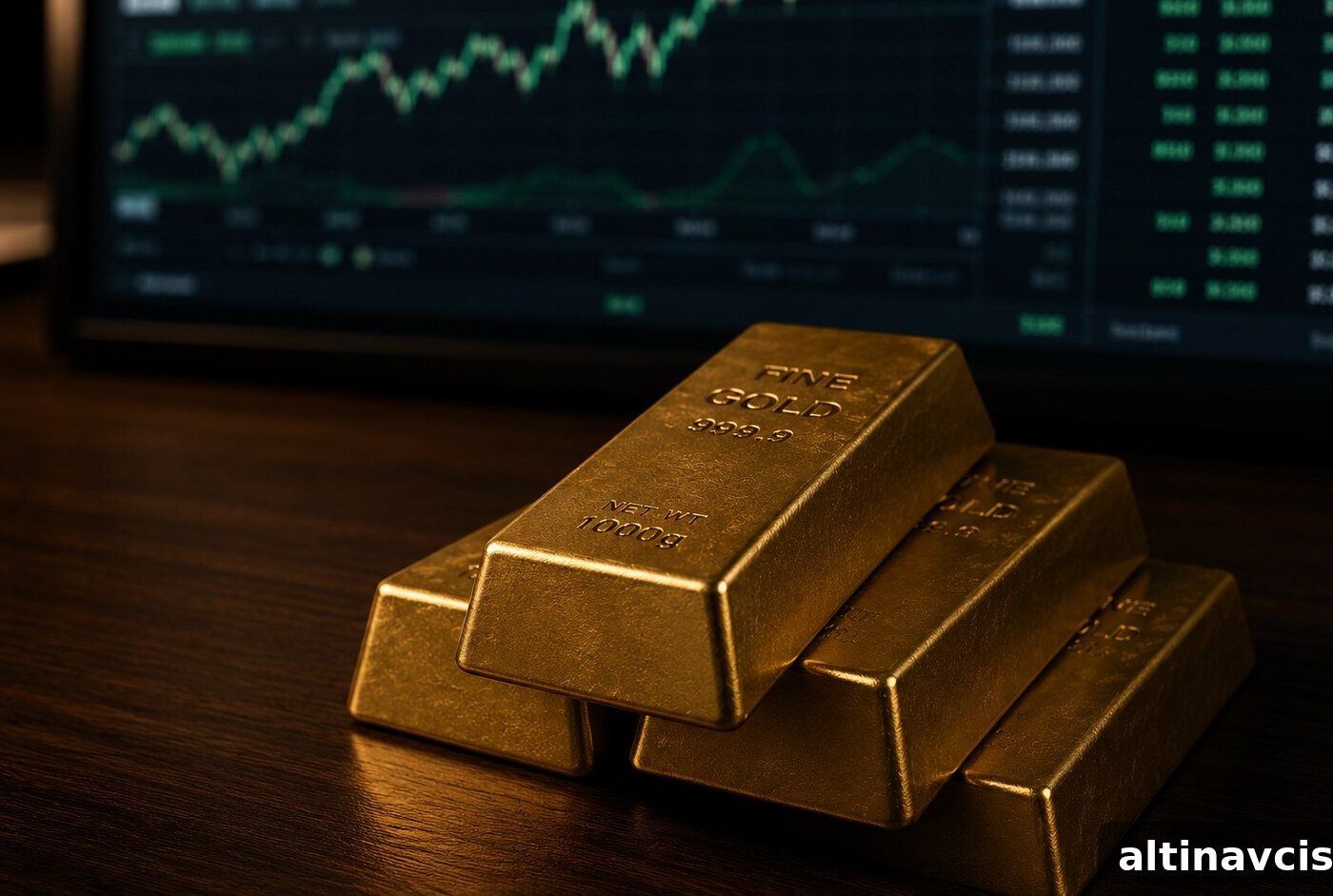
- Gold price: trading near $4,330/oz in Monday’s session (session range: $4,269–$4,353), according to GoldSilver live price data
- Silver price: trading near $68/oz (session range: $66.18–$68.94), per GoldSilver live price data
- Rate-hike driver: U.S. May nonfarm payrolls (+172,000) pushed markets to price in better than a 70% chance of a Fed rate hike in December, per CME FedWatch
- China banks: ICBC, Agricultural Bank of China, China Construction Bank, and Bank of Communications raised margins on retail gold and silver deferred contracts to 120%, reducing leverage on those products
- PBoC streak: China’s central bank added roughly 320,000 troy ounces of gold in May — its 19th straight month of net purchases — bringing official holdings to 74.96 million troy ounces, per SAFE
- Geopolitics: Iran’s central military command reported a halt to its operations against Israel on Monday, according to semi-official sources; markets stabilized after last week’s roughly 5% pullback in gold
- Oil: Brent around $95.42 and WTI near $92.64 after renewed Israeli strikes in Lebanon
Five major forces are shaping gold and silver markets in Monday’s trading session, and they point in different directions. A stronger-than-expected U.S. jobs report has pushed rate-hike expectations back into focus. Several top Chinese banks tightened margin rules for retail access to paper gold contracts. China’s central bank continued steady monthly purchases of physical gold. A partial easing of Middle East tensions helped prices stabilize after last week’s drop. Meanwhile, elevated oil supports inflation expectations. Below we examine each of these drivers and what they mean for long-term precious metals investors.
Why Are China’s Biggest Banks Raising Gold Margin Requirements to 120%?
In early June four of China’s largest state-owned banks — Industrial and Commercial Bank of China (ICBC), Agricultural Bank of China, China Construction Bank, and Bank of Communications — increased margin requirements for personal deferred gold and silver contracts to 120%. Practically, this means a contract with a face value of 1 million yuan now requires 1.2 million yuan in collateral, cutting available trading leverage below 1x.
This move is a deliberate risk-management decision that contrasts with the Shanghai Gold Exchange’s recent step to lower its contract margins. The exchange’s priority has been liquidity; the commercial banks are prioritizing counterparty and retail risk. Banks are responding to the recent volatility in precious metals — particularly silver’s sharp drop from March highs and gold’s pullback from 2026 peaks — by increasing upfront capital requirements rather than imposing outright trading bans.
For retail holders this is meaningful: higher margin rules reduce the risk of sudden forced liquidations during volatile swings. ICBC explicitly told some clients to top up margin accounts or reduce positions to avoid automatic sell-offs. While many new account openings were already suspended over the past year, this change mostly affects existing leveraged positions and signals a broader effort to channel retail exposure into lower-risk profiles. For physical gold owners, such measures are constructive because they curb speculative leverage in paper markets without reducing actual demand for the metal.
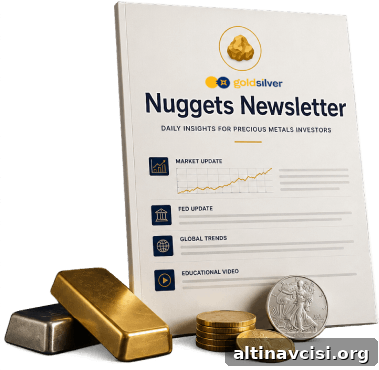
The Edge Every Investor Needs
Smarter precious metals investing starts here. The Nuggets Newsletter delivers concise market insights, Fed updates, global trends, and educational content.
What Does the U.S. Jobs Report Mean for Gold Prices in 2026?
The May nonfarm payrolls report showed an addition of 172,000 jobs, beating consensus estimates, and April’s figure was revised up to 179,000. A robust labor market changes the Federal Reserve’s outlook: market pricing shifted sharply, sending the probability of a December rate hike above 70% from about 45% a week earlier. That repricing contributed to gold’s decline of more than 3% on Friday.
The connection is straightforward. Higher interest rates increase the opportunity cost of holding non-yielding assets like gold. Rising 10-year Treasury yields often accompany stronger rate expectations, creating additional pressure on gold. After the jobs report yields moved higher, and gold subsequently stabilized near $4,310–$4,330.
This week’s key data are Wednesday’s Consumer Price Index (CPI) and Thursday’s Producer Price Index (PPI). A hotter-than-expected CPI could push gold toward the $4,000 level, according to market commentary; a softer print would likely moderate rate-hike bets and provide relief for metals. For now, CPI is the primary market-moving release to watch.
Viewed through a purchasing-power lens, a strong labor market with eroding real wages resembles past periods where inflation outpaced wage gains. Gold’s function as a hedge against the loss of purchasing power remains relevant even when nominal rates rise. The critical question for investors is whether rising nominal rates actually exceed real inflation or remain behind it.
How Long Has China Been Buying Gold — and Does the Streak Still Matter?
China’s central bank added roughly 320,000 troy ounces of gold in May, raising official reserves to about 74.96 million troy ounces — the 19th consecutive month of net purchases, according to the State Administration of Foreign Exchange (SAFE). May’s addition, near 10 tonnes, was the largest monthly increase since 2024.
These regular purchases appear to be part of a strategic, longer-term policy rather than a reaction to single-month events. SAFE noted that reserve growth stems from currency effects and rising global asset prices, but the consistent accumulation signals a deliberate diversification away from dollar-denominated assets. Gold’s appeal for central banks is operational: it cannot be frozen, sanctioned, or altered by another government’s policy, giving it unique utility within foreign-exchange reserves.
For markets, 19 months of steady central-bank buying is an institutional endorsement of gold as a reserve asset. That pattern favors a multi-year perspective on prices and demand, beyond short-term volatility driven by macro releases or geopolitical headlines.
How Are Middle East Tensions Affecting Gold and Silver Prices?
Reports on Monday indicated Iran’s central military command had paused its operation against Israel. The announcement helped gold stabilize after a near 5% decline last week; gold traded around $4,320 following the update. Silver also recovered modestly after a steep weekly drop.
However, the overall regional situation remains fragile. Iran cautioned that additional Israeli strikes — including operations in southern Lebanon — could prompt renewed retaliation. Separately, Yemen’s Houthi movement announced a blockade of Israeli shipping in the Red Sea, and disruptions around the Strait of Hormuz continue to affect energy flows.
Higher oil and shipping disruptions transmit to broader inflation by raising production and transport costs. That inflationary impulse can keep central banks on a more hawkish path, which is a headwind for gold in the short run. In practice, geopolitical risk and inflationary pressure are currently offsetting forces: geopolitical risk tends to lift gold, while the inflation it causes can encourage higher rates, which weigh on the metal. The People’s Bank of China’s steady accumulation of gold, however, signals a long-term buyer that is largely indifferent to weekly price swings.
What Is Happening With Oil, Silver, and the Dollar Right Now?
Oil prices rose more than $2 a barrel on Monday after strikes resumed in Lebanon despite the truce. Brent traded near $95.42 and U.S. crude near $92.64. Elevated energy prices support inflation expectations, which in turn keep rate-hike odds higher and weigh on gold.
Silver has shown a modest rebound after a near 10% weekly drop and was trading around $68. The gold-to-silver ratio widened during the pullback, reflecting gold’s relative resilience. Silver’s larger swings reflect its closer ties to industrial demand and growth expectations; a strong jobs report reduces safe-haven flows while mildly supporting industrial outlook — creating opposing pressures on silver.
The U.S. dollar remains firm, near a two-month high. The euro and pound weakened against the dollar, increasing the effective cost of gold for international buyers. Dollar strength often accompanies a shift toward higher U.S. rates and attracts capital into dollar assets, adding another constraint for metals priced in dollars.
When gold and silver diverge significantly, that gap often narrows within weeks. The coming CPI release will be decisive: a hotter-than-expected print would sustain rate-hike pressure and likely keep metals under stress, while a cooler reading could ease dollar strength and allow recovery.
What to Watch This Week
Two data releases dominate the calendar: Wednesday’s Consumer Price Index and Thursday’s Producer Price Index. These reports will heavily influence whether markets maintain a greater-than-70% probability of a December Fed hike or dial that back. A combination of persistent inflation and a strong labor market would create a stagflation-like scenario where rate hikes slow growth without immediately restoring purchasing power — an environment that can favor physical gold as a hedge even while pressuring paper gold instruments.
The structural backdrop remains intact: the People’s Bank of China continues to purchase physical gold month after month, and China’s largest commercial banks are reducing retail leverage in paper contracts to manage risk. Institutional accumulation at scale suggests a longer-term view on gold’s role in reserve management and portfolio diversification. Investors should consider whether their allocations reflect these structural trends alongside short-term macro drivers.
SOURCES
1. U.S. Bureau of Labor Statistics — The Employment Situation — May 2026
2. CME Group — FedWatch — 30-Day Federal Fund Futures
3. Bloomberg — US Adds 172,000 Jobs in May, Beating All Economists’ Estimates
4. Xinhua / Bastille Post — China’s Foreign Exchange Reserves Maintain Stable Growth in May
5. FX.co — China Forex Reserves Highest Since 2015 — PBoC Gold at 74.96M oz, 19th Month
6. France 24 — Middle East War Live: Iran’s Military Announces Cessation of Attacks on Israel
7. Gulf News — Iran Halts Strikes on Israel, Warns of Forceful Response if Lebanon Is Hit
Disclaimer: This article is for informational purposes only and does not constitute financial or investment advice. Consult a qualified financial adviser before making investment decisions.
You May Also Like:
- Gold Is Down 22% — The Same Drop as 2022. The Floor Is Not the Same.
- Silver Falls 6% on Jobs Beat. The Six-Year Deficit Didn’t.
- Gold Rate Hike Fears Are Weighing on Prices. Here’s the Full Picture.
- Gold at $4,480: Physical Demand Hits a 50-Year Milestone
- Gold Holds $4,481 With Rate Hike Risk Rising. Here’s the NFP Decision Map.
- Gold Surges 1.5%: ADP, ISM, and Beige Book Trap the Fed
- Gold at $4,454 Says the Fed Is Trapped. Here’s Why.
- Central Banks Picked Gold Over Treasuries. Should You?
- Central Banks Just Crossed a Line Not Seen Since 1996
- Factory Costs Hit 82.1. That Number Is Now Working for Your Gold.
- Gold at $4,500: What Fort Knox, China, and Silver Are Telling You
Popular Topics
Picked from the archive
-
01
 Topics
Gold Price Drops From Peak as Central Banks Continue Buying
-
02
Topics
Gold’s Bull Run: Fed Rate Cuts and China Buying Drive $5K Target
-
03
Topics
Why China’s Silver Imports Soared to a Record in 2026
-
04
Topics
Silver Eagle vs Maple Leaf vs Britannia: Which Has More Silver?
-
05
Topics
Gold Drops 19%: $3.8B Investor Bet Says It Won’t Matter
-
06
Topics
Trump Putin Summit and Jackson Hole Threaten Stock Bull Run
-
07
Topics
Optimize Portfolio with the 80/60 Gold-Silver Rule
-
08
Topics
Why Investors Are Buying Gold After Today’s Price Drop