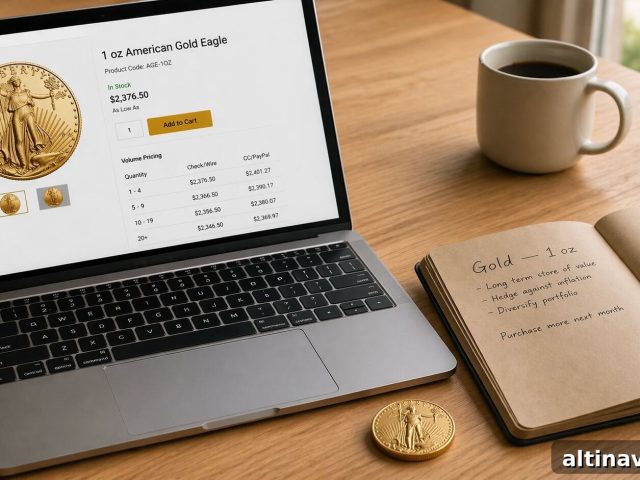
Does Owning Physical Gold Have Counterparty Risk?

Key Takeaways
- Bank deposits are unsecured loans to a bank; allocated physical gold is owned outright. Each carries a fundamentally different risk profile.
- In February 2022, Western authorities froze roughly $300 billion of a central bank’s foreign reserves, highlighting that reserve currencies can carry political risk in addition to inflation risk.
- World Gold Council data show central bank gold purchases reached multi‑decade highs in 2022–2024, driven largely by non‑Western buyers reducing exposure to dollar‑denominated reserves.
- Gold rose sharply from early 2024 lows, and silver outperformed on a percentage basis over the same period. Live price charts are available on reputable market sites.
- GoldSilver’s InstaVault provides a single account that can hold both allocated institutional vault storage and home‑held physical metal with full delivery options and no minimums.
Does Physical Gold Have Counterparty Risk?
Most investors understand diversification across asset classes — spreading capital so one loss doesn’t wipe you out. But an equally important, often overlooked form of diversification is counterparty diversification: where assets are held and who is legally responsible for them.
When it comes to gold and silver, the distinction is clear. Does physical gold have counterparty risk? No—allocated physical metal is direct property you own rather than a promise from another party. Understanding that difference can change how you approach protecting wealth.
What Is Counterparty Risk? Here’s a Story
Imagine lending $10,000 to a neighbor who gives you a handwritten IOU. If that neighbor later cannot repay, the IOU has no value even though you expected to recover your money. That is counterparty risk: the other party fails to meet their obligation.
That scenario mirrors how bank deposits work. When you deposit cash at a bank, you are lending the bank money. The bank owes that amount to you; the deposit appears on the bank’s balance sheet as a liability. If the bank or the system faces stress, access to your funds can be restricted and deposit insurance is limited by coverage caps and by the scope of systemic events.
Allocated physical gold is different: it is not a promise or an IOU. It is tangible property assigned to you, not recorded as a bank liability, and not subject to the same counterparty mechanisms that govern deposits.
The Knowledge That Changes Everything

Two essential guides—free. Learn why gold matters and the risks that typically accompany fiat currency systems.
Does Physical Gold Have Counterparty Risk? The Definitive Answer
The Bank for International Settlements defines counterparty risk as one party failing to deliver on a contractual obligation. Physical gold is not a contract or a claim; it is a tangible asset you own. Allocated gold held in a vault is not on anyone’s balance sheet, cannot be diluted by monetary policy, and is not subject to a creditor claim on the institution that stores it.
Banks operate within business hours and under regulatory or operational constraints; gold markets trade continuously. While bank accounts can be frozen, capped, or limited for transfers, physically allocated gold is not vulnerable to those same operational constraints. This durability explains why gold has endured as a form of money through many monetary regimes and crises.
Why Central Banks Made the Same Calculation in 2022
The February 2022 freeze of substantial foreign reserves illustrated that currency reserves held in another jurisdiction can be seized or restricted for political reasons. Many central banks reconsidered reserve allocation because holding currency in external systems carries political as well as economic risk.
Consequently, central banks increased gold purchases in 2022–2024, according to industry research. Nations including China, India, and several in the Middle East shifted part of their reserves into gold, reducing dollar exposure and raising the metal’s role as a strategic reserve asset.
For individual savers, the lesson is parallel: deposits are exposed to bank health, policy choices, and currency purchasing power; allocated gold is not.
How to Think About Gold vs. Silver
Gold and silver serve different roles within a portfolio. Gold is typically viewed as the long‑term store of value and a stability anchor. It generally moves less abruptly and preserves purchasing power across long time horizons.
Silver tends to be more volatile. It often lags during steady markets and can outperform during periods when monetary demand spikes while industrial demand softens. Recent market moves have shown silver outperforming on a percentage basis in certain stretches, while gold provided a steadier rise. The gold‑silver ratio and real yield trends are useful indicators for allocation decisions when used together with central bank and macroeconomic data.
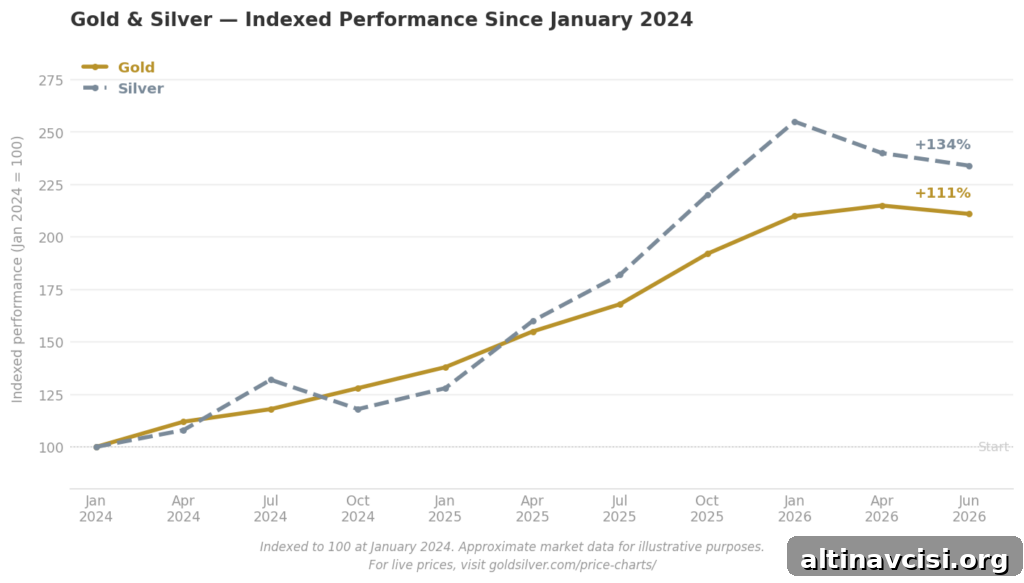
Price corrections are normal inside long‑term precious metals trends. The structural drivers for demand—monetary expansion, lower real yields on cash and bonds, and central bank accumulation of metal—remain important considerations for investors.
GoldSilver Vault Storage: Not a Deposit. Every Ounce Is There.
A key distinction between a bank account and a vault storage program is legal ownership. In allocated vault storage, metal is assigned to you and is not loaned out, pledged, or recorded as a liability by the storage provider. Each ounce is physically present in the vault and allocated to your account.
Unlike deposit insurance limits, many allocated vault programs carry full market replacement insurance for stored metal. That means coverage reflects the market value of the metal if a loss occurred, not a fixed dollar cap tied to a bank account balance.
Professional vaults operate with high security standards, independent audits, and insurance. Typical fees are modest relative to asset value—storage rates are usually quoted as a small percentage per year or month with no minimums and flexible delivery options.
If you want to compare allocated versus segregated or pooled storage in detail, industry guides discuss the tradeoffs between one‑to‑one allocated holdings and unallocated claims on pooled bullion.
Getting Started Is Easier Than You Think
Institutional‑grade storage is often accessible to small investors. Platforms offering allocated vault accounts frequently allow fractional ownership of large bars, require no minimum balance, and permit physical delivery when requested. Fees are typically billed separately and do not reduce your metal holdings.
Many services support multiple account types—individual, joint, trust, corporate, and retirement accounts—and offer in‑kind transfers from existing custodial IRAs. Offshore vault locations are also available for investors seeking additional jurisdictional options.
A combined approach—some metal at home for immediate access and a portion in a vault for liquidity, auditing, and insurance—covers a broader set of risks than either option alone. Several platforms provide a single dashboard to manage both home‑held and vaulted metal in one place.
The Question Nobody Asks Until It’s Too Late
Most people carefully decide how much gold or silver to own but rarely consider where to keep it. Home storage eliminates counterparty risk entirely because no intermediary holds a legal claim on your metal. The tradeoff is that security and insurance become your responsibility; standard homeowners policies generally provide only minimal bullion coverage.
Vault storage provides professional security, independent audits, and full replacement insurance, at the cost of a small institutional relationship. For many investors the optimal solution is a mix: some metal kept privately at home, some held in allocated vault storage for insured liquidity and ease of accumulation.
Where to Start
Start by defining the purpose of each portion of your metals. If the goal is an immediate, in‑hand backstop you can access if systems fail, keep that allocation at home. If the goal is insured accumulation and ease of liquidity, use allocated vault storage that permits delivery on demand.
Neither approach is sufficient alone; together they provide complementary protections. This is practical risk management rather than an extreme strategy.
Start with GoldSilver’s vault storage program here.
Stay On Top of Gold & Silver Prices
Receive market alerts and timely updates delivered to your inbox.
People Also Ask
Does physical gold have counterparty risk?
No — properly allocated physical gold held in institutional storage carries essentially zero counterparty risk because you own the metal outright. It is not a liability on an institution’s balance sheet and cannot be diluted or frozen by third parties in the way a claim on currency can.
What is the difference between a bank deposit and physical gold?
A bank deposit is an unsecured loan to the bank and depends on the bank’s solvency and regulatory environment. Physical gold is tangible property you own; it carries no default risk, no institutional dependency, and no exposure to bank solvency or monetary policy decisions.
Why are central banks buying gold instead of holding dollars?
Political and systemic risk to foreign‑held reserves—made clear by large reserve freezes—has encouraged central banks to diversify into gold. Industry data indicate increased central bank purchases in recent years as part of strategic reserve rebalancing.
Is it safer to store gold at home or in a professional vault?
Both approaches protect against different risks. Home storage eliminates counterparty risk but requires you to manage security and insurance. Professional vault storage offers institutional security, independent audits, and replacement insurance. Many investors combine both to achieve balance.
What does allocated gold storage mean?
Allocated storage assigns specific bars or coins to your ownership record. Your holdings are backed one‑to‑one by physical bullion in a vault and verified by independent auditors. This contrasts with unallocated storage, where you hold a claim on a pooled resource rather than specific metal.
SOURCES
1. Bank for International Settlements — Counterparty Credit Risk: Framework and Definitions
2. World Gold Council — Gold Demand Trends
3. Ludwig von Mises Institute — The Theory of Money and Credit
4. Underwriters Laboratories — UL 608: Standard for Burglary Resistant Vault Doors and Modular Panels
5. Insurance Information Institute — What Is Covered by Standard Homeowners Insurance?
6. Federal Deposit Insurance Corporation — Understanding Deposit Insurance
7. GoldSilver — Vault Storage: Allocated and Segregated Options
8. GoldSilver — Home Storage and Vault in One Account
Disclaimer: This article is for informational purposes only and does not constitute financial or investment advice. Consult a qualified financial adviser before making investment decisions.
You may also like:
- Why Is Gold Still a Safe Haven? Switzerland’s Biggest Refiner Just Answered.
- Rate Hike Odds Just Hit 85%. Gold Is Up. Here’s Why.
- Gold Confiscation: Could the Government Take Your Gold Again?
- Gold Price History: From $35 to $4,500 in 100 Years
- The Debasement Trade Explained: Mechanism, History, and What It Means for Gold
- Gold or Silver First? A First-Time Buyer’s Framework
- Gold Reserves by Country: The 2026 Rankings
- Gold Portfolio Allocation: Why Wall Street Is Rewriting the 60/40
- What Does the SILVER Act Mean for Precious Metals Investors?
- What Backs the US Dollar? Not Gold. Not Silver.
Popular Topics
Picked from the archive
-
01
 Topics
Why Silver Dropped 3.3% vs Gold’s 1.6%: The Gap Explained
-
02
Topics
Banks Forecast Gold Over $5,400 After Greenland News
-
03
Topics
How Much Gold Does It Take to Buy a House?
-
04
Topics
How to Buy Gold in 2026: A Step-by-Step Guide for New Investors
-
05
Topics
Gold’s Center of Gravity Shifted East: 5 Stories That Prove It
-
06
Topics
1 Trillion Added to Debt: How It Could Move Gold Prices
-
07
Topics
Silver Jewelry vs Silver Bullion: A Buyer’s Guide
-
08
Topics
Fed Study: 5 Countries Cashed In on Gold Reserves in 30 Years