How Much Gold Does It Take to Buy a House?
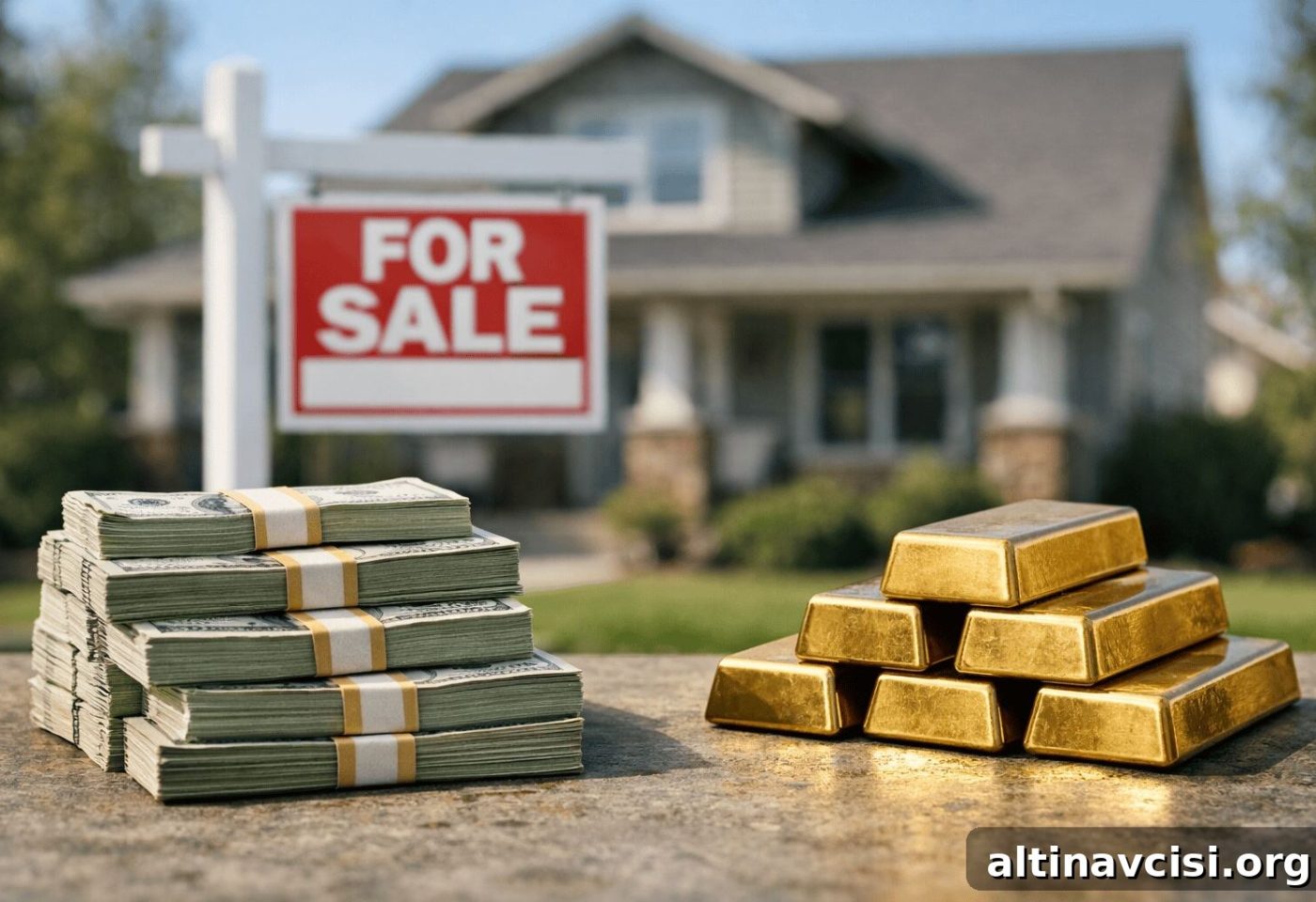
Home prices are near historic highs. College tuition keeps rising. The average new car now costs more than many Americans once paid for their first home.
Seen in dollar terms, these shifts look dramatic.
But there is another way to view long-term affordability: express those same assets in ounces of gold instead of dollars.
When you measure value this way, the picture changes significantly.
Gold as a Measuring Stick for Real Value
For most of human history, gold served as money or as the anchor behind monetary systems. Even after the United States left the gold standard in 1971, gold has remained a useful yardstick for purchasing power.
Unlike fiat currency, the supply of gold cannot be expanded at will. Global mine production typically raises the above-ground supply by only about 1–2% per year on average. By contrast, fiat money supplies can grow rapidly in response to fiscal policy, crisis interventions, or central bank decisions.
Since 1971:
- The U.S. dollar has lost a substantial portion of its purchasing power — often cited as more than 80% according to CPI-based measures.
- U.S. federal debt has climbed from roughly $370 billion in 1970 to nearly $37 trillion today — an increase measured in the thousands of percent.
- Broad money supply (M2) has expanded many times over — with especially rapid growth during crisis years.
Pricing assets in gold instead of dollars filters out much of that monetary distortion and makes changes in real purchasing power easier to see.
The Financial System Isn’t Safer — And You Know It
As risks mount, see why gold and silver are expected to remain relevant in 2026 and beyond.
Receive our guide and market alerts by email. (Static sign-up placeholder — subscribe via the site.)
How Much Gold to Buy a House in 1970 vs. Today?
In 1970, a modest California home cost about $25,000. Gold was trading around $35 per ounce then, so purchasing that home required roughly 714 ounces of gold.
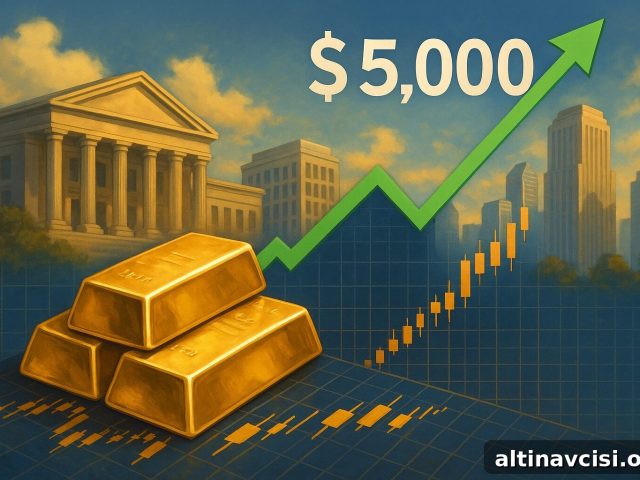
Today, a comparable California home might list for near $800,000. Using a round gold price of $5,000 per ounce for this example, that home would require about 160 ounces of gold.
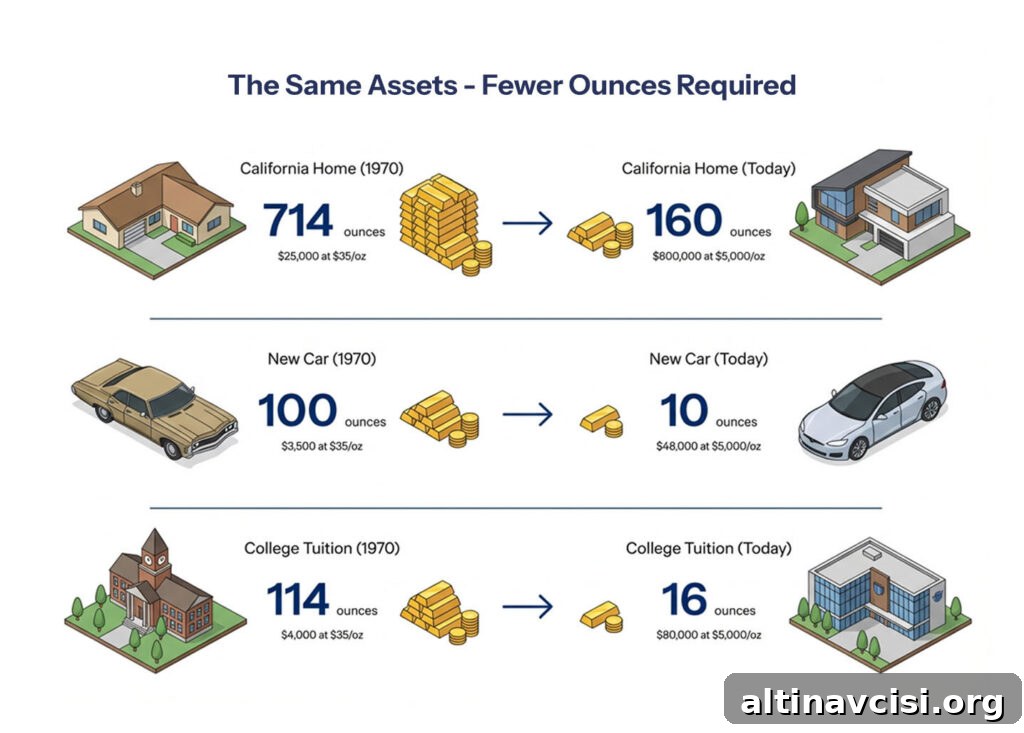
Measured in dollars, home prices have increased more than thirtyfold. Measured in ounces of gold, the number of ounces required has fallen by nearly 80%.
This comparison does not imply homes became intrinsically inexpensive. Instead, it highlights that the dollar’s purchasing power has declined relative to a tangible asset like gold. Evaluating decades of data this way provides a clearer picture of real purchasing power than nominal dollar values alone.
Across many decades, gold has generally preserved — and in some cases increased — its purchasing power relative to real assets. The dollar has not.
Cars and College Tell a Similar Story
The same pattern holds for other major expenses.
In 1970 the average new car cost about $3,500, which equated to roughly 100 ounces of gold at the time. Today, with new vehicles averaging around $48,000, that price equals roughly 10 ounces of gold when using the $5,000-per-ounce benchmark.
Four years of college tuition in 1970 averaged about $4,000 — approximately 114 ounces of gold. Today, an $80,000 degree would equal roughly 16 ounces of gold at $5,000 per ounce, and even fewer ounces if gold trades higher than that benchmark.
Measured in dollars, these expenses appear to have surged. Measured in gold, their ounce-equivalents have often declined. Over long periods, gold has tended to preserve purchasing power as fiat currencies lose value.
What This Means for Long-Term Investors
For people building retirement savings or generational wealth, the key question is not only whether asset prices rise, but whether savings keep their purchasing power. If your savings remain in a currency that erodes over decades, nominal gains can be misleading.
Since the early 1970s many monetary measures have expanded substantially, debt levels have increased markedly, and inflation has compounded. Gold functions independently of corporate earnings, government balance sheets, or counterparty promises. It carries no issuer risk and has historically served as a store of value across monetary cycles.
That is one reason central banks around the world hold gold reserves. In recent years central bank purchases of gold have reached multi-decade highs, reflecting a preference for tangible reserves during periods of monetary uncertainty. Gold also tends to perform relatively well in times of high inflation or financial stress.
The Dollar Illusion
When people say homes are unaffordable or college costs have exploded, they typically look only at nominal dollar figures. But if the unit of measurement — the currency itself — is losing value, higher nominal prices may simply reflect currency depreciation rather than higher real costs.
Gold offers an alternative lens. Pricing assets in ounces instead of dollars reveals whether real purchasing power has shifted or whether the currency has weakened. Over the past five decades, much of the appearance of explosive price growth reflects the dollar’s declining purchasing power.
Is Gold a Perfect Hedge?
No asset is flawless. Gold does not produce income, dividends, or interest, and its market price can be volatile in the short term. These characteristics mean it is not a substitute for productive investments when return generation is the priority.
However, over extended periods — particularly during inflationary cycles or currency debasement — gold has often preserved purchasing power relative to tangible assets. For many investors, that historical behavior makes gold a strategic allocation for wealth preservation rather than a short-term speculative position.
Investors worried about inflation, fiscal instability, or long-term currency erosion may view gold as a monetary anchor within a diversified portfolio.
A Broader Perspective on Wealth Preservation
The question of how much gold it takes to buy a house is less about timing the real estate market and more about understanding monetary systems and how purchasing power evolves. Currencies change, policies shift, debt accumulates, and economic cycles turn. Through those shifts, gold has been a consistent reference point for real value.
Measuring wealth in real terms — for example, by expressing assets in ounces of gold rather than nominal dollars — can give investors clearer perspective when planning for long horizons.
The numbers suggest that while dollar prices can fluctuate dramatically, gold’s long-term relationship to real assets has been relatively stable. That is a central lesson history offers about preserving purchasing power over time.
Stay On Top of Gold & Silver Prices
Get timely market alerts and updates delivered to your inbox.
Gold: — Silver: — Gold/Silver ratio: —
(Live market widget removed for privacy and performance. Check market data on trusted platforms.)
Sign up on the site to receive market summaries and educational guides. (Static placeholder — no external links included here.)
People Also Ask
How much gold does it take to buy a house today?
Using a $5,000-per-ounce example, an $800,000 home would require about 160 ounces of gold. If gold trades higher than $5,000 per ounce, the ounce-equivalent needed would be lower. Expressing home prices in gold highlights long-term purchasing power trends rather than only nominal dollar changes.
Was it cheaper to buy a house in gold in 1970?
In 1970 a $25,000 home equated to roughly 714 ounces of gold at $35 per ounce. Today, comparable homes require far fewer ounces, illustrating how the dollar’s purchasing power has shifted over time relative to gold.
Why compare house prices in gold instead of dollars?
Most people do not buy or sell homes using gold. Still, economists and long-term investors sometimes use gold as a benchmark to isolate the effects of inflation and monetary expansion. Comparing ounce-equivalents over time helps separate currency-driven price changes from shifts in the real value of assets.
Does gold really protect against inflation?
Historically, gold has often preserved purchasing power during inflationary episodes, especially when real interest rates are low or negative. While it generates no income, many view gold as monetary insurance during periods of currency debasement.
Is gold a better long-term store of value than the dollar?
Over the past five decades the dollar has lost purchasing power due to inflation. Gold, by contrast, has generally maintained the ability to command real assets across monetary cycles. For that reason, many investors include physical gold or gold-related holdings as part of a diversified, long-term wealth-preservation strategy.
Disclaimer: This content is for informational purposes only and is not investment advice. Past performance is not indicative of future results. Consult a qualified financial advisor before making investment decisions.
You May Also Like:
- Gold vs. Silver: Roles, Risks, and Portfolio Strategy
- Gold & Silver Prices: Short-Term Noise, Long-Term Signal
- Silver Canadian Maple Leaf: Why It’s a Top Bullion Coin
- Gold Portfolio Allocation 2026: Forecasts and Investor Implications
- How Government Debt Affects Gold and Silver
- Gold vs. Silver: Liquidity Differences That Matter
Popular Topics
Picked from the archive
-
01
 Topics
Gold Price Could Reach USD 5,000 by 2026: Institutional Forecast
-
02
Topics
Silver Squeeze Pushes Silver Prices Above $51
-
03
Topics
Gold Rises as Bitcoin Slips and Bubble Fears Grow
-
04
Topics
Bessent Urges 1.5% Rate Cut, Boosting Gold Prices
-
05
Topics
Tariff Deadline Fears Push Gold Prices Up as Other Metals Slide
-
06
Topics
Gold Fields Urges Major Miners to Boost Gold Exploration
-
07
Topics
Tech Giants Drive 90% of Earnings Growth Despite Trade War Fears
-
08
Topics
Brazil Threatens Retaliation After Trump Imposes 50% Tariff