How Much Gold Is in Your Phone and What It Means for Demand
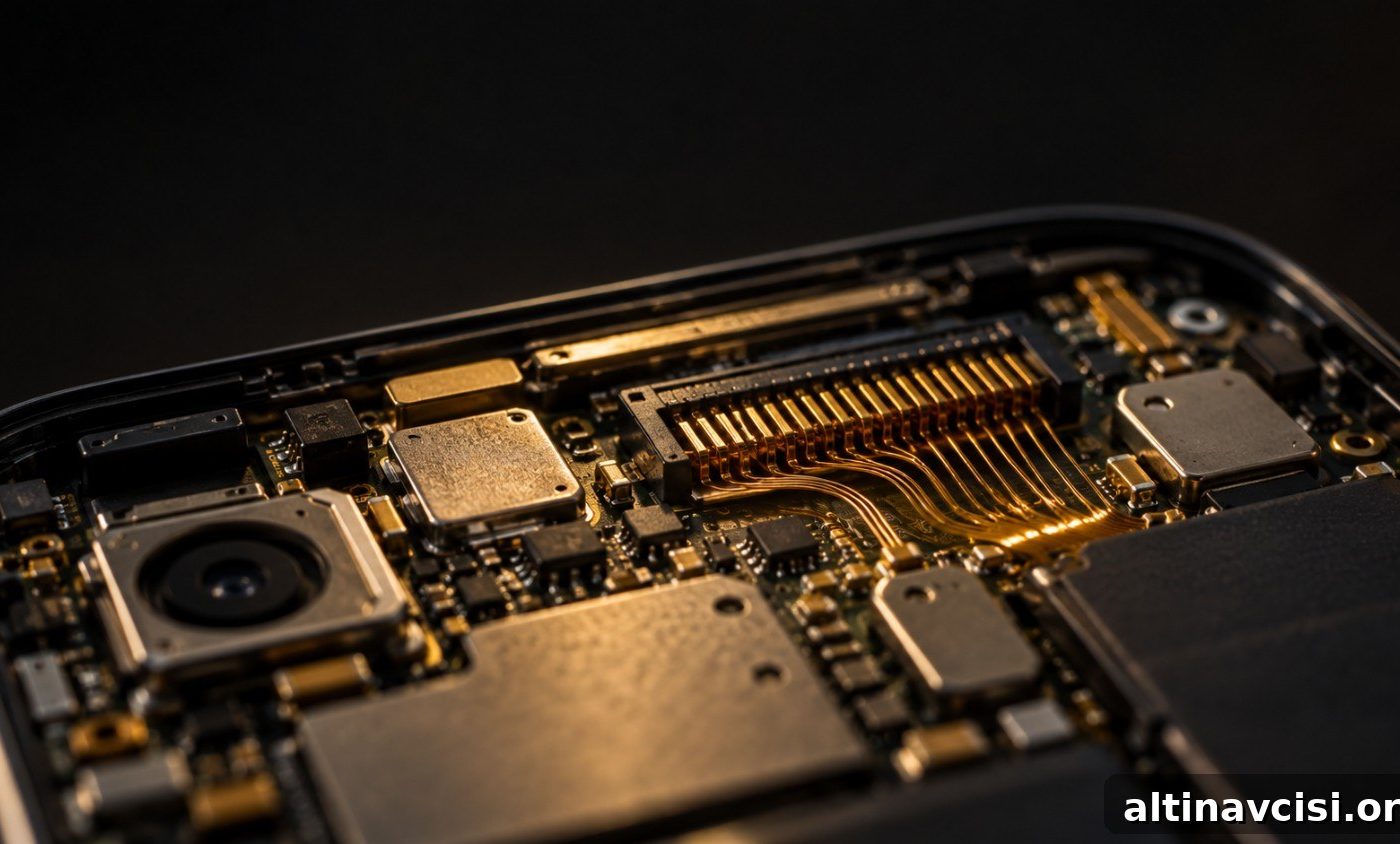
There is a tiny amount of gold inside the phone in your pocket. It’s barely visible and worth only a few dollars per device, but multiplied across billions of phones, servers and satellites it becomes a meaningful part of global gold demand. That small, reliable sliver of metal is soldered into components where failure is not an option.
Key Takeaways
- A typical smartphone contains about 0.03 to 0.034 grams of gold, while the electronics sector consumed roughly 270.4 tonnes of gold in 2025 (World Gold Council).
- Electronics is the largest technology use of gold, but technology accounts for only about 6% of the more than 5,000 tonnes of global gold demand in 2025 (World Gold Council).
- Growth within electronics is now driven more by AI infrastructure—bonding wire and dense interconnects in AI servers—than by smartphones (World Gold Council).
- Higher gold prices are prompting manufacturers to use thinner gold layers or substitute other metals in applications where gold’s unique properties are not essential.
- E-waste is a rich source of gold: in 2022 the world’s discarded electronics held an estimated $15 billion worth of gold, and circuit boards concentrate gold far more effectively than typical mined ore (UNITAR/ITU Global E-waste Monitor 2024).
Open a smartphone and you’ll find only a few milligrams of gold—mostly plating on connectors, tiny contact points on the motherboard, and traces on the SIM card. That amount is worth just a few dollars per device. But when you add billions of devices, plus the gold inside servers, networking gear and satellites, the electronics sector becomes a measurable slice of global gold consumption. This industrial use behaves differently from jewelry purchases or central bank buying; it’s driven by technical requirements for reliability and conductivity.
How Much Gold Is Actually Inside a Smartphone?
Most teardown estimates place a typical phone’s gold content at roughly 0.03 to 0.034 grams. Most of that gold is concentrated on the motherboard, coating connectors that link chips, memory and the display. Larger devices contain proportionally more gold: a desktop motherboard may hold around ten times a phone’s amount, and a heavy-duty server board can contain close to a gram. In every device, gold is used where tiny contacts must switch reliably and resist corrosion for many years.
Gold is chosen for specific technical reasons, not aesthetics. Where a failed connection would cause serious problems, engineers rely on gold’s conductivity and resistance to oxidation.
The Knowledge That Changes Everything

Two concise guides — free. Learn why gold matters and why fiat systems repeatedly face pressure.
Why Does a Phone Need Gold at All When It’s So Expensive?
Gold appears in electronics because no cheaper metal matches its combination of conductivity and long-term corrosion resistance at very small scales. Inside chips, gold bonds reliably to the ultra-fine wires that carry signals. Copper moves most of the current because it’s inexpensive, but copper and many common alloys corrode over time. In tiny contacts and bonding wires, that corrosion quickly causes failures. Gold resists those processes, which is why manufacturers use it where reliability is essential.
This is a technical decision about durability, not about luxury. Designers select gold to extend service life and reduce failure rates, not for appearance.
How Much Gold Does the Electronics Industry Use Each Year?
Electronics demand is measured in tonnes. The World Gold Council reports 270.4 tonnes of gold used by the electronics sector in 2025, nearly unchanged from 270.8 tonnes in 2024. Technology as a whole — which also includes dental and other industrial uses — accounted for about 322.8 tonnes and represented roughly 6% of global gold demand in 2025, out of over 5,000 tonnes total (World Gold Council).
Unlike jewelry or investment buying, gold used in electronics is not highly price-sensitive in the short term: a chipmaker cannot eliminate gold plating entirely without sacrificing reliability. What manufacturers can do, and are doing, is reduce the thickness of gold layers and seek alternative materials where possible.
Why Is AI Changing Gold Demand from Electronics?
While total electronics tonnage has been stable, the internal mix of demand is shifting. The World Gold Council highlights AI data centers and high-performance computing as growing sources of gold use. AI servers require dense interconnects and bonding wire that rely on gold for reliable, continuous operation. At the same time, memory shortages and rising component costs have dampened growth in everyday consumer device sales, so some gold demand has shifted away from phones toward data center hardware.
Are Makers Using Less Gold Because of the Price?
Yes. The World Gold Council has reported increased research into ‘thrifting’ — applying thinner gold layers — and substitution, using alternative metals such as palladium or nickel where gold’s unique properties are not strictly required. These changes are already visible on circuit boards and mirror shifts seen in other industries, such as lower silver usage per solar cell. However, gold remains indispensable in many critical applications across aerospace, dental and certain medical uses, providing a steady baseline of industrial demand.
Can Gold Be Recovered from Old Phones and Computers?
Yes — and it’s surprisingly economical at scale. The UN’s Global E-waste Monitor 2024 reported 62 million tonnes of e-waste in 2022, containing metals worth about $91 billion and roughly $15 billion in gold alone. Circuit boards concentrate gold at levels far higher than most mined ores: peer-reviewed studies report hundreds of grams per tonne for some board grades versus one to ten grams per tonne in typical ore. The main challenge is collection, not metallurgy: less than a quarter of global e-waste was properly collected and recycled in 2022, leaving much recoverable gold in landfills and drawers instead of back into the supply chain (UNITAR/ITU Global E-waste Monitor 2024).
What Does Electronics Demand Mean for Gold Investors?
For investors, electronics demand is a supportive but secondary factor. Technology accounted for roughly 6% of global gold demand in 2025, so shifts in industrial consumption do not move prices as dramatically as changes in investment flows, central bank purchases or jewelry demand. Still, industrial use creates a reliable, non-monetary floor for some level of demand: even without investor or central bank activity, modern electronics would continue to require a baseline of gold. Investors focused on gold as a store of value should track central bank reserves and real yields closely, and treat tech-sector demand as a steady underlying influence rather than the primary price driver.
Stay On Top of Gold & Silver Prices
Get important market alerts sent straight to your inbox.
People Also Ask
Teardowns estimate a typical smartphone, including iPhones, contains about 0.03 to 0.034 grams of gold, mainly on the motherboard and SIM contacts.
Electronics represented roughly 5–6% of global gold demand in 2025, and the broader technology category (including dentistry and other industrial uses) was about 6% of total demand for the year (World Gold Council).
Gold resists corrosion and conducts electricity well even at very small scales, making it ideal for fine contacts and bonding wires where a failed connection would be unacceptable. Cheaper metals like copper corrode more readily in those tiny interfaces.
For a single phone, no — the gold value is small. At scale, yes: the UN’s Global E-waste Monitor estimated about $15 billion in gold inside 2022’s global e-waste stream, and circuit boards are far richer in gold than most mined ore.
AI data center hardware is a growing source of electronics gold demand. This shows up in bonding wires and high-density interconnects used in AI servers, even as consumer device demand has softened (World Gold Council).
Yes. Manufacturers are investing in thinner gold coatings and alternative materials when feasible. The World Gold Council reports increased R&D into thrifting and substitution as prices rise.
SOURCES
1. World Gold Council — Gold Demand Trends: Full Year 2025 (Technology)
2. World Gold Council — Gold Demand Trends: Q4 and Full Year 2025
3. UNITAR / ITU — Global E-waste Monitor 2024
4. Waste Management — Concentration of Precious Metals During Their Recovery From Electronic Waste (Cayumil et al., 2016)
5. ACS Omega — Gold Metal Recovery from Electronic Waste through Laser Generation of Micro and Nanoparticles (Trivedi et al., 2025)
Disclaimer: This article is for informational purposes only and does not constitute investment advice. Past performance is not indicative of future results. Always consult a qualified financial advisor before making investment decisions.
You May Also Like:
- Real Yields vs. Nominal Rates: The Number That Actually Moves Gold
- How to Read a Gold Spot Price Chart: The 4 Things That Actually Matter
- Central Banks Hold 80% of Reserves in Gold. Sovereign Wealth Funds Hold Under 1%.
- You Don’t Need to Take Delivery to Sell Your Gold. Here’s What Actually Happens.
- The Real Price of a 1 Gram Gold Bar Isn’t $140
- What Are Negative Real Interest Rates, and Why Does Gold Thrive in This Environment?
- Cheapest Way to Buy Gold? We Measured 110 Live Prices
- How Much Silver Should You Own? A Portfolio Allocation Guide by Age and Goal
Popular Topics
Picked from the archive
-
01
 Topics
Gold and Silver Rally Today, Defying Market Theory
-
02
Topics
What Moved Gold and Silver Today: Hormuz, ISM, Hecla, Barrick
-
03
Topics
Gold Hits $4,000: Why the Debasement Trade Isn’t Dead
-
04
Topics
Silver Drops 1.4% as Gold Holds; Ratio Reaches 70:1
-
05
Topics
Why Gold Fell Again: Five Wall Street Analysts Disagree
-
06
Topics
Gold Price Jumps 6% This Week — One Number Tomorrow Decides
-
07
Topics
Oil Up 7% Yesterday, Silver Down: Physical Buyers Pivot
-
08
Topics
Store Gold at Home Securely: Safes, Security and Insurance