Sound Money: Why the Dollar Has Lost 87% Since 1971

Key Takeaways
- Sound money is a form of money whose supply cannot be expanded by decree, so it preserves purchasing power over time instead of eroding it.
- The concept dominated 19th-century monetary policy and referred to a metallic standard: coins of defined weight, with paper or token money redeemable on demand in that metal.
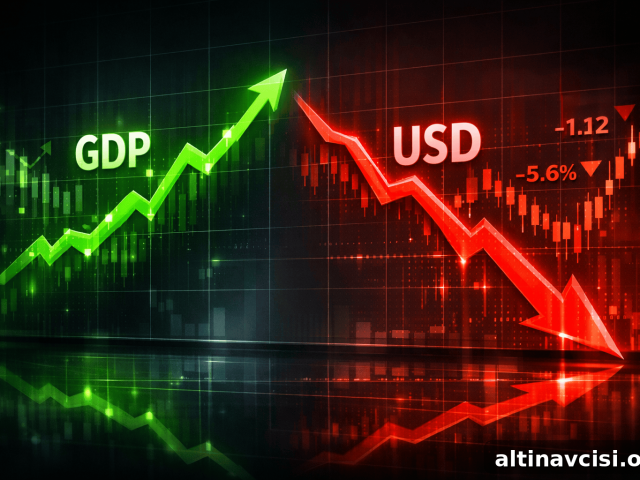
- Since 1971 the U.S. dollar has lost a large share of its purchasing power; official consumer-price indices document a multi-decade decline.
- Over the same span, the market price of gold rose dramatically, reflecting the dollar’s relative decline as a measuring unit.
You earn, spend, and try to save. But an equally important question is whether the money you save maintains its value. That question is at the heart of the idea of sound money, a principle that shaped monetary systems for more than a century and still affects how savers should think about wealth preservation.
Understanding sound money reframes the way you look at paychecks, bank balances, and long-term savings. It also helps explain a striking historical pattern: precious metals such as gold have gained substantially in nominal terms since the early 1970s while the dollar’s purchasing power has fallen.
Where Did the Term “Sound Money” Come From?
The term rose to prominence in the 19th century when many countries adopted the gold standard. “Sound money” described a metallic standard in which coins represented a fixed weight of metal established by law. Token coins and paper notes were often redeemable on demand in that metal. This arrangement put a natural limit on how much money governments could create.
The phrase carried political meaning as well as economic. Economists like Ludwig von Mises argued that the demand for sound money emerged in reaction to rulers debasing coinage. In this view, sound money functioned as a constraint on government power—similar in spirit to constitutional limits and individual rights.
A widely told anecdote links the expression to merchants testing coins by ear—the genuine metal would “ring” while debased coinage would “thud.” Whether literal or rhetorical, the distinction embedded in the term endures: sound money rewards saving over time, while poorly designed money erodes the value of savings.
The Knowledge That Changes Everything
Two essential guides — free to readers. Learn why gold remains relevant and why fiat currencies have historically lost value over time.
How Does Sound Money Differ from Fiat Currency?
Sound money satisfies three important conditions: it reliably stores value, it resists arbitrary inflation, and no single institution can create it by decree. These traits mean that saving becomes a way to preserve wealth rather than a slow process of losing it.
Fiat currency satisfies none of those conditions. The Latin root of “fiat” means “let it be done”: fiat money holds value because a government declares it so, not because a natural limit constrains its supply. Without that constraint, the amount of money in circulation can expand according to policy choices rather than scarcity.
To make this concrete: the U.S. M2 money supply, a broad measure of spendable dollars, was roughly $700 billion in 1971. By June 2026, it had grown to about $23.2 trillion. That is an increase of more than thirtyfold over 55 years, while real economic output expanded by a much smaller factor. The gap helps explain why each individual dollar now purchases fewer goods and services than it once did.
Official price measures show the effect. Since the creation of the Federal Reserve in 1913, the dollar has lost a very large share of its purchasing power; significant declines have also occurred since 1971. As a result, money held as a nominal currency balance has consistently lost value over long stretches.
Why Did the Dollar Leave the Gold Standard?
For much of modern history the dollar maintained a connection to gold. Under the classical gold standard, from the late 19th century through World War I, each unit of currency represented a fixed weight of metal. That legal link limited how much money could be created and produced relative price stability in many countries.
Throughout the 20th century the relationship to gold weakened. The Federal Reserve was established in 1913. During the Great Depression governments changed gold policies and restricted private ownership. After World War II, the Bretton Woods system tied the dollar to gold at a fixed rate, with other currencies pegged to the dollar.
On August 15, 1971, President Richard Nixon suspended the dollar’s convertibility into gold. Foreign governments and central banks had been redeeming dollar reserves, and the United States was issuing more dollars than its official gold coverage could support. That decision—often called the Nixon Shock—broke the last formal link between the dollar and gold and left the global reserve currency without a metallic anchor.
What Has Happened to the Dollar Since 1971?
The changes after 1971 are measurable. A dollar held since that year now buys only a small fraction of what it once did. Even more recently, dollars held at the start of 2020 lost a significant portion of their purchasing power by early 2026.
Meanwhile national debt grew from roughly $400 billion in 1971 to many trillions of dollars by the mid‑2020s. Interest costs on that debt have become a material line item in government budgets, rising to levels that for some years surpassed major spending categories. These fiscal trends and the absence of a hard monetary anchor help explain why the money supply expanded so dramatically.
In practical terms this means monetary expansion acts like a tax on savers: when more money chases a limited quantity of goods, the purchasing power of each monetary unit declines, transferring value away from holders of currency toward those who benefit from new spending.
Why Do Central Banks Still Buy Gold If the Gold Standard Ended?
An important point to note is that institutions managing fiat currency continue to accumulate gold. Central bank purchases have been significant in recent years—recorded quarterly and annual inflows show many central banks adding to official reserves. In some quarters and years, purchases reached multi‑decade highs as several countries increased holdings.
At the same time, first‑half totals and quarterly figures can vary: some countries occasionally sell reserves, and revisions to early estimates are not uncommon. Still, many central bankers surveyed expect global official reserves to rise and a substantial share plan to increase their own gold holdings. That persistent demand among conservative institutions signals a preference for holding some value in a scarce, non‑fiat asset.
When the most risk‑averse financial institutions keep adding gold through price fluctuations, their behavior speaks to a long‑term view that official documents do not always make explicit.
How Does Sound Money Protect Your Savings?
Gold was priced at $35 per ounce when the dollar’s convertibility into metal ended. By the mid‑2020s gold traded at many times that level. Silver followed a broadly similar long‑term pattern. These moves do not imply that precious metals suddenly became inherently more useful; rather, they record how the measuring stick—the dollar—declined over time.
Viewed this way, sound money matters because an asset whose supply is constrained by geology, not policy, tends to preserve purchasing power across generations. Allocating part of your savings to physical gold and silver does not require precise forecasting; it rests on observing repeated historical outcomes where fiat currencies have lost value.
For individuals, the practical lesson is straightforward: holding all wealth in a currency designed to be elastic is likely to erode real value. Diversifying, including a modest allocation to metals that cannot be created by decree, provides a hedge against long‑term monetary depreciation.
Stay On Top of Gold & Silver Prices
Get important market alerts sent straight to your inbox.
People Also Ask
Gold and silver are the most commonly cited examples because both are durable, relatively scarce, and cannot be created by fiat. Other commodities have functioned as money in history, but these two have proven resilient across cultures and centuries.
A formal return would require a complete restructuring of the global monetary system. For individual savers, a more practical question is whether they can adopt sound‑money principles privately by holding assets outside the fiat system.
Allocation depends on personal circumstances and goals. The general idea is to diversify across assets that react differently to monetary expansion. Even a modest holding of physical metal provides a long‑term store of value.
SOURCES
1. Bureau of Labor Statistics — Consumer Price Index (CPI-U) historical data
2. Federal Reserve — H.6 Money Stock Measures (July 28, 2026 release)
3. U.S. Treasury — Debt to the Penny dataset
4. Congressional Budget Office — budget projections and analyses
5. World Gold Council — Gold Demand Trends and central bank reporting (Q2 2026)
6. World Gold Council — Central Bank Gold Reserves Survey (2026)
7. Mises Institute — analysis of classical sound money ideas
8. Cato Institute — commentary on sound money theory and practice
9. Market price history for gold and silver as reported by price chart services
Disclaimer: This article is for informational purposes only and does not constitute investment advice. Past performance is not indicative of future results. Always consult a qualified financial advisor before making investment decisions.
You May Also Like:
- Vault Storage vs. Gold ETFs: Who Owns the Gold You Paid For?
- Silver Price Outlook August 2026: Down 47% and Barely Owned
- What Does an Inverted Yield Curve Mean for Gold Prices — and How Do You Use It?
- Gold Price Outlook August 2026: What Three Data Prints in One Week Mean for Your Metals
- 14 Million Coins Sold. Zero Design Changes in 35 Years. Here’s Why Investors Keep Choosing the Philharmonic.
- Two Inflation Numbers Come Out Every Month. The Fed Only Cares About One.
- Why Your Commodity ETF Gives You Almost No Gold — and What That Costs You
Popular Topics
Picked from the archive
-
01
 Topics
Gold Prices Stabilize Amid Saudi-Iran Tensions
-
02
Topics
Why Gold Held Steady After Trump’s Economic Pressure on Iran
-
03
Topics
Oil Drops 11% as Gold Rises: What Investors Need to Know
-
04
Topics
3 Questions Investors Must Ask Before Buying Any Asset in 2026
-
05
Topics
Silver Surges Past $70 Amid Conflicting GDP Data
-
06
Topics
What’s Moving Gold and Silver Prices This Week
-
07
Topics
How FOMC Minutes and Jackson Hole Could Move Gold
-
08
Topics
Two Investors Ran Debt Math Separately and Chose 15 Percent Gold