Central Banks Chose Gold Over Treasuries. Should You Invest?
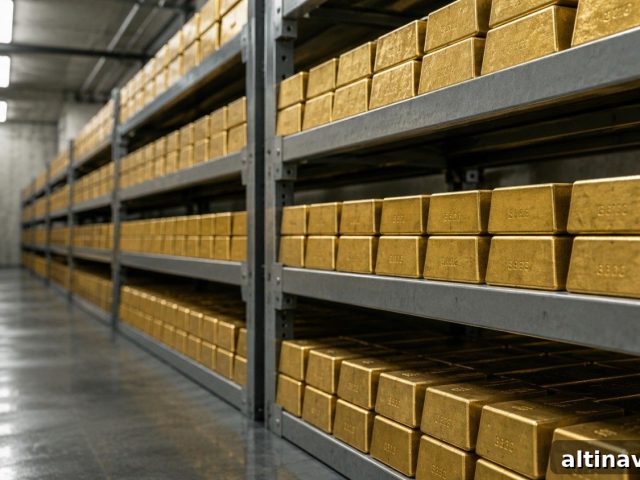
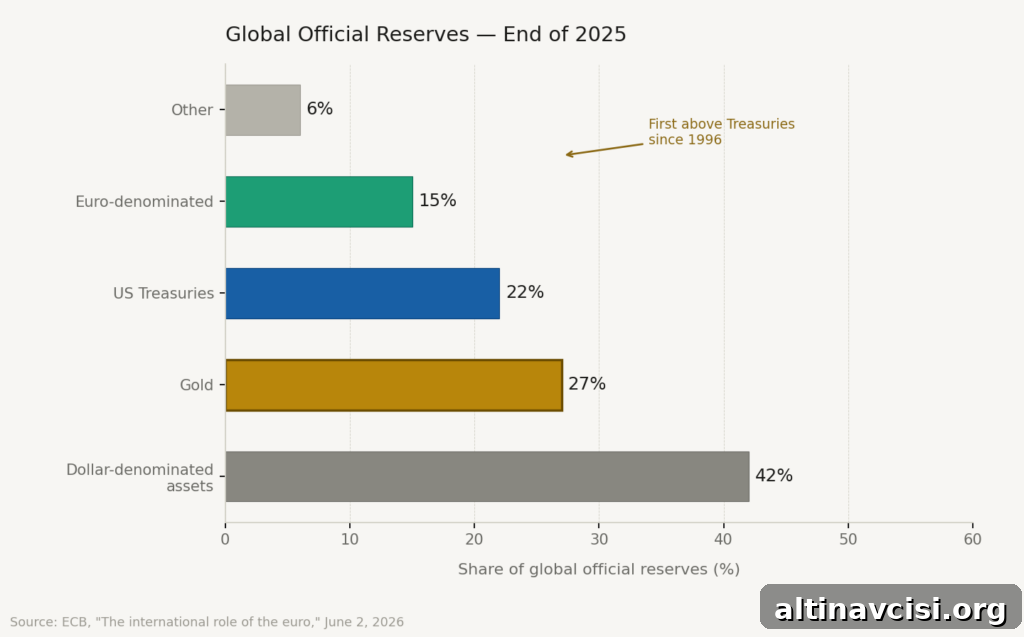
Gold was slightly lower on the day — down about 0.8% and trading near $4,454 as of Tuesday afternoon — but the more important development arrived in Frankfurt. The European Central Bank’s annual report on global official reserves revealed that gold now accounts for 27% of global official central bank reserves. That places gold ahead of US Treasuries, which represent 22%, and the euro at 15%. This is the first time since 1996 that gold has overtaken Treasuries in the global reserve mix.
Why did gold’s share of global reserves jump seven percentage points in one year?
Two forces explain the rapid rise in gold’s share of official reserves: valuation effects driven by price appreciation and continued purchases by central banks and other large buyers. Both matter for different reasons.
First, valuation. Gold rose roughly 60% in 2025 after gaining about 30% in 2024 (ECB, June 2026). When an asset appreciates sharply, it naturally takes up a larger share of an otherwise fixed portfolio even if no new quantities are bought. The ECB highlights this mechanical effect: measured at 2023 gold prices, US Treasuries would still be the largest reserve component at 26%, while gold would stand at 16%.
Second, buying. Central banks bought around 850 tonnes of gold in 2025. While that was below the peak annual pace of over 1,000 tonnes recorded in 2022–2024, it remains historically high. Since Russia’s invasion of Ukraine, a number of central banks have significantly increased holdings: China added more than 350 tonnes, Poland about 320 tonnes, India roughly 130 tonnes, and Turkey accumulated 220 tonnes before later loaning or selling part of its holding in early 2026 (ECB, June 2026). Notably, the stablecoin issuer Tether was reported as a major buyer in 2025, acquiring more than 100 tonnes — a detail that signals broad demand beyond the public sector.
Why didn’t central banks simply rebalance back into Treasuries when gold prices surged?
The technical explanation — that much of the change is a valuation effect rather than a wholesale structural shift away from the dollar — is accurate but incomplete. Central banks do not passively accept whatever automatic reweighting produces; they actively manage and rebalance reserve portfolios. If rising gold prices had created an unwanted overweight, institutions with large reserves could have sold bullion and restored Treasury dominance. They chose not to.
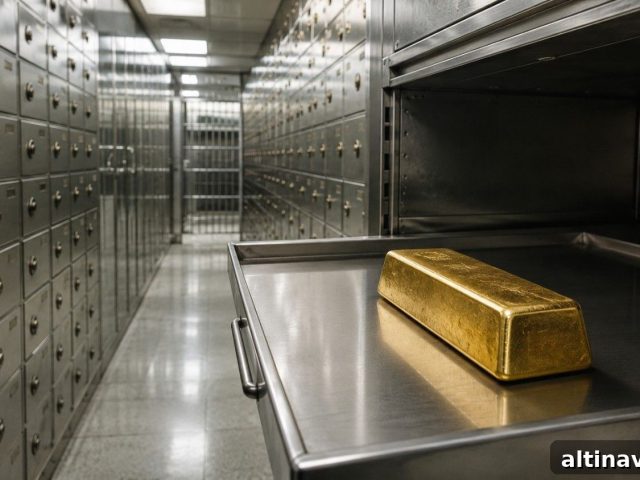
This deliberate decision signals preference. ECB President Christine Lagarde summarized the motivation plainly: geopolitical tensions have driven strong central bank demand for gold (ECB, June 2026). That motivation is straightforward. After the United States froze Russian dollar reserves following the 2022 invasion of Ukraine, many governments reassessed the risk that large dollar-denominated holdings might be subject to freezes, sanctions, or other restrictions tied to foreign policy. Gold carries no counterparty risk and cannot be frozen or seized through correspondent banking channels. It sits outside any single country’s legal jurisdiction.
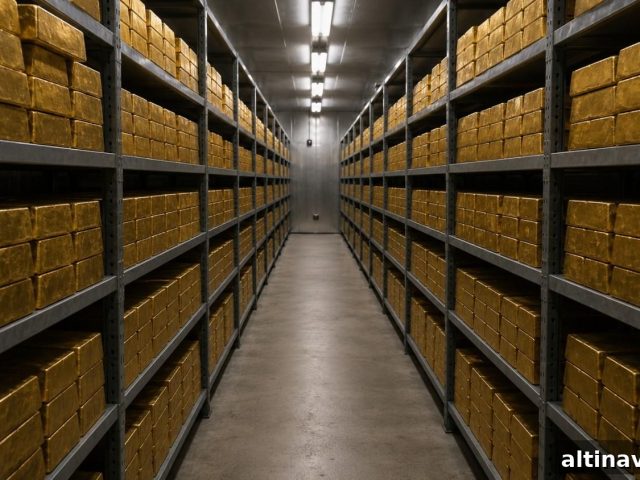
Central banks now hold more than 36,000 tonnes of gold in total, approaching the roughly 38,000 tonnes held during the Bretton Woods era, when the dollar itself was convertible to gold (ECB, June 2026). That shift suggests a deliberate, gradual restructuring of the reserve system, not a fleeting market blip.
What are the limitations of gold as a reserve asset, according to the ECB?
The ECB rightly lists several limitations: gold produces no yield, its price is volatile, storage and security are costly, and mining supply can’t be rapidly expanded to meet sudden demand. Those are valid operational and financial constraints.
However, those same characteristics are also the reasons many policymakers trust gold: scarcity, independence from fiat issuance, and immunity to counterparty risk make it a reliable hedge against political and monetary uncertainty. Put another way, features the ECB frames as drawbacks are also the features that give gold resilience as a monetary asset.
If the largest, most sophisticated reserve managers are increasing gold allocations for strategic reasons, private savers and investors may reasonably ask whether their own portfolios reflect similar diversification logic. This is not an alarmist call — it is an invitation to consider financial sovereignty and balance-sheet resilience in a world where geopolitics can affect access to currency reserves.
What should gold investors watch in the week ahead?
Short-term price action will respond to near-term US data and policy events. Friday’s US jobs report should move markets, and the Federal Open Market Committee meeting on June 16–17 — the first under the new Fed Chair — will set the tone for summer policy expectations. Yet the reserve-composition story is long-term and structural. Central banks rebalance over months and years, not days, so the trend toward higher official gold holdings reflects durable strategic choices rather than purely transient market noise.
Key takeaways
- The ECB reports that gold now makes up 27% of global official reserves, with US Treasuries at 22% — the first time gold has led Treasuries since 1996 (ECB, June 2026).
- The valuation effect from rapid price appreciation is real: at 2023 gold prices, Treasuries would still have been larger. But central banks actively bought gold and chose not to rebalance away from bullion — indicating preference, not passive drift.
- Since 2022, several major buyers — including China, Poland, India, and others — have boosted holdings to reduce exposure to assets that can be frozen or sanctioned. That underscores a geopolitical motive behind the trend.
SOURCES
1. ECB — The International Role of the Euro, June 2026 (ECB report on global reserves).
2. Xinhua — reporting on ECB findings (June 2026).
3. The Northern Miner — coverage of ECB reserve composition (June 2026).
4. Canadian Mining Journal — coverage of ECB reserve shift (June 2026).
5. Mining.com — article on bullion overtaking Treasuries (June 2026).
6. South China Morning Post — reporting on China as a top gold buyer (June 2026).
7. Yahoo Finance — coverage of central bank reserve changes (June 2026).
8. World Gold Council — Gold Demand Trends: Central Banks, Full Year 2025.
9. TradingEconomics — gold price data.
10. MPA Magazine — commentary on early actions by the new Fed Chair.
Disclaimer: This article is for informational purposes only and does not constitute financial or investment advice. Always consult a qualified financial adviser before making investment decisions.
You may also like
- Central Banks Just Crossed a Line Not Seen Since 1996
- Factory Costs Hit 82.1 — That Number Is Now Working for Your Gold
- Gold at $4,500: What Fort Knox, China, and Silver Are Telling You
- Silver Has Two Engines. Stagflation Is the One Condition That Fires Both at Once.
- The Buyer List for Gold Just Got Longer — These Countries Have Never Bought Before.
- PCE Hit 3.8%. GDP: 1.6%. Gold Went Up. Here’s the Mechanism.
- Gold Targets Are Falling. The $8,000 Forecast Isn’t.
- Gold Radar: 5 Stories the Price Chart Isn’t Telling You
- Silver Lost 3.3% While Gold Lost 1.6% — That Gap Is Not Random.
- Gold Down 1.2%, Silver Down 2.8% — The Floor Holds.
Popular Topics
Picked from the archive
-
01
 Topics
Why Gold Prices Are Falling Despite Global Turmoil
-
02
Topics
Gold Price Nears $5,000 as Silver Approaches $100
-
03
Topics
Why Investors Are Buying Gold After Today’s Price Drop
-
04
Topics
Barclays’ $4,791 Target Unchanged as Gold Drops 26%
-
05
Topics
5 Signs Gold’s Correction Is a Reset, Not a Reversal
-
06
Topics
GoldSilver: One Account for Home Storage and Secure Vaults
-
07
Topics
Gold Targets Are Falling, but the $8,000 Forecast Holds
-
08
Topics
Gold Fell During War: Is It Still a Safe Haven?