Gold Fell During War: Is It Still a Safe Haven?
Gold remains a trusted haven — but not in the simplistic way many investors assume. It does not automatically rise every time markets fall. Instead, gold responds to deeper structural trends: geopolitical fragmentation, central bank reserve diversification, and weakening confidence in paper currencies. Switzerland’s export figures illustrate that global demand for physical bullion spikes during periods of systemic uncertainty, even while the market price can swing wildly on short-term news. For long-term investors, gold’s principal value is as a strategic portfolio anchor, not a guaranteed crisis-proof hedge.
In March 2026 Switzerland reported a 30% month-on-month increase in gold exports. Those flows reveal patterns every investor should understand. [Reuters/Mining.com]
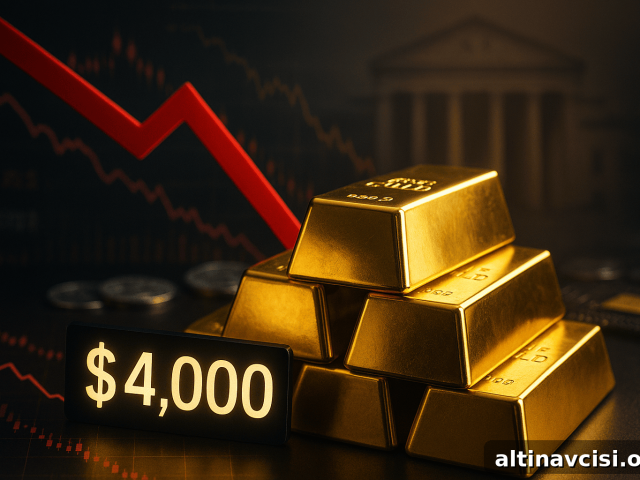
Switzerland sits at the core of the international bullion market. Its refineries and trading networks refine and distribute more than two-thirds of the world’s physical gold. Sharp moves in Swiss export volumes are therefore a global signal rather than a local anomaly. Yet this creates an interesting tension: while safe-haven demand has pushed exports to multi-month highs, the gold price itself has fallen around 10% since the Iran conflict began. [Trading Economics]
What does it mean, then, to call gold a safe haven?
What Is a Gold Safe Haven — and What Isn’t?
Gold’s reputation as a safe haven rests on a single, powerful attribute: it has no counterparty. Unlike bonds, it cannot default; unlike fiat currencies, it cannot be printed by a central bank; and unlike stocks, it carries no company earnings risk. Its value is anchored in scarcity and centuries of global consensus that precious metals preserve purchasing power — a history that underpins gold’s role as a hedge.
That long-term foundation, however, sits beside short-term price dynamics shaped by interest-rate expectations, US dollar moves, geopolitical headlines, and speculative flows. An asset can be both a safe haven in fundamental terms and highly volatile in market price. Recognizing that distinction is essential to using gold intelligently in a portfolio.
Your Gold Buying Guide Most investors overpay when they buy gold and again when they sell. This concise guide explains what to own, why it matters, and how to avoid common mistakes.
Free guide available. Sign-up forms have been removed from this version.
Why Is Switzerland’s Export Data a Global Fear Gauge?
Switzerland refines and transits more physical gold than any other nation. Over two-thirds of annual global production moves through Swiss refineries and trading desks, which makes Swiss customs data one of the most reliable real-time indicators of where physical gold demand is flowing. [Swiss National Bank]
March 2026 figures were notable. Shipments to the UK — the world’s largest over-the-counter gold trading hub — rose from 19.8 tonnes in February to 57.6 tonnes in March. Exports to China increased by about 18%. When large volumes head toward major financial centres, it typically signals institutional accumulation for safety and reserve purposes. [Reuters/Mining.com]
The reverse can be just as revealing. In August 2025 a US import tariff ruling affected one-kilogram and 100-ounce bars, and shipments to the United States plunged by more than 99% in one month, falling to roughly 0.3 tonnes. A single policy decision redirected the flows of a globally important commodity. [Bloomberg]
Across the first half of 2025 Switzerland exported over 476 tonnes of gold to the US, valued at approximately CHF 39 billion, as investors positioned for inflation protection and safe-haven exposure. Stablecoins also played a role: Tether reportedly acquired about 70 tonnes in 2025 — a volume comparable to many central bank purchases. These are deliberate, institutional moves, not random retail trends. [Swiss Bankers Association]
Does Gold Actually Hold Up When Markets Panic?
The price action during early 2026 illustrates the paradox. On January 28 gold reached an intraday high of $5,589.38 after climbing from about $4,330 at the start of the year — a near 29% gain in under a month. That rally was followed by a sharp correction, driven by profit-taking and shifting expectations for US monetary policy. [InvestingNews Network / Fortune]
When the Iran conflict began in late February 2026, gold fell further — contrary to many investors’ expectations. By late April 2026 the metal was roughly 10% below its January peak. Market commentator reactions underscore how sensitive gold can be to short-term news: even announcements about central bank personnel have triggered double-digit percentage moves in short windows. [Trading Economics / Swiss Bankers Association]
In short: safe-haven demand is real, but gold’s market price can be volatile in the short run. That volatility does not negate its long-term role; it merely complicates its behavior during episodic stress.
What Actually Drives Long-Term Gold Demand?
Remove the daily noise and a clearer structural picture emerges. In 2025 central banks bought roughly 863 tonnes of gold, continuing a multi-year shift in reserve management driven by de-dollarisation and a gradual loss of confidence in dollar-denominated assets. [World Gold Council]
Global gold demand in 2025 topped 5,000 tonnes for the first time, producing a record market value near $555 billion. Central bank purchases, rising government debt, persistent inflation in many countries, and a weaker US dollar are structural forces that increase institutional demand for physical gold. These trends operate over years rather than days. [World Gold Council]
Short-term events — wars, tariffs, or headlines — can move the price in either direction depending on whether investors buy into fear, sell assets to raise cash, or revise rate expectations. Swiss export figures are valuable because they show where physical metal is actually relocating: increasingly toward major financial hubs and institutional vaults, not merely retail consumption channels.
Is Gold Still Worth Holding?
Yes — but as a strategic anchor rather than a short-term hedge.
By late April 2026 gold had delivered about a 43% year-on-year gain, reinforcing its long-term case for investors seeking protection against currency depreciation, portfolio diversification, and preservation of purchasing power. The Swiss Bankers Association notes that gold’s growing relevance comes less from headline-grabbing price spikes and more from its expanding role in portfolios, official reserves, and international trade. [Fortune / Swiss Bankers Association]
Gold doesn’t need to reach arbitrary price milestones to justify its place in a portfolio. If it preserves purchasing power while paper currencies lose value over time — which recent years suggest it can — it is serving its purpose. Treat gold as insurance: accept the short-term volatility as the cost of long-term protection and include it as part of a diversified allocation rather than a speculative all-in bet.
Stay On Top of Gold & Silver Prices
Receive important market updates sent to your inbox.
People Also Ask
Why did Switzerland’s gold exports rise 30%?
Swiss gold exports rose 30% month-on-month in March 2026 largely because shipments to the UK and China increased significantly. The UK received 57.6 tonnes in March versus 19.8 tonnes in February. Given Switzerland’s dominant role in refining and transiting bullion, those export movements reflect shifting institutional demand across global markets.
Is gold really a safe haven asset?
Gold qualifies as a safe haven because it carries no counterparty risk and is inherently scarce. But safe-haven status does not make it immune to price swings. Monetary policy shifts, dollar strength, and short-term speculative flows can push the price both up and down. Viewed over years, gold retains its value proposition; in the short term, it can be volatile.
Why did gold fall during the Iran conflict if it’s a safe haven?
Gold fell roughly 10% after the Iran conflict began because geopolitical risk can influence other market dynamics that pressure the price. Rising oil prices, stronger US dollar moves, and higher Treasury yields can all weigh on gold, even when safe-haven demand increases. In some episodes investors sell assets to raise cash or reposition portfolios, producing counterintuitive price action.
Why does Switzerland play such a central role in the gold market?
Switzerland refines and transits over two-thirds of global annual gold production. Its refineries, Geneva-based trading networks, and connections to the London OTC market make it the primary hub for physical gold flows. Changes in Swiss export data therefore reflect global institutional behavior, not just local Swiss conditions.
What happened to gold’s price in January 2026?
Gold reached an intraday record of $5,589.38 on January 28, 2026 after a rapid rally from around $4,330 at the start of the year. That surge was driven by heightened geopolitical tensions, a weaker US dollar, and strong institutional and central bank demand. A swift correction followed amid profit-taking and shifting expectations about US monetary policy direction. [InvestingNews Network / Fortune]
Gold Is Not a Panic Button — It’s a Strategic Anchor
Switzerland’s 30% export surge is more than a trade statistic: it’s an insight into how serious investors and institutions respond to rising uncertainty. They direct physical gold toward major financial centres and reserve vaults. The safe-haven narrative is valid, and so is the market’s short-term price sensitivity. Both are true simultaneously.
Gold is not a panic button. It is a long-term strategic asset with a long track record of preserving purchasing power. It rewards disciplined, patient investors and penalizes those who treat it as a speculative, short-term trade. Volatility is not a defect — it is the cost of the insurance gold provides.
If you want to build a considered position in physical gold, start by researching reputable dealers and understanding storage, liquidity, and the role gold plays within a diversified portfolio.
SOURCES
1. Reuters / Mining.com — Gold exports from Switzerland up 30% in March as deliveries to UK jump
2. Swiss National Bank — Gold as a safe-haven asset and the Swiss external sector
3. Swiss Bankers Association — What the volatile price of gold tells us
4. Trading Economics — Gold Price Chart & Historical Data
5. World Gold Council — Gold Prices & Historical Data
6. World Gold Council — Gold Demand Trends, Full Year 2025
7. World Gold Council — Central Bank Gold Demand, Full Year 2025
8. Fortune — Current price of gold: April 20, 2026
9. Bloomberg — Swiss gold exports to US collapsed in August after tariff scare
10. Fortune — Current price of gold: December 31, 2025
Disclaimer: This article is for informational and educational purposes only and is not investment advice. Consult a qualified financial advisor before making investment decisions.
You May also like:
- Is Gold at Fair Value? What Three Models Say — and Where They Disagree
- Silver Price Predictions for the Next 5 Years: Data-Backed Scenarios
- Tariff Refunds, Dollar Weakness, the AI Bust: Gold’s Case
- How to Buy Gold for Beginners: Step-by-Step Guide (2026)
- Silver Price Forecast 2026-2027: The Bull Case and Bear Case
- How to Buy Silver Bars: The Investor’s Guide
- Why Silver Falls While Gold Rises: What It Means for You
- Why Are BRICS Countries Buying So Much Gold?
Popular Topics
Picked from the archive
-
01
 Topics
Gold Coins vs Gold Bars: Compare Value, Liquidity and Costs
-
02
Topics
Silver Price Hits $50 as Morgan Stanley Allocates 20% to Gold
-
03
Topics
HSBC Survey: Investors Double Gold Allocations as Markets Falter
-
04
Topics
Wall Street Whiplash: Stocks Rally on CPI, Plunge on PPI Shock
-
05
Topics
Gold Price Support Shifts After Ceasefire Violation
-
06
Topics
Gold Prices Jump Past $4,000 as Fed Signals Rate Cut
-
07
Topics
Why Gold Is Outperforming Nvidia in 2025
-
08
Topics
High Earners Falling Behind on Credit Cards and Auto Loans