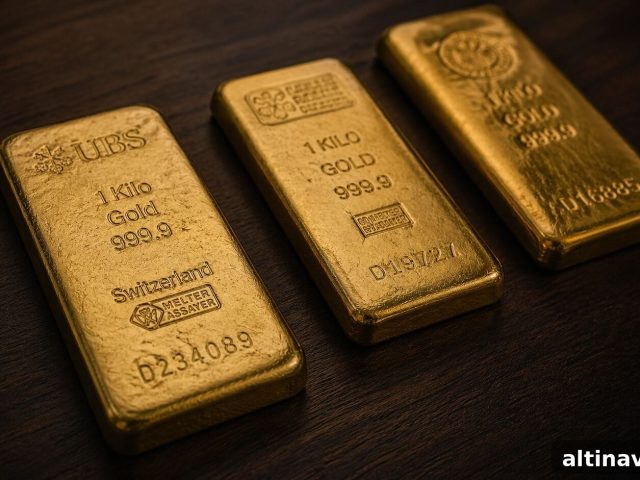
Central Banks Hike Rates to Levels Not Seen Since 1996
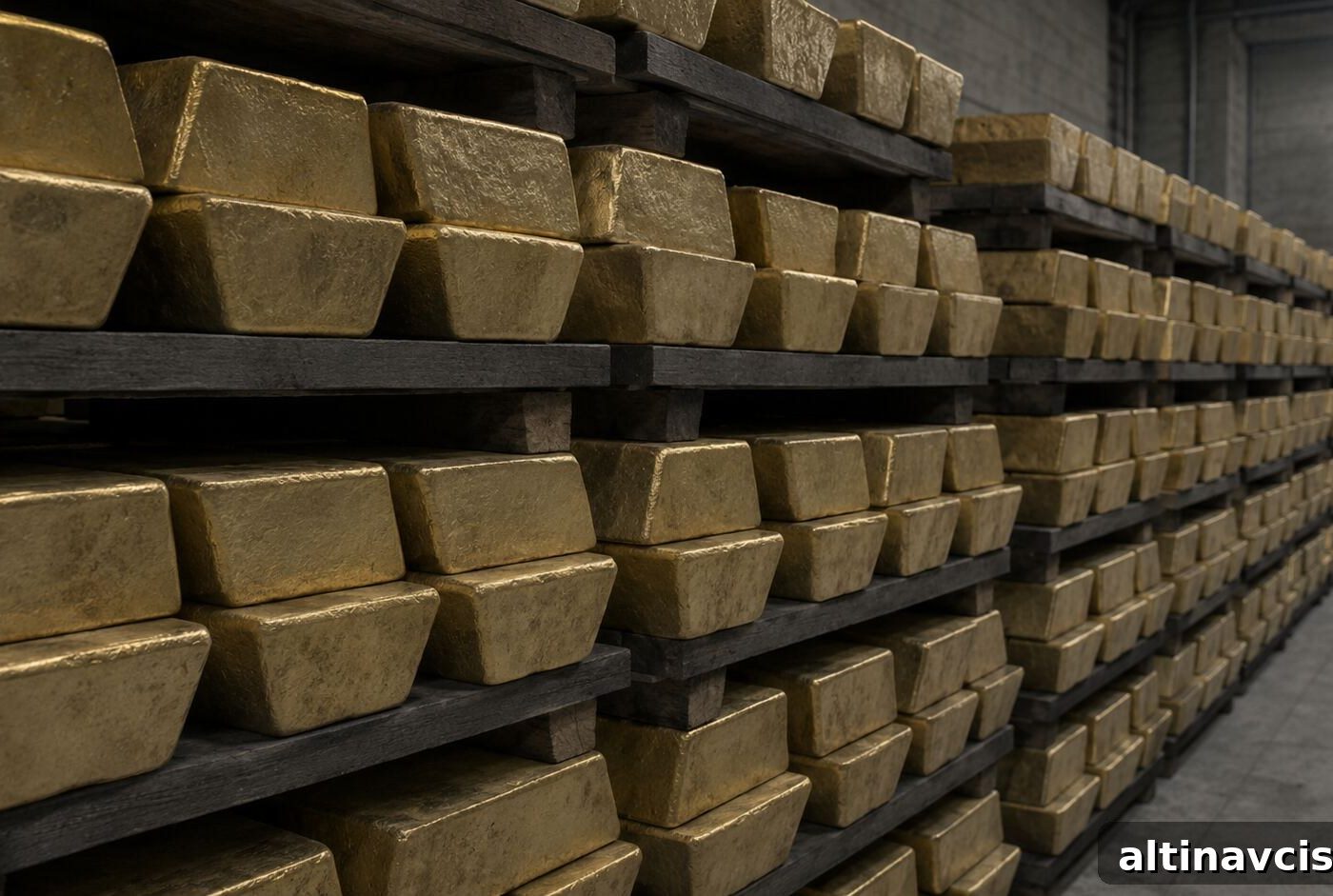
Five signals, one clear narrative: central banks are reshaping what “sound money” means. The European Central Bank confirmed a historic reallocation of global reserves toward gold. India’s government publicly refuted a Bloomberg report alleging a large gold sale. Reuters polling shows current gold prices trading well below analyst consensus. U.S. labor data set up a pivotal economic release this Friday. And the conflict involving Iran continues to weigh on markets — particularly on gold’s near-term price action. Together, these developments explain why today’s gold price reflects the friction of a transition in reserve strategy rather than the long-term outcome.
Why are central banks shifting away from U.S. Treasuries?
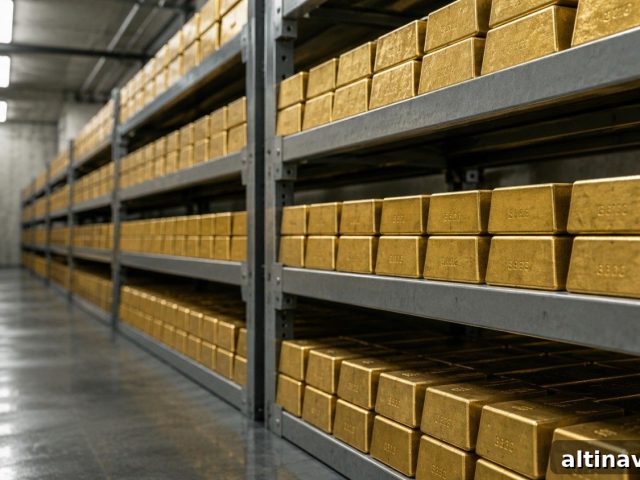
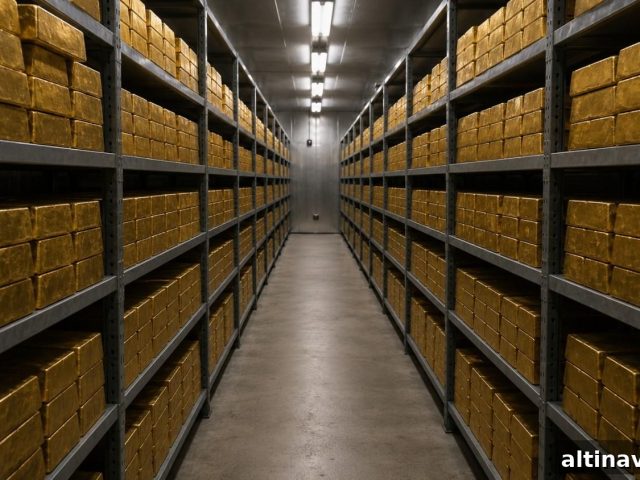
They have not abandoned U.S. Treasuries entirely, but reserve allocations are changing in ways that matter. An ECB report released on June 2 shows gold now represents roughly 27% of global central bank reserves, up from about 20% a year earlier. Over that same period, the share held in U.S. Treasuries declined from near 25% to about 22%. For the first time since the mid-1990s, gold ranks above Treasuries as a global reserve asset.
The ECB attributes this shift to rising geopolitical risk. Policymakers point to the reaction that followed Washington’s decision to freeze Russia’s dollar reserves in 2022, an event that prompted many sovereign managers to reassess the risks of holding dollar-denominated assets. Central banks now hold more than 36,000 tonnes of gold — a level approaching historical standards seen during the Bretton Woods era, when currencies were still convertible to gold.
For decades investors were told U.S. Treasuries were the safest global reserve asset. The quiet recalibration of reserve managers suggests a broader reassessment of that claim.

The Edge Every Investor NeedsSmarter precious metals investing begins with reliable market insight: fundamentals, central bank behavior, and macro trends.
Did India’s central bank actually sell $12 billion in gold?
No — at least not according to India’s government. On June 2 Bloomberg Economics published an analysis suggesting the Reserve Bank of India may have sold about $12 billion in gold during the two weeks ending May 22, inferring the move from shifts in public reserve data. The hypothesized motive was defending the rupee amid tensions tied to Iran and disruptions in the Strait of Hormuz.
India’s Press Information Bureau quickly labeled that analysis false and pointed to official RBI figures. Those figures show gold’s share of India’s foreign exchange reserves rose from 13.92% in September 2025 to 16.85% as of May 22, 2026. The matter may be clarified further in the RBI’s next Monthly Bulletin, but the episode already highlights how closely markets now watch sovereign gold holdings. A single media inference moved markets before an official response arrived — a sign of heightened sensitivity around central-bank gold policy.
This sensitivity underscores gold’s growing strategic role in sovereign finance.
Why is gold falling if the structural case for it remains strong?
The near-term drag on gold is driven largely by a transmission mechanism tied to the Iran conflict. That mechanism doesn’t negate the long-term fundamentals, but it does explain current price pressure. Rising oil prices from disruptions in the Strait of Hormuz can push inflation higher. Higher inflation, in turn, tends to keep central banks — especially the Federal Reserve — cautious about easing policy. Elevated U.S. real yields increase the opportunity cost of holding non-yielding assets like gold, which can depress prices in the short run.
Despite that headwind, structural demand persists. The World Gold Council reported net central bank purchases of 244 tonnes in Q1 2026, and those purchases occurred at levels above today’s prices. Moreover, gold remains up roughly 36% over the past year and about 90% over two years. The short-term decline reflects a tactical response to higher real yields and geopolitical uncertainty, not a reversal of the long-term thesis.
What does the Reuters analyst poll indicate for gold in 2026?
A Reuters poll of about 30 analysts produced a median 2026 gold-price forecast of $4,746.50 per troy ounce — the highest annual consensus since Reuters began polling in 2012. At the time of this report, spot gold traded around $4,461, nearly $300 below that median forecast. A year earlier, that same survey pegged 2026 at just $2,700, illustrating how rapidly the structural case for gold has shifted.
Analyst projections in late May clustered around $4,900 to $5,243 for annual averages, with year-end targets generally even higher. Central bank buying, monetary debasement concerns, and a softer dollar underlie those views. The current gap between price and consensus should be read as a measure of the near-term suppression from geopolitical-driven macro forces, not as evidence the fundamental thesis has failed.
What does the JOLTS report mean for gold prices this week?
It elevates the importance of Friday’s May payrolls report. The U.S. Bureau of Labor Statistics reported that job openings rose sharply to 7.62 million in April — well above forecasts — signaling a resilient labor market on the surface. Yet the internals showed voluntary quits at their lowest level since the pandemic, and both hiring and layoffs slowed. That mix — more openings but less worker movement — suggests stabilization that masks underlying caution.
After the JOLTS release, gold failed to sustain gains above $4,500. A still-resilient labor market gives the Fed more latitude to delay easing, while ongoing U.S.-Iran tensions can push oil and inflation expectations higher, reinforcing a more restrictive policy stance. The May payrolls print — due Friday at 8:30 a.m. ET — becomes the decisive data point: a weak print combined with persistent inflation would be classic stagflation, a condition that historically favors gold. Conversely, a strong jobs print would sustain rate-hike pressure and likely keep gold trading in a range.
SOURCES
1. nFusion Solutions — Gold & Silver Spot Price Data
2. Canadian Mining Journal — Gold Overtakes US Treasuries in Global Reserve Shift (ECB report coverage)
3. Bloomberg — Analysis suggesting RBI gold sales (June 2 reporting)
4. NewsX — Coverage of claims about RBI gold sales and government response
5. CNBC — Reporting on gold’s two-month low amid Middle East tensions and rate expectations
6. World Gold Council — Gold Demand Trends Q1 2026 (central bank purchases)
7. U.S. Bureau of Labor Statistics — JOLTS: Job Openings and Labor Turnover Survey, April 2026
8. CNBC — Coverage of oil-driven inflation concerns and U.S.-Iran talks
9. Yahoo Finance — Live coverage and updates on U.S. jobs reports
Disclaimer: This article is informational only and does not constitute financial or investment advice. Consult a qualified financial adviser before making investment decisions.
You May Also Like:
- Factory Costs Hit 82.1. That Number Is Now Working for Your Gold.
- Gold at $4,500: What Fort Knox, China, and Silver Are Telling You
- Silver Has Two Engines. Stagflation Is the One Condition That Fires Both at Once.
- The Buyer List for Gold Just Got Longer. These Countries Have Never Bought Before.
- PCE Hit 3.8%. GDP: 1.6%. Gold Went Up. Here’s the Mechanism.
- Gold Targets Are Falling. The $8,000 Forecast Isn’t.
- Gold Radar: 5 Stories the Price Chart Isn’t Telling You
- Silver Lost 3.3% While Gold Lost 1.6%. That Gap Is Not Random.
- Gold Down 1.2%, Silver Down 2.8% — The Floor Holds
- UBS Just Cut Its Gold Target by $400. The Part They Kept Is the Real Story.
Popular Topics
Picked from the archive
-
01
 Topics
Why Gold Prices Are Falling Despite Global Turmoil
-
02
Topics
Gold Price Nears $5,000 as Silver Approaches $100
-
03
Topics
Why Investors Are Buying Gold After Today’s Price Drop
-
04
Topics
Barclays’ $4,791 Target Unchanged as Gold Drops 26%
-
05
Topics
5 Signs Gold’s Correction Is a Reset, Not a Reversal
-
06
Topics
GoldSilver: One Account for Home Storage and Secure Vaults
-
07
Topics
Gold Targets Are Falling, but the $8,000 Forecast Holds
-
08
Topics
Gold Fell During War: Is It Still a Safe Haven?