Why Gold Prices Are Falling Despite Global Turmoil
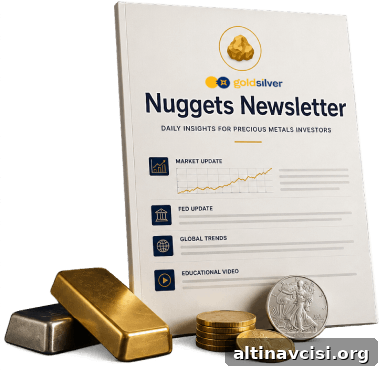
🌅 Morning News Nuggets | Today’s top stories for gold and silver investors
April 3rd, 2026 | Brandon Sauerwein, Editor
Gold prices have fallen even as conflict intensifies in the Middle East. This piece breaks down the five forces currently shaping precious metals: the Iran conflict’s oil shock, a surprising jobs report, the Fed’s policy dilemma, Goldman Sachs’ $5,400 target, and whether gold’s safe-haven status remains intact.
Why Are Gold and Silver Falling During a War?
At first glance, war typically boosts demand for safe-haven assets like gold and silver. This time is different because the Iran conflict has pushed oil prices sharply higher. Rising oil lifts inflation expectations, forces yields up, and strengthens the U.S. dollar — a combination that increases the opportunity cost of holding non-yielding metals and pressures their prices.
After a recent escalation, crude oil surged more than 10%, while gold fell nearly 4% and silver declined almost 7% on the same day. The 10-year U.S. Treasury yield climbed, which triggered dollar strength and compelled some leveraged metal positions to be liquidated. In short, energy-driven inflation has outweighed the usual geopolitical bid for precious metals.
Analysts noted that public statements have done little to clarify a timeline for a ceasefire or de-escalation. Until supply pressures in critical chokepoints ease or the Federal Reserve signals a clear pivot toward rate cuts, oil-related inflation will likely remain the dominant headwind for metals.
The Edge Every Investor Needs
Smarter precious metals investing starts here. The Nuggets Newsletter delivers clear market analysis, Fed updates, global trends, and educational content.
What Does the March Jobs Report Mean for Gold?
March payrolls rose by 178,000, well above the consensus expectation of about 57,000, while the unemployment rate fell to 4.3%. Job gains were largest in health care, construction, and transportation and warehousing, even as federal government employment continued to decline.
A stronger-than-expected payroll number usually weighs on gold in the near term. Robust employment reduces the urgency for the Fed to cut rates, supports the dollar, and signals the economy may withstand higher borrowing costs. That raises the opportunity cost of holding gold and typically suppresses prices until monetary policy appears more accommodative.
Still, caveats matter: a portion of private-sector growth was concentrated in lower-paid home health roles rather than higher-paying, full-benefit positions that most reliably support durable consumer spending. Markets will weigh both the headline and the underlying composition as trading resumes, balancing immediate rate expectations against longer-term structural trends in the labor market.
Is the Fed Trapped Between Inflation and Recession?
Yes — the Federal Reserve faces a difficult trade-off. Oil-driven inflation has pushed price pressures above the 2% target, while the labor market shows resilience on the surface but signs of fragility underneath. That tension makes policy decisions more complicated.
Market-implied odds for another rate hike by year-end have risen, reflecting growing concern that inflationary forces could persist. Import and export price gains in recent months underscore the inflationary impulse from higher energy costs. At the same time, Fed officials have emphasized that they are not seeing a classic stagflation picture, even as they acknowledge the competing goals of price stability and full employment.
In practice, a strong jobs print eases pressure on the employment side of the Fed’s mandate but does not address inflation driven by external energy shocks. That leaves the Fed in a bind: unable to confidently cut rates without risking higher inflation, and reluctant to hike aggressively as growth data softens. Historically, when central banks are between those poles, gold can regain traction once policy direction becomes clearer.
Why Is Goldman Sachs Still Forecasting Gold at $5,400?
Goldman Sachs maintains a year-end target of $5,400 per ounce because its structural thesis remains intact: sustained central bank buying, rising fiscal deficits, and an eventual easing cycle from the Fed should all support higher gold prices over time. A near-term pullback changes the price but not the underlying drivers.
Since late January’s peak, gold has retraced a significant portion of its gains, but Goldman argues that normalized speculative positioning, continued central bank purchases, and eventual rate cuts would push prices back toward their target. The firm’s near-term fair-value estimate is lower than the target, which reflects current risk pricing, but its year-end view assumes macro conditions evolve in gold’s favor.
In short, Goldman’s forecast is a view of where macro trends could move: lower real rates, a weaker dollar, and increased demand for gold as a hedge. Geopolitical tensions themselves could accelerate flows into the metal if they begin to threaten fiscal stability or trigger broader diversification away from fiat currencies.
Has Gold Lost Its Safe-Haven Status?
No. The recent selloff does not signal that gold has lost its role as a safe haven. The drop is tied to a specific macro dynamic — energy-driven inflation pushing yields and the dollar higher — rather than a structural breakdown of gold’s investment case.
Both gold and silver reached record levels in late January and have since pulled back. That behavior mirrors past episodes: geopolitical shocks can spark an initial rally, but if central-bank rate-hike expectations dominate the narrative, metals can retreat before recovering. For example, similar dynamics played out after the 2022 Russia-Ukraine conflict.
If the conflict proves prolonged and strains government budgets through higher defense spending and lower revenues, central banks may ultimately turn to easing measures to support growth. That scenario would favor higher gold prices and reaffirm the metal’s role as a portfolio anchor. For now, the safe-haven function is not gone — it is simply waiting for macro policy direction to become clearer.
Stay On Top of Gold & Silver Prices
Get important market alerts and timely analysis sent to your inbox.
Sources
- U.S. Bureau of Labor Statistics — Employment Situation, March 2026 (Released April 3, 2026)
- CNBC — Coverage of gold movements and market reaction to geopolitical developments (April 2, 2026)
- Fortune — Analysis of market reaction following public statements on the Iran conflict (April 2, 2026)
- Yahoo Finance — Federal Reserve press conference and commentary (March 2026)
- IDNFinancials / ExchangeRates — Reports on Goldman Sachs’ gold price outlook (April 2, 2026)
- Euronews — Context on past metals reactions to geopolitical events (March 2026)
This article is for informational purposes only and does not constitute financial or investment advice. Consult a qualified financial advisor before making investment decisions.
You May Also Like
- The Stagflation 2026 Warning Hidden in Today’s Data
- Gold Price Volatility Hits COVID Levels
- Gold Jumps 2% as Plans for an Iran Address Raise Tensions
- Gold Is Rising Again — The Reason May Surprise You
- Gold +3%, Silver +7%: Metals Close Q1 With a Bang
- Gold and Silver Market Update: Rebound Faces Pressure
- Gold Bounces as Iran, the Fed, and the Dollar Collide
- Iran Rejects Talks as Gold and Silver Extend Slide
Popular Topics
Picked from the archive
-
01
 Topics
Gold Price Surges Past $5,000 Amid Bond Market Turmoil
-
02
Topics
Trump’s Fed Shake-Up: Hassett and Bessent Top Picks
-
03
Topics
Falling Dollar Puts Trump’s Trade Agenda, Fed Goals at Risk
-
04
Topics
Inflation Holds at 3.0%, Gold Funds Post Historic Rally
-
05
Topics
Gold Prices Steady as U.S.-EU Tariff Truce Boosts Risk Before Fed
-
06
Topics
Powell’s Rate-Cut Dilemma: Trump vs Fed Credibility
-
07
Topics
Gold Breaks Through $4,400 as Silver Targets $70
-
08
Topics
August 27 News: Fed Shakeup, Tariff Tensions and Silver Surprise