Why Gold Prices Held Steady After Iran Peace News
Key Takeaways
- Gold fell only 0.23% after Trump announced he had called off a planned strike on Iran — a reaction far smaller than conventional market logic would predict.
- A blocked Strait of Hormuz pushes oil higher, which feeds into broader inflation and constrains the Federal Reserve from easing monetary policy. Cancelling a single strike does not unwind that inflation pathway.
- The U.S. faces near-$39 trillion in debt and rising annual interest costs, while inflation remains elevated. That policy squeeze — not the ebb and flow of conflict headlines — is the key support under gold.
What did Trump actually announce?
On Truth Social, former President Trump said he had called off a planned strike on Iran after requests from several Gulf leaders. He indicated serious negotiations were underway and that the military remained on standby. Such an announcement would ordinarily remove the war premium from prices: a major easing of geopolitical risk typically pushes safe-haven assets lower and risk-sensitive assets higher.
Yet the market response was muted. Gold futures slipped only 0.23% after the announcement — far less than the several-percent move many traders would expect when a potential military escalation is averted. That muted reaction is the important signal here: it shows the market is looking past the immediate headline and pricing in deeper, structural forces.
The Edge Every Investor Needs
Smarter precious metals investing starts here. The Nuggets Newsletter delivers concise market insights, central bank updates, global trends, and educational content.
Why isn’t the gold price moving on peace news?
Since the Iran conflict began on February 28, 2026, gold has declined by nearly 20% from its January peak around $5,590. Even while the Strait of Hormuz was effectively shut — affecting roughly one-fifth of global seaborne oil flows — the gold price moved lower rather than higher. That apparent contradiction becomes clearer when you trace how oil and inflation interact with monetary policy.
A closed Strait of Hormuz pushes oil prices higher. Rising oil tends to filter through to broader consumer prices, raising inflation expectations. When inflation rises or looks sticky, the Federal Reserve is reluctant to cut rates and may even consider further tightening. Higher policy rates and elevated Treasury yields make fixed-income securities more attractive relative to gold, putting downward pressure on the metal. In that chain, geopolitical shock leads to higher oil, which leads to higher inflation expectations, which then affects Fed policy and bond yields — and those moves matter more for gold than the headline about a single strike.
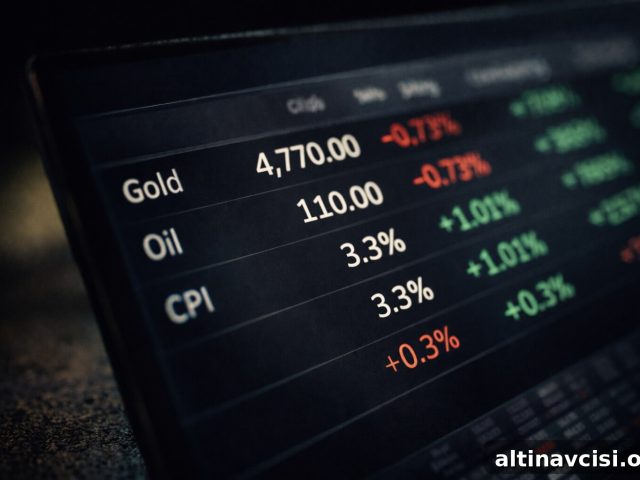
Market data underlines this linkage: the 10-year Treasury yield reached 4.687% on Monday (its highest level since January 2025), Japan’s 30-year bond yield climbed to 4.17% — a record for that tenor — and Brent crude remained above $110 per barrel. Futures markets also reflect renewed odds of further Fed tightening, with CME FedWatch indicating roughly a 51% chance traders see a rate hike by December. These conditions do not disappear because a planned strike was called off.
So what is holding the gold price up?
Gold’s current support is structural rather than purely headline-driven. Before the Iran conflict intensified, gold was already elevated near $5,277 in late February, supported by dollar weakness and a wave of central bank purchases. The conflict has not created that structural floor; it merely exposed the underlying dynamics that keep the metal bid.
The overriding factor now is a policy impasse at the Federal Reserve. The U.S. carries nearly $39 trillion of national debt. Annual interest payments on that debt already exceed $1 trillion — larger than several major federal budgets. Raising rates significantly in that environment would increase the government’s debt-service burden markedly, creating fiscal stress. Yet cutting rates while inflation remains well above the Fed’s 2% target would undermine credibility on price stability and risk fuelling further inflation. That dilemma effectively pins the Fed in place: it cannot easily ease without risking inflation, nor can it tighten much further without worsening the fiscal position.
That policy stalemate supports gold. When central banks appear constrained and inflation is persistently above target, investors gravitate toward real assets and stores of value. The result is a durable floor under gold prices that is largely independent of each new geopolitical headline.
The Fed trap is the floor — not the war
Look at the market reaction in context: gold trading just above $4,500, failing to spike on a potential escalation and barely falling on a de-escalation, signals that traders are focused on the persistent macro story. Headlines change frequently; monetary and fiscal constraints do not. The market appears to have concluded that the dominant driver for gold today is the Fed’s limited policy options in a high-debt, elevated-inflation environment.
That does not mean geopolitical risk is irrelevant — it remains a volatility catalyst. But it does mean that peace or renewed fighting are likely to be second-order influences while inflation, yields, and the structural fiscal picture remain the principal determinants of the gold price.
SOURCES
1. AP / NPR — Trump Says He’s Called Off Iran Strike at Request of Gulf Allies
2. CNBC — 10-year Treasury and market commentary on yields and inflation
3. Bloomberg — Japan 30-Year Bond Yield Hits Record as Inflation Fears Mount
4. CNBC — Oil prices and market reaction, May 19, 2026
5. CNBC — Fed rate hike odds and market pricing
6. CNBC — Kevin Warsh confirmed as Federal Reserve Chair, May 13, 2026
7. Chase / J.P. Morgan Wealth Management — notes on Federal Reserve leadership
8. Fox Business — U.S. national debt tracker and related fiscal data
9. Forex Factory — U.S. FOMC meeting minutes calendar
Disclaimer: This article is for informational purposes only and does not constitute financial or investment advice. Always consult a qualified financial adviser before making investment decisions.
You May Also Like:
- Trump Called Off the Strike. Gold’s Real Risk Is Still $39 Trillion.
- The Gold Market Is Mostly Paper. Dubai Disagrees.
- The Institutions Are Buying. Yields Are Rising. What Does That Tell You?
- Gold Up 40% in a Year. The Moody’s Downgrade Explains Why.
- No Deal, No Premium: Why Silver Fell 7% at the Trump–Xi Summit
- Gold Fell. China Bought Its Most in 17 Months. Here’s Why.
- Why Silver Falls Harder Than Gold — And What It Means
- Gold Near $4,700: The Chaos Isn’t a Ceiling. It’s a Floor
Popular Topics
Picked from the archive
-
01
 Topics
5 Factors Driving Gold and Silver Prices Higher
-
02
Topics
US Treasury Yields Rise Ahead of Major Bond Auction
-
03
Topics
Gold Price Volatility Back to COVID-Era Levels
-
04
Topics
Gold Price Nears $3,700 Ahead of Fed Meeting
-
05
Topics
CPI 3.3% and GDP Stalling: Is 2026 Stagflation Coming?
-
06
Topics
Dollar Drops as Markets Price In Fed Cuts; Tariff Fears Rise
-
07
Topics
Why Turkey Sold Its Gold and What It Means for Sound Money
-
08
Topics
Gold Price Forecast: Oil Futures Diverge From Stocks