Gold IRA vs Physical Gold: Which Is Right for Your Portfolio?

Most investors understand that gold can protect wealth. Fewer realize that the way you hold gold — in a Gold IRA or as physical metal — can save or cost you thousands in taxes and fees.
The core trade-off is simple: a Gold IRA stores IRS-approved bullion in a tax-advantaged retirement account inside a licensed depository, while owning physical gold gives you direct personal control and immediate access. The IRA typically wins on taxes; direct ownership wins on control and liquidity.
Last verified: September 2026 — prices and tax rules referenced below reflect current spot and 2026 tax-year guidance.
If you’ve thought about adding gold to your portfolio, you’ve likely seen two options: a self-directed Gold IRA or buying physical coins and bars you store yourself. Both provide exposure to precious metals, but they differ sharply in tax treatment, storage, fees, and access.
This guide explains the main differences so you can choose the structure that matches your goals — or decide whether a mix of both makes sense for diversification and peace of mind.
What’s the Difference Between a Gold IRA and Physical Gold?
A Gold IRA is a self-directed retirement account that holds physical precious metals in an IRS-approved depository. It can include approved forms of gold, silver, platinum, and palladium within a tax-advantaged retirement structure.
Physical gold ownership means you buy coins or bars and take possession of them yourself. There are no custodians or institutional layers — the metal is in your control.
This choice affects taxes, ongoing costs, how quickly you can access your money, and who is responsible for security. It isn’t just philosophical — it has material financial consequences.

The Financial System Isn’t Safer — And You Know It
As risks rise, see why gold and silver remain attractive for 2026 and beyond.
How Are Gold IRAs Taxed Compared to Physical Gold?
Many investors don’t realize the IRS treats most physical gold as a collectible. That classification matters because collectibles are subject to a maximum long-term capital gains rate of 28% when sold at a profit.
By contrast, most long-term investments face long-term capital gains rates in the 15–20% range. That 8–13 percentage point gap can noticeably reduce after-tax returns on physical gold compared with other long-term holdings.
A Gold IRA avoids this collectible tax treatment. As a tax-advantaged retirement account, gains inside a traditional Gold IRA grow tax-deferred until you take distributions in retirement, which often occur when investors are in a lower tax bracket.
Contributions to a traditional Gold IRA may also be tax-deductible depending on your income and any participation in employer retirement plans. And you can roll funds from an existing 401(k) or traditional IRA into a self-directed precious metals IRA through a custodian-to-custodian rollover without triggering a taxable event, keeping retirement savings intact while adding gold exposure.
For investors with long horizons and higher tax rates, the Gold IRA’s tax structure can outperform outright physical ownership on an after-tax basis, even after accounting for annual custodial and storage fees.
How Is Gold Stored in an IRA vs. Physical Ownership?
When you hold metals in a Gold IRA, storage is handled by an IRS-approved depository. These facilities provide professional security, insurance, and regular audits. Many offer allocated storage so your specific bars or coins are identified and segregated on your behalf.
The trade-off is cost and access: you pay annual storage and custodial fees (typically a fraction of a percent to around 1% of holdings’ value), and you cannot take personal possession of IRA metals without triggering taxes and potential penalties.
Physical ownership gives you full control. You choose where to keep the metal — a quality home safe, a bank safe deposit box, or a private vault. A home safe gives immediate access but limited protection; a bank box adds security but restricts access and rarely insures precious metals; private vaults offer the strongest protection at an ongoing cost.
Neither option is universally superior. Your preference depends on how much you value custody convenience and institutional security versus direct control and immediate liquidity.
If you’re also considering silver, storage logistics matter more. A given dollar amount of silver occupies far more physical space and weight than the same dollar amount of gold at current spot prices, increasing storage and insurance considerations for large silver allocations.
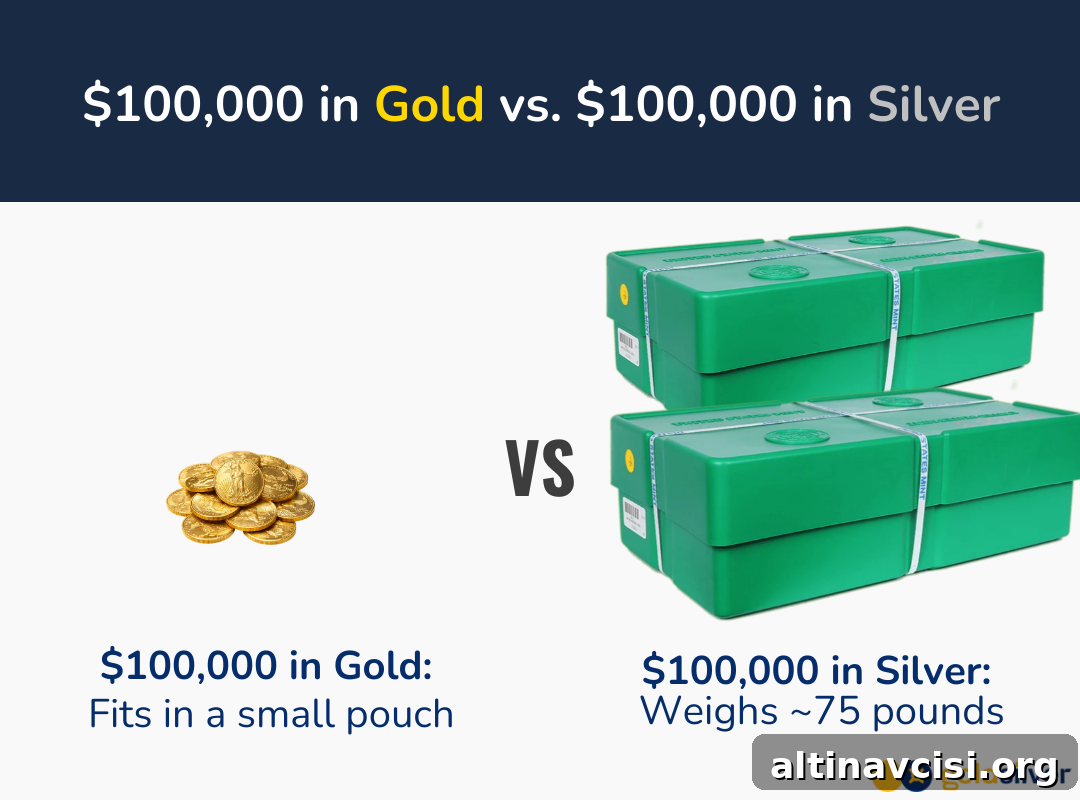
For investors attracted to silver’s price upside, plan for the additional weight and volume before committing to physical storage.
Gold IRA vs. Physical Gold: Which Has Lower Fees?
Fee structures differ, but total cost depends on your time horizon and tax situation.
Gold IRAs typically involve setup fees ($50–$150), annual maintenance ($75–$300), storage fees, custodian charges, and transaction spreads when buying or selling. Those are recurring costs that add up over years or decades.
Owning physical gold usually carries higher upfront premiums above spot (commonly 3–10%), potential sales tax in some jurisdictions, and the costs of storage, insurance, and dealer spreads on later transactions. Many of these expenses are one-time or infrequent rather than annual.
For short-term holdings, physical gold’s one-time costs can be more efficient. For long-term holdings, tax advantages within a Gold IRA can offset recurring fees, especially for investors in higher tax brackets. The right answer depends on your tax bracket, account size, and intended holding period, so run the numbers for your situation.
Can You Sell Gold From an IRA Whenever You Want?
Physical gold is flexible — you can sell it to a dealer or buyer whenever you need cash, with no age restrictions or early-withdrawal penalties. That makes physical metal useful as an emergency backstop or liquidity source.
Gold IRAs are structured for retirement. Distributions taken before age 59½ usually trigger a 10% early withdrawal penalty plus ordinary income tax on the distribution value, which can be costly if you need funds early.
Keep in mind that selling physical metal quickly at a fair price isn’t always straightforward. Local dealers and pawnshops often offer below-market prices, and in stressed markets finding a reliable buyer at good value can be difficult. Plan liquidity strategies before you need to sell.
Which Is Right for You: Gold IRA or Physical Gold?
Gold IRAs suit investors focused on retirement planning who value tax advantages and professional storage and who don’t need immediate access to those assets. They can also make sense when rolling over existing 401(k) or IRA balances into a metals allocation.
Physical gold is often better for people who prioritize direct control, want flexibility without institutional constraints, or view metal as insurance outside the banking system. With physical ownership, there is no custodian, no counterparty risk, and no account that could be frozen.
Both approaches can be valid. Many sophisticated investors use a combination: a Gold IRA for tax-advantaged retirement exposure and physical metal for liquidity and direct control.
How Much Gold Should You Hold in an IRA vs. Physical?
There is no universal allocation. The smart approach is to define your goals: retirement savings growth, inflation hedge, liquidity needs, or insurance against systemic risk. Then use the tools that meet those objectives.
A practical starting point many advisors recommend is to include precious metals as a modest portion of a diversified portfolio. Use a Gold IRA to capture tax-deferred retirement exposure and physical metal for immediate access and system-independent protection. Adjust the split based on your time horizon, tax profile, and risk tolerance.
Stay On Top of Gold & Silver Prices
Get important market alerts sent straight to your inbox.
People Also Ask
A Gold IRA stores IRS-approved precious metals in a licensed depository inside a tax-advantaged retirement account. Physical gold is direct ownership of coins or bars in your possession. Gold IRAs provide tax-deferral and professional custody but limit access until retirement. Physical gold gives immediate control and liquidity but requires you to manage security and insurance.
Contributions to a traditional Gold IRA may be tax-deductible and investment gains grow tax-deferred until withdrawal. Physical gold generally offers no retirement tax benefits and is treated as a collectible for tax purposes, subject to a maximum long-term capital gains rate of 28% when sold at a profit.
IRA metals must be held in an approved depository with professional security, insurance, and auditing, typically at an annual cost. Physical gold can be stored at home, in bank safe deposit boxes, or private vaults; you control security and insurance decisions.
You can roll over funds from a 401(k) or traditional IRA to a self-directed precious metals IRA via a custodian-to-custodian transfer. The custodian purchases approved metals and places them in an approved depository on your behalf. Follow custodian instructions carefully to avoid taxable distributions.
It depends on your goals. Gold IRAs are attractive for retirement-focused investors seeking tax advantages. Physical gold is better for those who want direct control, immediate liquidity, or an asset held outside the conventional financial system. Many investors combine both approaches.
Gold IRAs have setup fees, annual maintenance, storage and custodian charges, and transaction costs. Physical gold typically involves upfront premiums above spot, possible sales tax, storage and insurance, and dealer spreads. IRA fees are recurring; physical ownership costs are often front-loaded.
Distributions before age 59½ generally trigger a 10% early withdrawal penalty plus ordinary income tax, which can significantly reduce net proceeds. Physical gold can be sold at any time without retirement penalties, though sale prices vary by buyer and market conditions.
Selling physical metals can be easier through established dealer buyback programs that publish competitive prices and streamline transactions. That removes the uncertainty of finding a private buyer or accepting below-market offers at pawnshops or small local dealers.
SOURCES
1. IRS — Investments in Collectibles in Individually Directed Qualified Plan Accounts
2. IRS — Topic No. 409, Capital Gains and Losses
Note: This article is for informational purposes only and is not investment advice. Always research thoroughly or consult a qualified financial professional before making investment decisions.
You May Also Like:
- When Should You Sell Gold and Silver? (And What to Buy Next)
- Could the US Revalue Its Gold Reserves to Pay Down Debt?
- How Gold Performs in Recessions: What History Tells Us
- Gold vs Inflation: What 100 Years of Data Shows
- Why Silver Is More Volatile Than Gold (And Why It Matters for Investors)
- Silver Bars vs. Silver Coins: Which Is the Better Investment?
Popular Topics
Picked from the archive
-
01
 Topics
How COMEX Sets Gold Prices and Moves Global Markets
-
02
Topics
UBS Warns Investors: USD Unattractive After 10% Annual Drop
-
03
Topics
Dollar Hits Multi-Year Low as $3.3T Trump Budget Spurs Debt Risk
-
04
Topics
Trump Targets Powell Over Fed Spending, White House Tensions Rise
-
05
Topics
How to Invest in Silver: A Practical Guide to Growing Wealth
-
06
Topics
Tariff Burden Shifts to Consumers, Could Push Inflation to 3.2%
-
07
Topics
Silver Could Double in 2025 as Dollar Dominance Fades
-
08
Topics
Market Update: Gold Steady, Shoppers Cautious, Nvidia Scrutinized