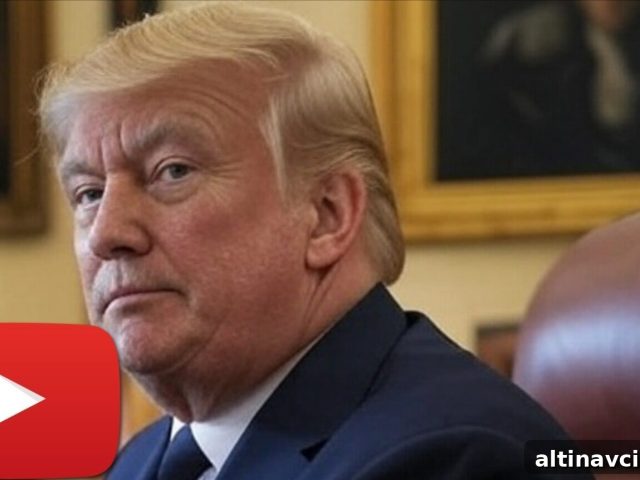
Markets Doubt Trump’s Ability to Balance Tax Cuts and Spending
Trump Faces Skepticism Over Tax Cuts and Their Effect on the National Debt
President Trump continues to face difficulty persuading both members of his own party and investors that the proposed tax cut package will not significantly increase the national debt. As debate around the plan intensifies, concerns about fiscal responsibility and the likelihood of meaningful offsetting measures have become central to the conversation.
Financial markets and many investors have remained cautious. Part of this skepticism stems from the absence, so far, of the deep spending reductions that were initially promised to accompany the tax cuts. Without clear and credible commitments to reduce spending or identify alternative offsets, markets are left to weigh the probability that lower tax receipts will widen budget deficits and add to long-term debt burdens.
The White House has actively pushed back against critics who warn of rising deficits. Officials have challenged negative assessments, including those coming from independent budget analysts like the Congressional Budget Office (CBO), arguing that some projections overstate the fiscal impact. This public dispute has become a focal point: the administration emphasizes optimistic economic assumptions, while outside analysts focus on the arithmetic of lower revenues and delayed or uncertain spending cuts.
Despite the administration’s rebuttals, President Trump himself has acknowledged a political reality that complicates efforts to balance the plan. He has conceded that concessions and compromises required to secure political support have limited the scope of spending reductions. Those concessions, he indicated, made it impossible to achieve the full level of cuts needed to offset the tax reductions in the short term. That admission has been seized upon by opponents and has reinforced market concerns that deficits may grow as a result.
The friction between political feasibility and fiscal aims highlights the broader challenge of enacting major tax reform without increasing public debt. Tax cuts can stimulate growth, but their net effect on deficits depends on details: which taxes are cut, how quickly revenues fall, whether economic growth accelerates sufficiently to offset lost revenue, and whether spending is trimmed to maintain fiscal balance. When promised offsets are uncertain or delayed by political bargaining, the risk of higher deficits naturally increases.
Republican lawmakers are not united in their reaction. Some continue to support the administration’s approach, citing potential growth benefits and arguing that future reforms can address budgetary gaps. Others, including fiscally conservative members, have expressed unease about moving forward without firmer guarantees on spending restraint. This internal division has made it more difficult to present a cohesive message that reassures investors and credit markets.
For investors, the credibility of the deficit outlook matters because higher deficits and rising national debt can influence interest rates, inflation expectations, and confidence in long-term fiscal sustainability. Market participants often react not just to policy details but to the perceived likelihood that policymakers will follow through on promises. When spending cuts remain aspirational rather than enacted, credibility suffers.
Given these dynamics, calls for greater transparency and a clearer plan have grown louder. Analysts and some lawmakers urge a comprehensive fiscal framework that pairs tax changes with specific, enforceable spending reforms or alternative revenue measures. Such a framework could help reduce uncertainty by showing a realistic path toward fiscal balance or at least a manageable trajectory for the deficit and debt.
At the same time, the political calculus remains unchanged: achieving significant spending reductions requires votes, and votes require compromises. Those compromises often dilute the fiscal protections that would make tax cuts deficit-neutral. The administration’s acknowledgement of this trade-off underscores the difficult choices that lie ahead for policymakers who want to pursue tax reform while maintaining fiscal credibility.
In summary, the debate over President Trump’s tax cut package has become a test of fiscal trust. Financial markets and many observers want concrete measures to demonstrate that lower taxes will not come at the cost of a dramatically higher national debt. Until credible offsets are enacted or stronger evidence of growth-driven revenue gains appears, skepticism is likely to persist among investors, some Republicans, and independent budget analysts.
Popular Topics
Picked from the archive
-
01
 Topics
S&P 500’s 20-Year Winning Streak Eases Recession Fears
-
02
Topics
Gold Prices Rise on Trade Tensions and Currency Moves
-
03
Topics
US Gives Global Partners Five-Week Deadline for Trade Proposals
-
04
Topics
Record Gold Rally: Trading Data Shows Banks Flipping Positions
-
05
Topics
CBO Warns: Trump Tax Plan Could Add $2.4T to US Deficit
-
06
Topics
Gold Price Holds Near $3,180 as Markets Brace for U.S. Data
-
07
Topics
Gold Falls as Trade Tensions Ease Despite Monthly Gains
-
08
Topics
Gold Falls to 3,300 as Strong Dollar, Inflation Hits Markets