Why Central Banks Are Buying Gold Again and What It Means
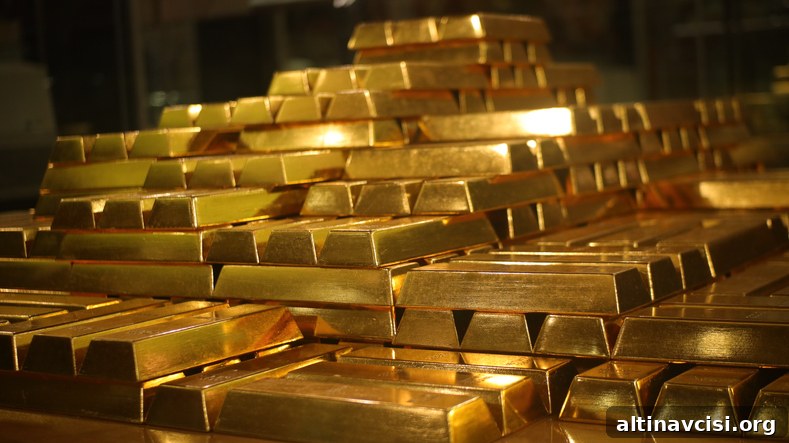
A quiet but important shift is underway in the global financial system: central banks around the world have resumed large-scale gold purchases at a pace not seen in decades. This trend is not a short-term reaction to a single shock. Instead, it reflects a structural reassessment by monetary authorities about reserves, risk and the future of international finance.
What drives this renewed appetite for gold, and why should investors pay attention?
The Numbers Tell the Story
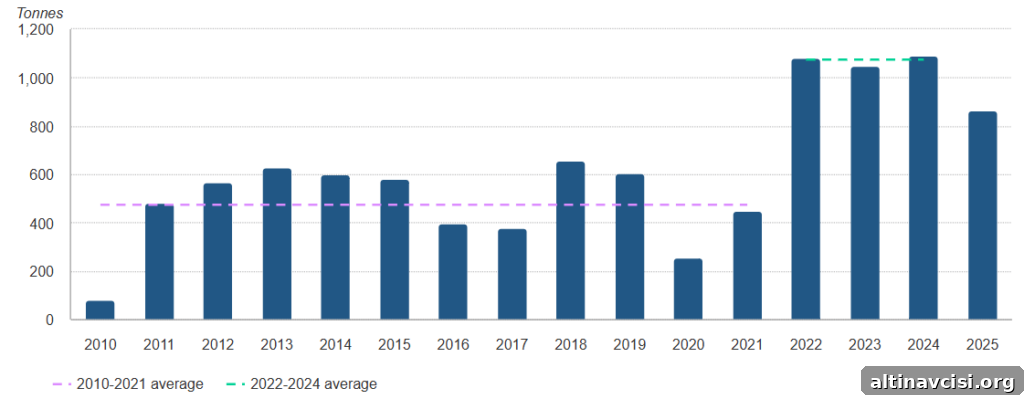
The scale of central bank gold purchases over the past few years is striking. According to World Gold Council data, central banks added more than 1,000 tonnes of gold to reserves in 2022, 2023 and 2024—with 2022’s 1,082 tonnes the largest annual net purchase since 1950. In 2023 purchases totaled about 1,037 tonnes and in 2024 roughly 1,045 tonnes. Full-year 2025 figures show 863 tonnes added globally—below the recent four‑figure pace but still well above longer-term averages.
To put this into context: from 2010 to 2021, central banks averaged about 473 tonnes per year. In just a few years the pace of accumulation almost doubled. Even though 2025 saw some moderation—partly due to record-high gold prices and a more cautious approach—23 countries still increased their holdings in the first half of that year. Overall, central banks have now been net buyers for 16 consecutive years, reversing a long era of selling.

The Financial System Isn’t Safer — And You Know It
As risks mount, learn why gold and silver are likely to remain in demand in 2026 and beyond.
Why Now? The Key Drivers Behind the Trend
1. De‑Dollarization and Reserve Diversification
For decades the U.S. dollar and U.S. Treasuries were the backbone of central bank reserves. That arrangement has come under pressure as governments reassess the risks of concentrating reserves in dollar-denominated assets. A major inflection point was the freezing of Russia’s foreign exchange assets after the 2022 invasion of Ukraine. That action signaled to many nations that foreign-held dollar assets can be restricted, while gold cannot be frozen or sanctioned in the same way.
As a result, many countries—especially emerging markets—have moved to diversify reserves away from dollar assets and increase their gold holdings. China, India, Poland, Singapore, Turkey and others have steadily reduced dollar dependence while expanding gold allocations.
2. Geopolitical Risk and Global Instability
Rising geopolitical tensions, shifting trade relationships, and the risk of financial sanctions have prompted central banks to seek assets viewed as politically neutral and widely accepted. Gold has long fulfilled that role: it has no nationality, no counterparty risk, and a longstanding global recognition as a store of value. In an era where financial linkages can be weaponized, many reserve managers treat gold as insurance against systemic shocks.
3. Inflation Concerns and Currency Devaluation
The inflation surge after the COVID‑19 pandemic highlighted a key weakness in fiat systems: governments can increase the money supply, eroding purchasing power. Gold cannot be created by policy action, so it remains a natural hedge against long-term inflation and currency devaluation.
Even while central banks tightened policy to combat inflation in 2022 and 2023, many continued to add gold. Their purchases are strategic and long-term, designed to protect reserve portfolios over decades rather than to capture short-term profits. With global public debt ratios elevated—including U.S. public debt exceeding 122% of GDP—many reserve managers see gold as a counterbalance to potential inflationary outcomes.
4. Growing Distrust of Sovereign Debt
U.S. Treasuries were once the unquestioned global safe asset. Rising debt levels, fiscal strain and the risk of returns being eroded by inflation have prompted central banks to question that assumption. Gold offers different characteristics: no credit or counterparty risk and no maturity date. For institutions managing national savings and reserves across multi‑decade horizons, those features are compelling.
Who Is Buying—and How Much?
Emerging market central banks have led recent buying, but the trend has broadened to include developed economies. China is among the largest buyers, officially adding 225 tonnes between late 2022 and 2023 and holding reported reserves of roughly 2,300 tonnes. That still represents only a small share of China’s overall reserves, suggesting room to accumulate further.
Poland has been especially active in Europe, adding more than 100 tonnes in 2025 and increasing its gold share to around 28% of international reserves after raising its target. India has steadily built reserves—adding over 200 tonnes since 2017—and repatriated 100 tonnes from foreign vaults in 2024, signaling a shift in custody preferences. Singapore, Turkey, Kazakhstan, Brazil, the Czech Republic and many others have also increased holdings, making the buying geographically broad as well as large in scale.
Notably, a growing share of central bank gold is now held domestically: about 68% of central banks store most of their gold within their own borders, up from roughly 50% in 2020. The freezing of overseas assets prompted many countries to repatriate gold or otherwise reduce reliance on foreign custodians.
Central bank demand in 2025 remained resilient despite record gold prices
Annual central bank net purchases, tonnes*
Source: World Gold Council
How Central Bank Buying Impacts Gold Prices
Central banks buy on strategic, long-term mandates rather than to time markets. That steady, often price‑insensitive demand creates a durable floor under gold prices and changes market dynamics. In 2021 through mid‑2024, gold ETFs were net sellers while prices rose substantially—an unusual divergence that highlights how central bank demand can act as a powerful independent price driver.
Although record prices in 2025 prompted some moderation in purchases, the overall influence of central bank buying has supported gold’s resilience even in environments—such as rising rates and a strong dollar—that historically weighed on gold.
Is This a Sign of Economic Uncertainty?
Yes, but it reflects deeper structural concerns rather than only short-term market anxiety. Reserve managers operate across long time horizons; a sustained shift toward gold indicates mounting doubts about the dollar-centric reserve system, greater worries about geopolitical and financial instability, and a reassessment of what truly qualifies as a safe asset.
When many of the world’s most sophisticated institutions move in the same direction, individual investors should take note and consider how those risks might affect their own portfolios.
What This Means for Individual Investors
Central bank purchases not only influence prices but also reinforce gold’s strategic role in a diversified portfolio. If sovereign treasuries and central banks are increasing gold allocations to manage geopolitical, inflation and reserve-concentration risks, many individual investors face similar threats to purchasing power and portfolio stability.
Including some allocation to physical gold or silver, or to diversified precious‑metals vehicles, can provide protection by reducing correlation with conventional financial assets, hedging against currency declines and preserving long-term purchasing power. Financial professionals commonly recommend a 5–15% weighting in precious metals depending on an investor’s objectives and tolerance for risk.
The Bottom Line
Central banks are not buying gold for a quick gain. They are reallocating reserves in response to a meaningful structural shift in the international monetary landscape—away from a single dominant reserve currency toward a more multipolar system where political neutrality and seizure resistance matter more.
Gold’s universal acceptance, political neutrality and long history as a store of value make it a natural anchor during this transition. The institutions with the most resources, the longest time horizons and the greatest responsibility for preserving national wealth have been steadily increasing gold holdings for over a decade—and in recent years have accelerated that commitment. That trend is significant and worth paying attention to.
Stay On Top of Gold & Silver Prices
Receive timely market alerts delivered to your inbox.
People Also Ask
Why are central banks increasing their gold reserves?
Central banks are growing gold reserves to reduce exposure to the U.S. dollar, hedge against inflation, and guard against geopolitical risks. The freezing of foreign exchange assets in 2022 highlighted the vulnerability of dollar‑denominated holdings abroad, reinforcing gold’s appeal as an asset that cannot be frozen or easily restricted.
How does central bank gold buying affect gold prices?
Sustained central bank demand provides a structural floor for gold prices because these purchases are driven by long-term reserve management rather than short-term trading. That steady demand can offset flows from other market participants, supporting prices even when some investors are selling.
Which countries are buying the most gold?
Emerging market central banks lead the recent buying. China, India, Poland, Singapore and Turkey are among the most active buyers. Poland and India have been especially notable for large, public purchases and strategic shifts in custody and allocation.
Is central bank gold buying a sign of economic uncertainty?
Yes, but it reflects long-term structural concerns about reserve systems, sovereign debt and geopolitical risk rather than short-term market panic. Central banks manage portfolios across decades, so persistent shifts in their reserve strategies carry weight.
Should individual investors buy gold because central banks are buying it?
Central bank buying strengthens the strategic case for gold as a portfolio diversifier and protection against inflation and geopolitical risk. Individual investment decisions should reflect personal goals and risk tolerance, but many advisors recommend a modest allocation—commonly 5–15%—to precious metals for diversification and long-term protection.
This article is provided for informational purposes only and does not constitute investment advice. Always consult a qualified financial advisor before making investment decisions.
You May Also Like:
- Gold vs Inflation: What 100 Years of Data Shows
- Why Silver Is More Volatile Than Gold (And Why It Matters for Investors)
- Silver Bars vs. Silver Coins: Which Is the Better Investment?
- Gold vs. Silver: Roles, Risks, and Portfolio Strategy
- Gold & Silver Prices: Short-Term Noise, Long-Term Signal
Popular Topics
Picked from the archive
-
01
 Topics
Why Trump Cannot Fire Federal Reserve Chair Jerome Powell
-
02
Topics
Gold and Silver Outlook: Fed Moves, Inflation and Global Supply
-
03
Topics
How the Current Gold Rally Compares to Past Bull Markets
-
04
Topics
Invesco Quarterly Gold Report: Gold Performance Drivers
-
05
Topics
Dollar Surges After Strong Jobs Report, Fed Rate Cut Delayed
-
06
Topics
Gold Price Slides Today Amid War and US Debt Reaches 39 Trillion
-
07
Topics
Gold Rises 0.4% as Traders Weigh Mixed Fed Policy Signals
-
08
Topics
Oil Drops 12% as Iran-Israel Ceasefire Eases Supply Fears