USD Falls to Seven-Week Low as Gold Price Hits New High

Daily News Nuggets | September 9th, 2025 — Here’s what you need to know about today’s most important economic and precious metals news:
Dollar Drops to 7-Week Low, Gold Hits $3,659
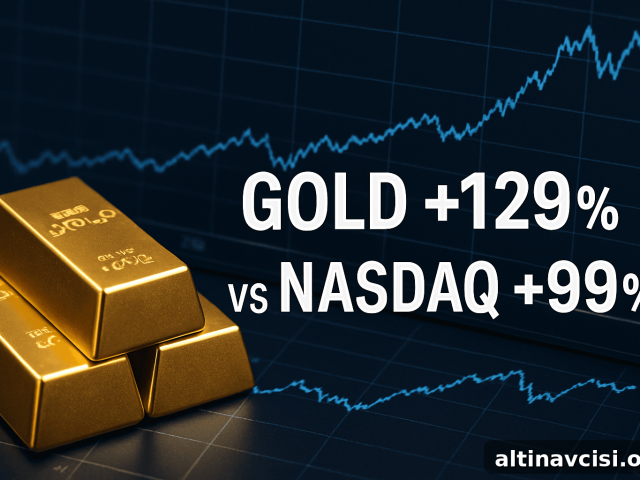
The U.S. dollar fell to a seven-week low after revised jobs data hinted at a softer labor market, reinforcing expectations that the Federal Reserve could pivot to quicker easing. Gold responded strongly, rising to $3,659.10 per ounce — another record high that highlights its appeal as an anti-dollar hedge. The downward revision to job creation over recent months has increased concern about economic momentum and pushed markets to price in more aggressive Fed rate cuts.
When unemployment worries rise and rate-cut expectations grow, investors typically shift into safe-haven assets. Gold is benefiting from a mix of a weaker dollar, lower bond yields, and heightened expectations of monetary easing. If the labor market continues to show signs of deterioration, these flows into gold are likely to persist and could further pressure the dollar and yields.
Why Gold Keeps Making New Records
Gold’s record-breaking run shows little sign of slowing as spot prices move past prior highs. The rally is driven by a convergence of factors: a weakening dollar, falling government bond yields, and widespread bets that the Fed will cut rates sooner rather than later. Beyond pure rate speculation, gold’s momentum reflects broader concerns about the strength and credibility of paper currencies.
Investors appear to be positioning for a sustained change in monetary policy and for an environment where real yields remain low or negative. For many market participants, gold functions as insurance against currency depreciation and monetary policy uncertainty. The metal’s appeal is reinforced when inflation expectations remain elevated and traditional safe assets offer lower real returns.
Is 3% the New 2%? Fed May Accept Higher Inflation
With the Fed’s upcoming September meeting, inflation metrics are proving stubbornly above the long-standing 2% target. Core CPI is reported at 3.1% and the Fed’s preferred PCE measure is near 2.9%. Despite inflation remaining above target, markets are increasingly pricing in rate cuts, suggesting the central bank may tolerate a higher inflation plateau — effectively treating around 3% as the new acceptable norm to avoid more severe economic damage.
This potential shift represents a notable change in central bank priorities, emphasizing growth and employment stability over strict price targeting. For gold investors, a higher tolerated inflation rate could sustain demand, as real purchasing power of cash erodes and savers seek tangible assets to preserve wealth.
Historic Shift: Gold Overtakes Treasuries in Reserves
Central bank reserve allocations appear to be shifting. Recent estimates indicate that official holdings of gold may now exceed U.S. Treasury holdings for the first time in modern memory — roughly $3.92 trillion in Treasuries versus an estimated more than $4.2 trillion in gold after this year’s strong rally. This milestone is driven by both higher gold prices and continued official sector buying.
This change does not mean a wholesale abandonment of dollars, but it does underscore gold’s growing role as a reserve asset that carries no counterparty risk. In a world of extensive monetary stimulus and geopolitical uncertainty, many central banks are diversifying their reserve portfolios, treating physical gold as a stabilizing asset alongside foreign bonds and other holdings.
Anglo-Teck Merger Reshapes Mining Landscape
Anglo American and Teck Resources are forming a combined mining company valued at over $53 billion, creating one of the world’s largest copper producers. The new Anglo Teck will be headquartered in Vancouver and will integrate Anglo’s African and Latin American operations with Teck’s North American assets. The move comes as copper demand accelerates due to electric vehicles and renewable energy infrastructure buildouts.
Management expects roughly $800 million in annual pre-tax synergies within four years, achieved through operational efficiencies and procurement savings. In Chile, the proximity of the Collahuasi and Quebrada Blanca operations could unlock an additional $1.4 billion in annual revenue synergies from 2030–2049. With copper supplies tightening and demand rising, the merged company will be positioned to capture premium pricing in a market that looks increasingly constrained.
Market participants should watch how these macro trends—currency shifts, central bank reserve strategies, and supply-side consolidation in critical metals—interact. Together they are reshaping the investment landscape for gold, copper, and other commodities, with implications for portfolios, inflation hedging, and long-term industrial supply chains.
Popular Topics
Picked from the archive
-
01
 Topics
World Gold Council: Gold’s Role as an Inflation Hedge Explained
-
02
Topics
Why Boring Gold Outperformed Nasdaq by 30% in 5 Years
-
03
Topics
Fed Chair Holds Rates Firm as Trump Urges GOP to Pressure Powell
-
04
Topics
Silver Prices Eye Record Highs as Fed Signals Rate Cuts
-
05
Topics
Could Gold Hit $5,000? Goldman Sachs Explains
-
06
Topics
June Inflation Rises to 4-Month High as Import Costs Surge
-
07
Topics
Federal Reserve Keeps Rates Steady Amid Economic Uncertainty
-
08
Topics
700,000 Zimbabwe Miners Strike Gold Amid Record-Breaking Prices