These Countries Just Bought Gold for the First Time
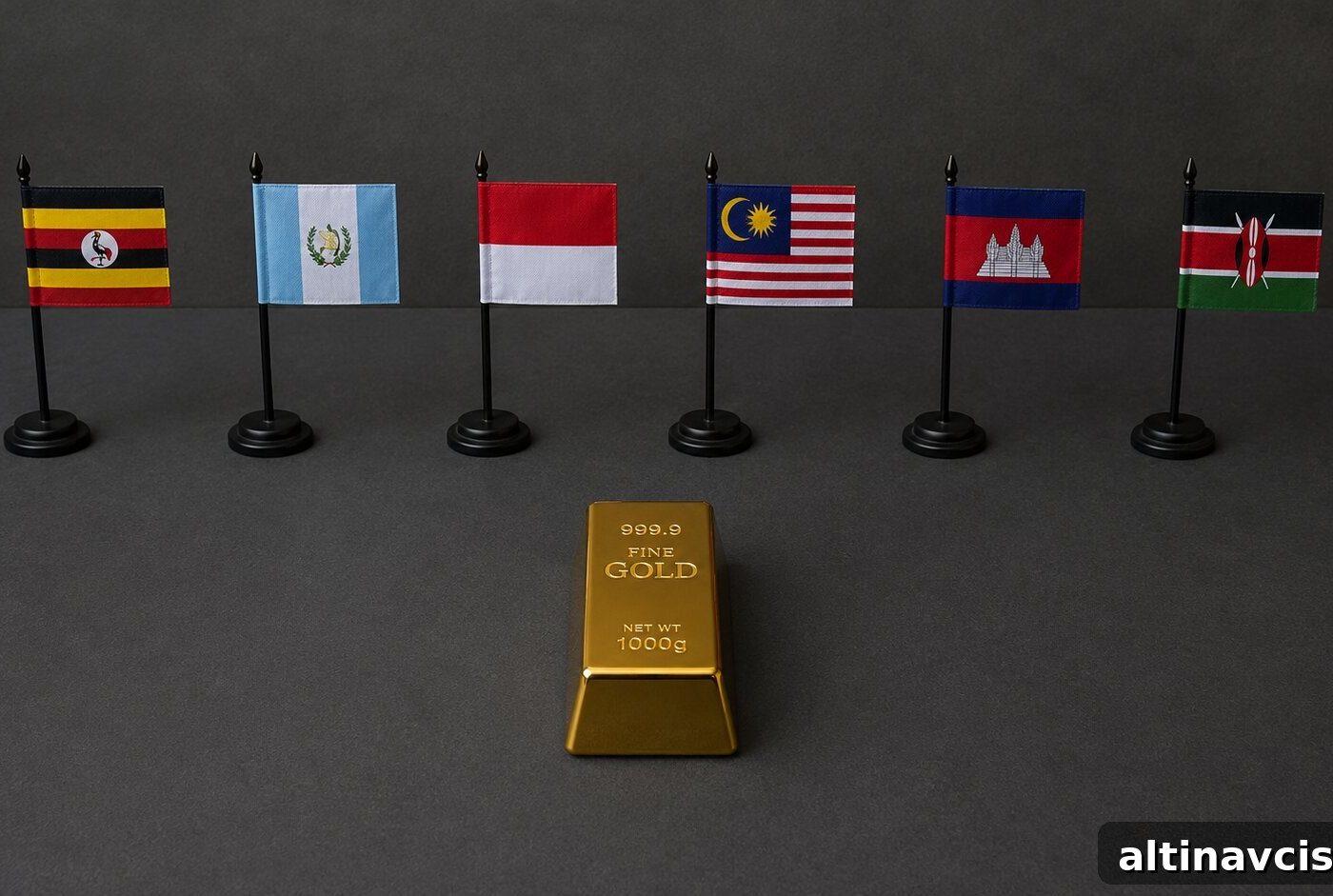
In the first quarter of 2026, central banks added a net 244 tonnes of gold to their reserves — the fastest quarterly pace in more than a year. What stands out is not only the volume but the changing profile of buyers. For the first time in recent records, countries such as Guatemala, Indonesia, Malaysia, Cambodia, Uganda, and Kenya appear among sovereign gold purchasers. Some of these central banks are buying gold for the first time ever, while others are returning after long absences. That shift matters for global reserve-management trends and for investors watching sovereign balance-sheet decisions.
There are two overlapping stories to watch. One is familiar: established large emerging-market central banks, notably those that began heavy accumulation after 2022, continue to buy. The other is more surprising: a growing number of smaller or previously inactive central banks are now moving into gold. That second trend points to a broader reassessment of reserve composition across diverse economies.
Guatemala, Indonesia, Malaysia, Cambodia, Uganda, and Kenya are examples of this widening buyer base. The World Gold Council’s Q1 2026 Gold Demand Trends report (published April 29, 2026) shows central banks purchased a net 244 tonnes in the quarter, a 3% increase year-over-year and extending a streak of consecutive monthly net purchases. Shaokai Fan, global head of central banks at the World Gold Council, described the arrival of new and returning central bank buyers as a noteworthy phenomenon — language that captures its strategic significance.
Which countries are buying gold in 2026?
Poland led Q1 2026 purchases with 31 tonnes as part of a multiyear plan to reach around 700 tonnes in total. Uzbekistan added 25 tonnes and Kazakhstan added 12. Alongside these known accumulators were the Czech Republic, Malaysia, Serbia and other institutions ranging from modest to first-time buyers. Central banks such as Guatemala, Cambodia and Indonesia were called out by the World Gold Council as new entrants or returning participants, and the Bank of Uganda began active buying under a domestic gold programme in March 2026. Kenya’s central bank governor publicly indicated similar intentions in early 2026. These moves are not mere imitation; each central bank is reaching its own conclusion on reserve strategy and arriving at a similar preference for gold.
Why are central banks buying more gold even as prices rise?
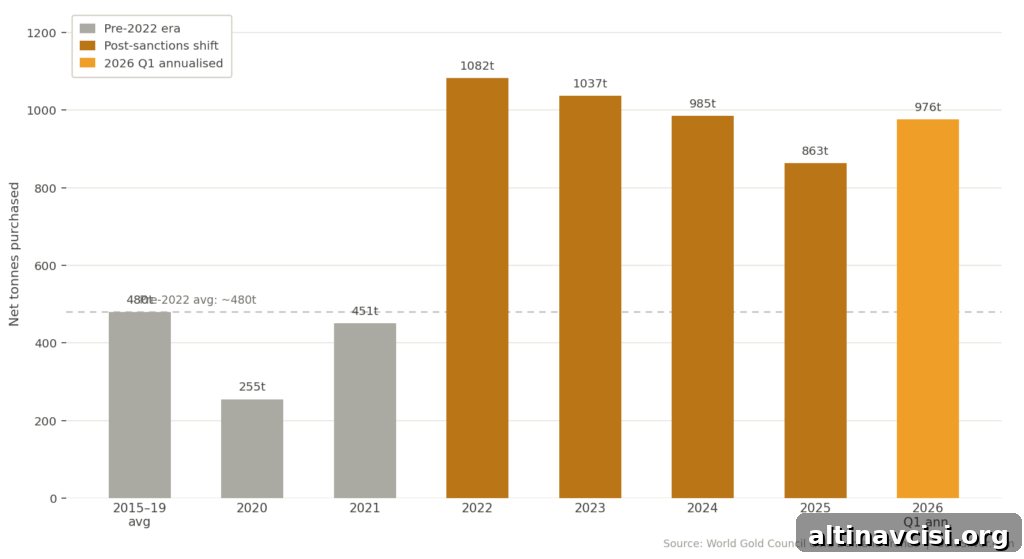
In typical markets, rising prices slow purchases as buyers wait for pullbacks and sellers increase supply. Central bank behavior since 2022 has defied that pattern. Gold reached a record nominal intraday high near $5,600 in January 2026, yet central bank buying accelerated. The five-year quarterly average for central bank purchases is roughly double the pre-2022 five-year average, even while gold prices themselves doubled.
This is not momentum trading; it is structural repositioning. Reserve managers make decisions with much longer time horizons than short-term traders. For a central bank, the price paid today matters less than the long-term durability of reserve composition over a 10–30 year view. A 2025 World Gold Council survey found 95% of central bank respondents expected global official gold reserves to increase over the next 12 months — the highest reading in the survey’s eight-year history — and a record 43% planned to raise their own holdings. None expected to cut reserves.
Why did central banks roughly double gold buying after 2022?
Before 2022, annual central bank gold buying typically ranged from about 400 to 500 tonnes. Since 2022 the annual norm has shifted to roughly 850–900 tonnes. That change was driven less by a sudden surge in gold’s investment appeal and more by geopolitical reality: in 2022, a major event showed that a sovereign nation’s foreign-exchange reserves held overseas can be frozen quickly. After that, reserve managers everywhere had to reassess how much of their holdings were in assets controlled by others.
Gold sits outside that vulnerability. It cannot be frozen or sanctioned in the same way as foreign-currency reserves tied to another country’s banking system. No correspondent bank in New York or London is required to access physical gold, and no foreign government can directly block sovereign ownership of it. For smaller economies especially, buying gold is often framed as a decision about financial sovereignty rather than a short-term macro trade.
What this means for investors and allocations
Individual investors watching these trends are observing the choices of some of the most sophisticated reserve managers in the world. These institutions have access to every major asset class and currency, yet many continue to increase gold holdings. The World Gold Council’s forecast for full-year 2026 central bank purchases is around 850 tonnes — slightly below 2025’s 863 tonnes but still more than double the pre-2022 annual average. Additional unreported buying, inferred from flow discrepancies, may push actual activity above headline figures.
As of June 1, 2026 (approximately 12:26 UTC), gold was reported near $4,507.08. Central banks acquiring gold today are often doing so with very long time horizons in mind. For them, this is a strategic hedge and an expression of financial sovereignty. Individual investors are not being instructed to follow a specific allocation; rather, they can take note that reserve managers with deep institutional knowledge are increasingly positioning toward gold.
People also ask
Why are new countries buying gold for the first time?
The freezing of roughly $300 billion in Russian central bank reserves in 2022 highlighted that foreign reserves held in another country’s financial system can be seized or restricted. That event prompted central banks worldwide to re-evaluate reserve composition and control. Gold cannot be frozen or accessed without the owner’s permission in the same way as currency balances in foreign banking systems. For smaller economies, adding gold often reflects a sovereignty-first motivation, prioritizing control and access to reserves.
How much gold are central banks buying in 2026?
The World Gold Council reported net purchases of 244 tonnes in Q1 2026, up 3% year-over-year. The council’s full-year forecast for central bank buying in 2026 is about 850 tonnes, modestly below 2025’s 863 tonnes but still significantly higher than the pre-2022 annual average.
Will central bank gold buying continue?
Current indicators suggest continued demand. The World Gold Council’s 2025 Central Bank Survey showed exceptionally strong expectations for rising official gold reserves, with a record share of respondents planning to increase holdings and none signaling intentions to cut them. Net purchases have extended across many consecutive months even as gold traded near historic price levels.
Which central banks bought the most in Q1 2026?
Poland led quarterly purchases with 31 tonnes as part of a long-term accumulation plan. Uzbekistan added 25 tonnes and Kazakhstan 12 tonnes. Other buyers included the Czech Republic, Malaysia, Serbia and China. New and returning entrants such as Guatemala, Indonesia and Uganda expanded the list of sovereign buyers beyond the established emerging-market cohort.
Sources
- World Gold Council — Gold Demand Trends Q1 2026
- World Gold Council — Gold Demand Trends Q1 2026: Central Banks
- World Gold Council — Central Bank Gold Reserves Survey 2025
- Mining Weekly — Coverage of central bank responses to geopolitical risks (March 2026)
- Regional press coverage on Bank of Uganda domestic gold programme (April 2026)
Disclaimer: This article is for informational purposes only and does not constitute financial or investment advice. Consult a qualified financial adviser before making investment decisions.
You may also like:
- PCE Hit 3.8%. GDP: 1.6%. Gold Went Up. Here’s the Mechanism.
- Gold Targets Are Falling. The $8,000 Forecast Isn’t.
- Gold Radar: Five Stories the Price Chart Isn’t Telling You
- Silver Lost 3.3% While Gold Lost 1.6%. That Gap Is Not Random.
- Gold Down 1.2%, Silver Down 2.8% — The Floor Holds
- UBS Cut Its Gold Target — The Retained Rationale Is the Real Story
- Why Gold Is Falling Today — And Why $4,500 Is Holding
- Gold Is Down Today. Here’s Why Smart Money Is Still Buying.
Popular Topics
Picked from the archive
-
01
 Topics
Fed Rate Cut Sparks Silver Rally Above $62
-
02
Topics
Gold, Silver Rally as Federal Reserve Independence Is Questioned
-
03
Topics
Bank Safety Deposit Box vs Gold Vault: Which Is Safer for Gold?
-
04
Topics
Gold Price Drops Below $5K After Jobs Revisions Roil Markets
-
05
Topics
GoldSilver: One Account for Home Storage and Secure Vaults
-
06
Topics
Treasury Secretary Urges Fed to Cut Rates by 1.5-1.75%
-
07
Topics
US Jobless Claims Jump to 3-Month High, Point to Labor Softening
-
08
Topics
Gold Rises While Silver Falls: What Investors Need to Know