Silver Price Forecast 2026-2027: Bull and Bear Scenarios
Last updated: October 29, 2026.
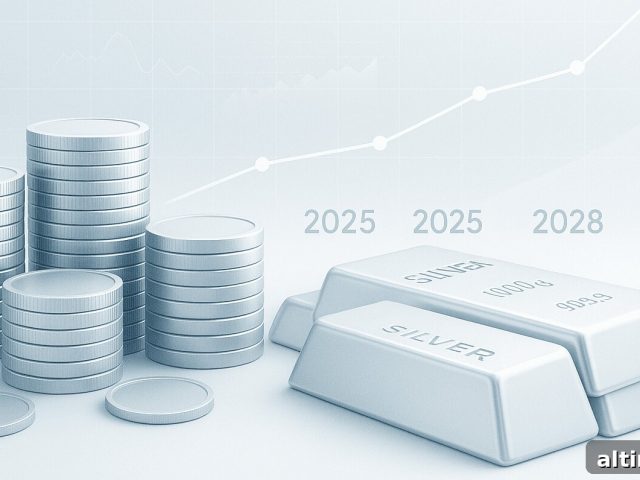
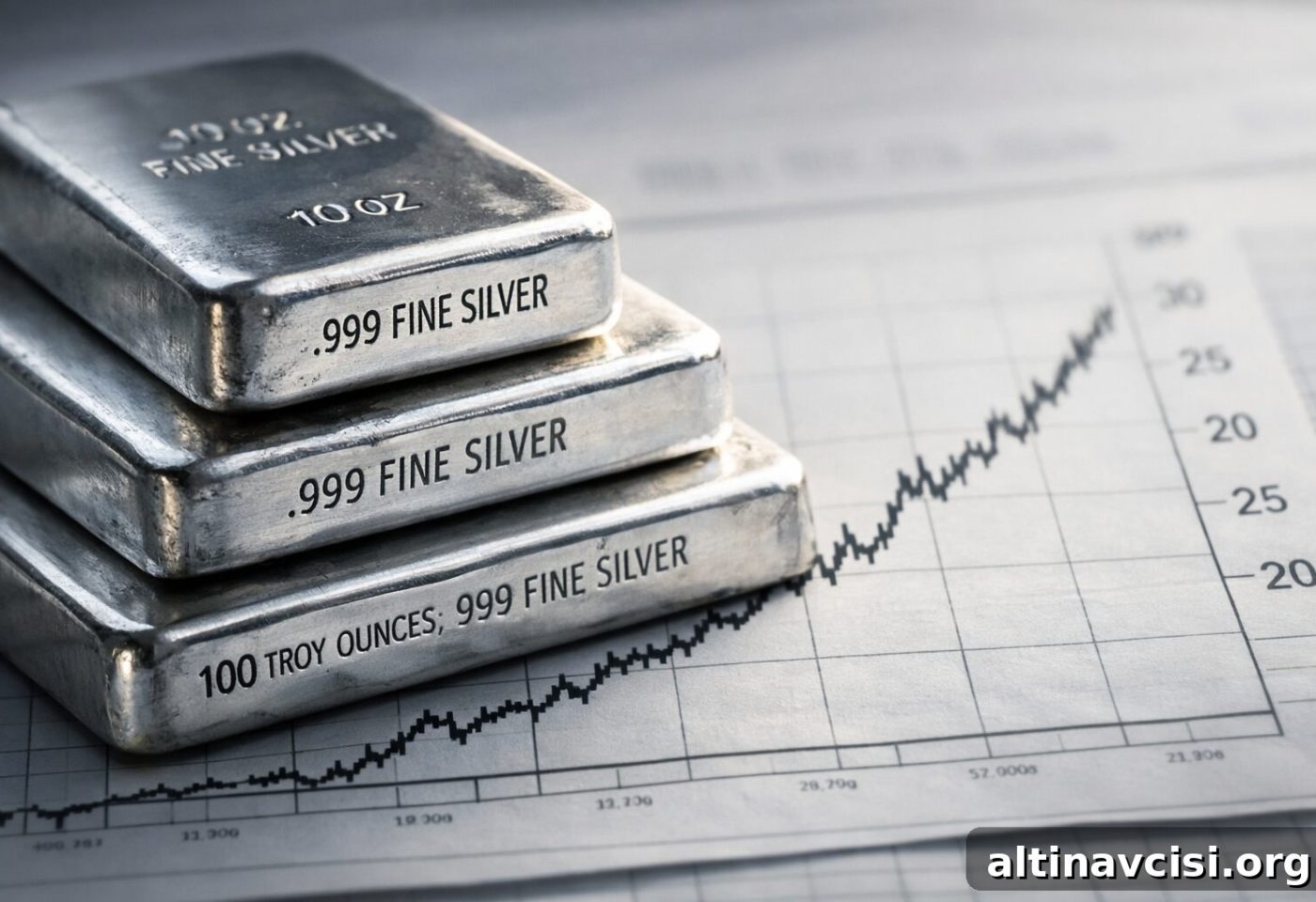
Institutional forecasts for silver in 2026–2027 vary widely, from roughly $44/oz in a bearish TD Securities scenario to $165/oz at the high end of an LBMA bull response, with many forecasters clustered near $79–81/oz. The bullish view depends on ongoing supply deficits and expanding industrial demand; the bearish view relies on a resilient dollar and reduced odds of rate cuts. As of late October 2026, silver trades near $52/oz — well below most forecasts and a reminder of the metal’s high volatility.
Where Silver Stands Heading Into the Rest of 2026
Silver is no longer the “undervalued” metal many called it in early 2025. It has already experienced a dramatic run-up, but the story is not finished and important risks remain.
The gold-to-silver ratio helps explain that rapid change. This ratio shows how many ounces of silver it takes to buy one ounce of gold. In April 2025 the ratio reached about 105:1, an extreme reading that suggested silver was deeply undervalued. By early 2026 the ratio compressed to roughly 57–63:1 as silver dramatically outperformed gold. As of late October 2026 the ratio sits near 77:1, slightly above a modern long-term average near 70:1. In short, silver swung from historically cheap to relatively expensive and then back toward cheap again in about a year — illustrating how quickly the relationship between gold and silver can change.
Where the price goes next depends on which scenario — bullish or bearish — ultimately dominates market forces.
The Bull Case for Silver in 2026–2027
Q: What factors could push silver prices significantly higher from current levels?
Several institutional forecasters remain bullish despite recent volatility. Their arguments center on durable industrial demand, persistent supply deficits, and the potential for easier U.S. monetary policy.
1. Industrial Demand Has Structural Momentum
Silver is both a monetary and an industrial metal. Solar panel production currently accounts for a meaningful share of annual global silver demand, and that share has been growing. Technologies such as electric vehicles, 5G infrastructure, semiconductors, and certain medical devices depend on silver’s conductive and antimicrobial properties. Major banks, including J.P. Morgan, project average prices materially higher than current levels — J.P. Morgan has cited an $81/oz average for 2026, while Commerzbank has suggested about $90/oz by year‑end with upside into 2027 — and those targets could be exceeded if industrial demand accelerates beyond expectations.
2. Multiple Years of Supply Deficits
Industry surveys and the Silver Institute have documented consecutive years of global silver supply deficits; a sixth year of deficit was widely expected in 2026. When mine production and recycled supply repeatedly fall short of demand, structural upward pressure on price builds. Much of new supply takes years to bring online as ore grades decline at some large producers, so deficits can persist and accumulate.
3. A Fed Policy Tailwind
If the Federal Reserve begins cutting interest rates in the second half of 2026, real yields would likely fall, supporting non-yielding assets such as silver. A weaker U.S. dollar would amplify this effect, making dollar-denominated commodities more attractive to global buyers and potentially kicking off another leg higher for silver.
4. Elevated Bull Targets from Some Institutions
Several financial institutions have outlined aggressive upside scenarios. LBMA survey respondents show a wide range, and some banks have highlighted bull scenarios that extend well past $100/oz if physical shortages intensify. Those scenarios are not consensus base cases, but they reflect genuine institutional conviction about silver’s structural supply-demand imbalance.
In short: persistent supply deficits, strong industrial demand and a potential policy pivot from the Fed could push silver toward — and perhaps above — $100/oz if those conditions materialize.
The Bear Case for Silver in 2026–2027
Q: What risks could cause silver prices to decline or disappoint?
The bear case rests on realistic macro and demand-side risks. Investors and analysts watching the downside point to a number of important headwinds.
1. Silver Already Experienced Its Major Move
Silver surged roughly 147% in 2025 and reached about $121/oz in January 2026 before a large correction. Much of that early‑2026 extreme price action showed speculative characteristics. When speculative positions unwind, prices can retreat sharply, and the gold‑to‑silver ratio at current levels no longer signals the same obvious undervaluation it did at the 105:1 extremes.
2. A Strong Dollar and Resilient Rates
Persistent inflation and signs that central bank policy might remain restrictive have supported a stronger dollar and higher real yields at times. A robust dollar raises the local cost of dollar‑priced commodities for foreign buyers and can blunt demand. Some bearish institutional scenarios assume rates stay higher for longer, which would be unfavorable for silver.
3. Industrial Demand Could Soften Through “Thrifting”
Improvements in manufacturing efficiency can reduce the amount of silver needed per product. The solar industry, for example, has improved silver usage per panel, a so‑called “thrifting” effect that can cap future demand even while installation volumes rise. Exhibit weakness in global growth, particularly in major consumers like China, would further reduce industrial demand for silver.
4. Geopolitical and Macro Wildcards
While geopolitical risk can support precious metals, it can also trigger economic stress that forces central banks into tighter policy or drives energy prices higher. Those outcomes would create mixed pressures: slower growth and higher rates at the same time, which could be doubly negative for silver.
In short: remaining speculative overhang, resilient rates, a strong dollar and potential industrial demand headwinds could keep silver under pressure and test key support ranges.
What Are Analysts Forecasting for Silver in 2027?
Analyst projections for 2027 diverge significantly. Some institutions expect a moderate path: for example, HSBC’s forecast around $57/oz assumes gradual easing of the 2026 tightness. Others see higher levels if deficits and industrial demand persist — OCBC and Commerzbank offered targets closer to the $90s under more bullish assumptions. The crucial variable is monetary policy: if the Fed eases in H2 2026, lower real yields could allow silver to amplify gold’s moves; if the Fed remains restrictive, lower-end forecasts become more likely.
Is 2026–2027 Still a Good Time to Invest in Silver?
There is no definitive yes or no — it depends on your time horizon, risk tolerance and entry price. Investors who bought during the extreme ratio readings in 2025 saw exceptional returns. At current ratios and prices, silver is closer to a historical average relationship with gold, not an obvious asymmetric bargain. The structural arguments for holding silver — supply deficits, industrial uses and inflation hedge properties — remain intact for long-term investors. For those seeking rapid repeats of 2025’s gains, the risk profile has changed. Manage position sizes, accept volatility, and consider disciplined approaches such as dollar-cost averaging instead of attempting precise market timing.
Silver in 2026–2027: Tension, Not a Verdict
Silver’s path over the next year or two will depend on how the competing forces play out. Structural bull arguments are real: green‑energy demand, persistent deficits and inflation considerations. Countervailing forces include a resilient dollar, possible further tightening of rates and demand-side efficiency gains. The pragmatic approach is to understand both scenarios, size positions to match your risk tolerance and avoid extreme bets on either guaranteed upside or inevitable decline.
People Also Ask
What are the bull and bear case scenarios for silver prices in 2026–2027?
The bull case targets a range roughly between $90 and $150+/oz, driven by ongoing supply deficits, accelerating industrial demand in solar and EV sectors, and potential Fed rate cuts. The bear case points to a correction toward $60–65/oz (or lower in some institutional views) if the dollar stays strong, inflation remains sticky, and industrial demand softens. Institutional forecasts span a wide range — from roughly $44/oz at the low end to $165+/oz at the high end of the spectrum.
What could drive silver to very high levels (for example, $300/oz)?
Reaching extreme targets like $300/oz would require a confluence of a severe and persistent physical supply shortage, a major collapse in the dollar, and a broad institutional rush into real assets — scenarios most mainstream analysts consider unlikely as a base case. Some banks have flagged high‑end scenarios if supply tightness intensifies sharply, but these are outlier views rather than consensus forecasts.
What risks could cause silver prices to decline?
Key downside risks include a persistently strong dollar, continued or renewed Fed tightening instead of cuts, a slowdown in industrial demand (especially from China), and the unwinding of speculative positions built during the 2025 rally. Historical precedent shows that even in structurally bullish markets, sharp pullbacks can and do occur.
SOURCES
1. J.P. Morgan Global Research — How Will Silver Prices Fare in 2026?
2. SBC Gold — Silver Price Forecast 2026: Institutional Target Aggregation
3. deVere Group — What’s Next for Silver in 2026? Analysts Predict Volatility Ahead
4. Finance Magnates — Silver Price Predictions: Targets and Scenarios for 2026
5. GoldSilver.com — What the Falling Gold-to-Silver Ratio Means for Investors
6. CoinDCX — Silver Price Forecast 2026–2030: Outlook and Key Drivers
7. The Silver Institute — World Silver Survey: Supply and Demand Data
8. LBMA — Precious Metals Forecast Survey 2026
This article is for informational purposes only and does not constitute investment advice. Precious metals investing involves risk, including the possible loss of principal. Price data referenced as of October 2026. Consult a qualified financial advisor before making investment decisions.
You May Also Like:
- How to Buy Silver Bars: The Investor’s Guide
- Why Silver Falls While Gold Rises: What It Means for You
- Gold Price Forecast 2026–2027: Key Predictions from Top Analysts
- Is Now a Good Time to Buy Gold? Here’s the Macro Case
- Is Gold a Better Investment Than Bitcoin Right Now?
- What the Silver-to-CPI Ratio Reveals That Spot Price Hides
- Gold & Silver Supply and Demand: What Really Drives Prices Over Time
- Dow to Gold Ratio: 100 Years of History Decoded
- How the 50 Day SMA Helps You Understand Gold & Silver
Popular Topics
Picked from the archive
-
01
 Topics
Trump Threatens Tariffs on China Over Russian Oil Imports
-
02
Topics
Tariff Uncertainty Could Push US Into Recession by Fall 2025
-
03
Topics
Fed Faces Tariff-Driven Inflation and Weakening Job Market
-
04
Topics
Trump Threatens EU With 250% Tariffs on Pharmaceuticals
-
05
Topics
HSBC Survey: Gold Allocations Surge from 5% to 11%
-
06
Topics
VIX at Yearly Low as Wall Street Investors Shrug
-
07
Topics
Is Gold in a Bubble? Kiyosaki’s $35K Prediction Explained
-
08
Topics
Silver Pauses After 100% Rally as Gold Traders Watch Fed