Is Gold in a Bubble? Kiyosaki’s $35K Prediction Explained
When gold doubles in a year, the question everyone asks is the same: is this a bubble?
That’s a fair question — but often people focus on the wrong thing. The central issue isn’t merely whether gold’s price has moved too far too fast. It’s whether the forces driving that rise are grounded in fundamentals or whether speculation has raced ahead of reality.
Robert Kiyosaki offered a stark answer. The Rich Dad Poor Dad author told his followers on March 16, 2026, that gold would reach $35,000 an ounce within a year of what he calls “the biggest bubble bust in history.”
That claim is either visionary or reckless. Here’s how to evaluate it.
Why Does Kiyosaki Predict $35,000 Gold?
Kiyosaki’s forecast is not merely a price target. It rests on a broad macro thesis about systemic financial distress.
BIGGEST BUBBLE BUST
I do not know what pin, what event will pop the biggest bubbles in history. Whatever the event, the pin is near.
It’s not IF. It’s WHEN.
When the bubbles go bust I predict gold will hit $35,000 an ounce one year after the gold bubble goes pop…
— Robert Kiyosaki, March 16, 2026
Three related assumptions underpin his view:
- Unsustainable debt. Global and U.S. debt levels have grown faster than underlying economies can support. Kiyosaki warns that unresolved structural damage since 2008 and rising private credit risk could trigger cascading failures.
- Fiat currency debasement. Central banks can expand money supply at will; gold cannot. That asymmetry is central to his argument and a reason many central banks themselves have accumulated gold.
- Post-crash revaluation. The $35,000 number represents his estimate of gold’s value after a severe repricing of paper assets, when investors rush into tangible stores of value.
Put in perspective, $35,000 an ounce implies a gold market capitalization far larger than today’s global equity markets. Whether that projection is plausible depends entirely on how seriously you accept the collapse scenario behind it.

The Financial System Isn’t Safer — And You Know ItAs risks mount, discover why gold and silver remain relevant in 2026 and beyond.
Receive concise analysis and alerts to help you consider precious metals as part of a diversified plan.
What Actually Makes an Asset a Bubble?
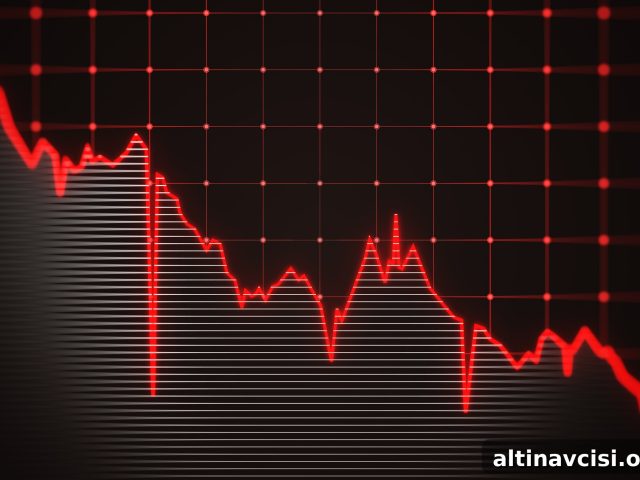
A bubble forms when price becomes disconnected from value because speculation and herd behavior dominate fundamentals. That pattern — initial value creation, followed by irrational exuberance and then a sharp correction — played out in the dot-com crash and the 2008 housing crisis. In both examples, easy credit and chase-for-returns pushed prices far beyond what underlying cash flows or collateral justified. When sentiment reversed, the falls were swift.
Does gold fit that script? Not neatly. The reasons why matter.
Is Gold in a Bubble — or a Bull Market?
The argument that gold might be in a bubble has some merit: prices have moved rapidly, and momentum-driven flows are present. But the price history and demand drivers tell a more nuanced story.
Gold’s path has included sharp rallies and meaningful pullbacks. For example, prices moved above $5,000 in late 2024, climbed above $5,500 in early 2026, and later retreated as geopolitical events and short-term risk management influenced flows. Those swings reflect volatility rather than a breakdown of gold’s fundamental case.
Gold differs from typical bubble assets because it produces no earnings and pays no dividend. Traditional valuation metrics don’t apply. Its value is practical: preserving wealth, hedging currency debasement, and providing protection when other assets falter. Those functions don’t disappear when the price rises; in many cases they become more relevant.
Current demand is shaped by structural factors: persistent fiscal deficits, aggressive central bank gold purchases, geopolitical uncertainty, and concerns over fiat purchasing power. These are durable forces, not the speculative mania that marks a bubble’s final stage.
Should You Trust Kiyosaki’s $35,000 Gold Prediction?
Kiyosaki has occasionally called market moves directionally correctly. His prior targets have sometimes been met, although timing has often slipped. That track record makes him a useful indicator of macro sentiment rather than a precise forecaster.
There are credibility questions to weigh. He has issued large-scale crash warnings repeatedly since 2022, and each missed timing has pushed the target further out. Public inconsistencies on other positions — for example, Bitcoin — suggest taking specific entry and exit calls with caution.
A practical way to read his message: accept the signal that hard assets could outperform in a severe deleveraging, but treat the $35,000 figure as rhetorical emphasis rather than a near-term price forecast.
What Does Gold’s History Tell Us About Where It’s Headed?
Historically, gold rallies during periods of stress and consolidates when conditions calm. In 2020 it rose sharply as markets and economies reacted to the pandemic; in 2021 it gave back some gains during a period of relative stability. Those moves are consistent with gold acting as a hedge rather than displaying classic bubble behavior.
Monetary policy remains the largest variable for gold over the long run. When real interest rates are deeply negative, gold tends to perform well. When central banks tighten and yields rise, gold faces pressure. That explains much of the volatility alongside geopolitical headlines.
Importantly, many structural drivers — high debt, fiscal deficits, questions about dollar credibility, and geopolitical risk — remain in place. Short-term swings are noise within a broader macro environment that has supported gold since 2022.
How Should You Actually Position for This?
You don’t need to endorse Kiyosaki’s extreme collapse scenario to consider an allocation to gold. Its low historical correlation with stocks and bonds, and its performance as an inflation hedge in multiple cycles, make it useful simply as insurance against uncertainty.
Most advisory frameworks suggest allocating between roughly 5% and 15% of a portfolio to precious metals, adjusted for risk tolerance. Conservative investors often favor gold for stability, while more aggressive investors add silver for greater upside potential at the cost of higher volatility.
Choose the form that fits your goals: physical bullion, ETFs, or mining equities each carry distinct tradeoffs. For many investors, dollar-cost averaging—buying gradually over time—reduces timing risk and builds a position across price points. That approach benefits you whether a dramatic revaluation happens or not.
The Bottom Line: Is Gold in a Bubble?
By classical definitions, no. Gold’s recent gains reflect tangible macro pressures: elevated debt, central bank accumulation, geopolitical tensions, and inflation concerns — not the speculative mania that drives classic bubbles. Will those pressures escalate into the kind of full systemic collapse Kiyosaki envisions? Nobody can know for certain.
Kiyosaki’s $35,000 assertion is almost certainly hyperbolic on a near-term timeline. Still, the broader logic—that hard assets can preserve wealth when paper assets are stressed—is historically sound. Build a portfolio to withstand multiple scenarios rather than to hinge on a single dramatic prediction.
Stay On Top of Gold & Silver Prices
Get market alerts and timely analysis delivered to your inbox.
People Also Ask
Is gold currently in a bubble?
Not in the traditional sense. Gold’s rise is driven largely by structural factors — global debt, central bank purchases, geopolitical risk, and inflation concerns — rather than pure speculative mania. Short-term corrections are possible, but the fundamental demand drivers remain intact.
What is Robert Kiyosaki’s $35,000 gold prediction based on?
Kiyosaki’s projection is framed as a post-crash revaluation. He argues that unsustainable debt, fiat currency debasement, and unresolved structural risks could trigger a systemic collapse after which gold would be dramatically revalued as investors shift into tangible assets.
How does a financial bubble differ from a gold bull market?
A financial bubble is driven by speculation that detaches price from intrinsic value and collapses when sentiment reverses. A gold bull market typically reflects worsening macro conditions — negative real rates, currency weakness, or geopolitical risk — which increase the practical demand for gold as a hedge.
Has Kiyosaki’s gold prediction been accurate in the past?
Directionally, yes: some of his earlier targets were exceeded. However, his timing has often been off and he has repeatedly issued broad crash warnings. Read his calls as macro signals rather than precise timing or price forecasts.
How much gold should an investor hold in their portfolio?
Common recommendations suggest allocating roughly 5%–15% of a portfolio to precious metals, depending on risk tolerance. Conservative investors lean toward the higher end for stability; more aggressive investors may add silver for higher potential returns. Dollar-cost averaging is a practical way to build a position over time.
This article is informational only and does not constitute investment advice. Past performance is not indicative of future results. Consult a qualified financial advisor before making investment decisions.
You May Also Like:
- Gold vs Stocks & Bonds: What the Data Really Suggests
- Silver Price Crash History: What Happens After the Biggest Drops
- Gold IRA vs Physical Gold: Which is Best for Your Portfolio?
- How Gold Performs in Recessions: What History Tells Us
Popular Topics
Picked from the archive
-
01
 Topics
Gold Price Drops Below 50-Day Moving Average
-
02
Topics
Gold Rally Consolidation Signals Continued Upside
-
03
Topics
Hong Kong Plans New Global Gold Trading Platform
-
04
Topics
Gold Price Falls 0.5% Ahead of Fed Appointment
-
05
Topics
Gold Price Nears $4,000 as U.S. Data Confidence Falters
-
06
Topics
JPMorgan Predicts Gold Could Top $5,400 by 2027
-
07
Topics
US-EU Deal Sets 15% Tariffs; China Truce to Continue
-
08
Topics
EU Rushes to Avert Trump’s 30% Tariff Deadline