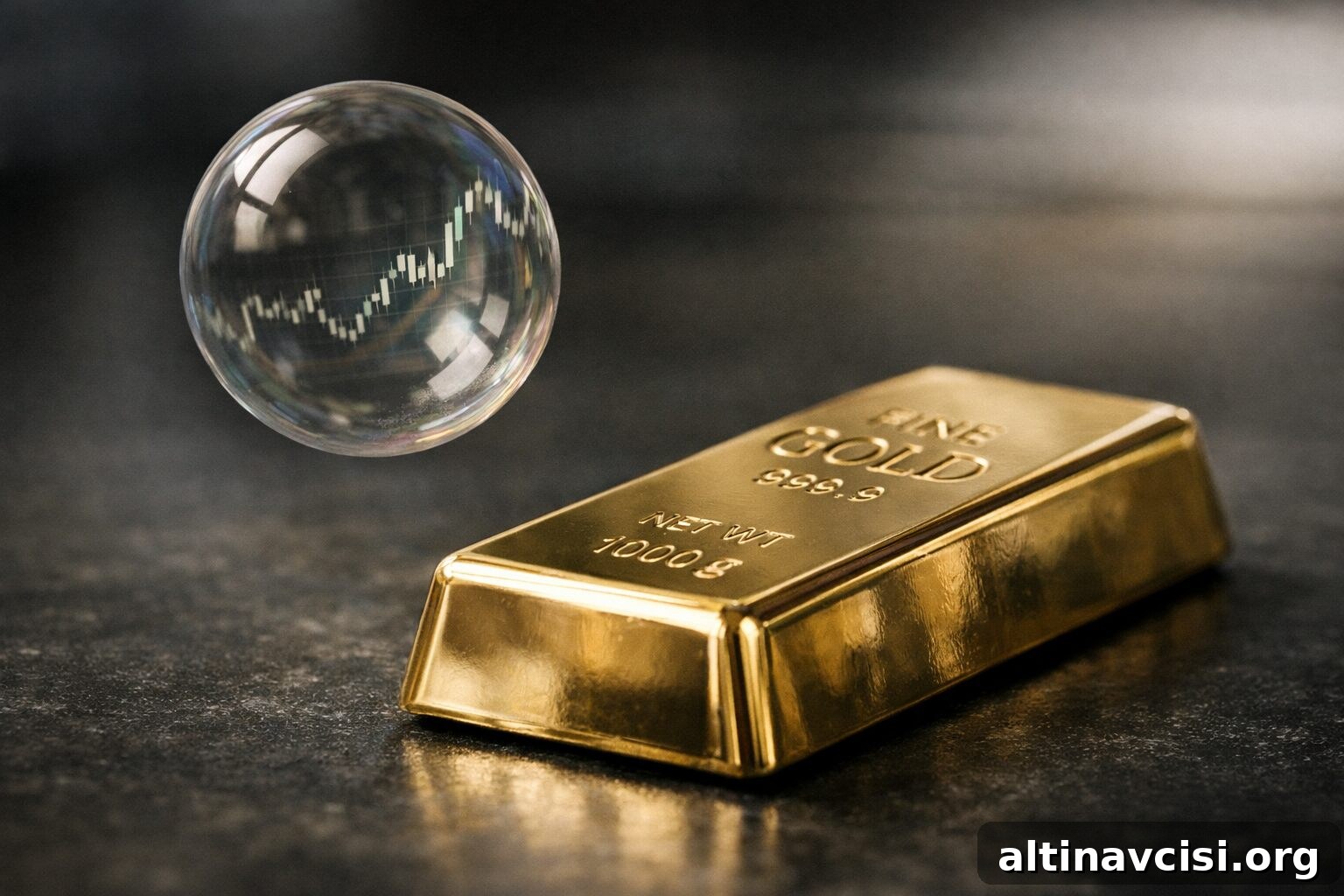
When gold doubles in a year, the same question resurfaces: is this a bubble?
That is a fair question, but many people focus on the wrong thing. The important issue is not simply whether gold’s price has risen a lot; it’s whether the forces behind that rise are rooted in fundamentals or driven by speculation that has run ahead of reality.
Robert Kiyosaki has offered a clear, if extreme, view. The Rich Dad Poor Dad author told his followers on March 16, 2026 that gold could reach $35,000 an ounce within a year of what he calls “the biggest bubble bust in history.”
That prediction may be visionary or reckless — the difference depends on how plausible you find the collapse scenario beneath it.
Why Does Kiyosaki Predict $35,000 Gold?
Kiyosaki’s call is not simply a numeric target. It rests on a macro narrative of systemic failure.
In his March 16 post he wrote that a massive bubble will pop and that gold will be revalued dramatically in the aftermath.
Three interlocking assumptions shape his argument:
Unsustainable debt. Global debt, particularly in major economies, has grown faster than productive capacity can absorb. Kiyosaki points to unresolved structural weaknesses since 2008 and to rising private credit exposure as potential triggers for cascading failures.
Fiat currency debasement. Central banks can expand money supply; gold cannot be printed. That contrast is central to his thesis — and it’s an idea reflected in the behavior of major central banks, which have been accumulating gold at elevated rates.
Post-crash revaluation. The $35,000 figure is framed as a post-collapse revaluation rather than a short-term forecast: a level gold could reach once investors flee paper assets and seek tangible stores of value.
The numbers are eye-catching. A $35,000 per ounce price would imply a gold market larger than all global equities today. Whether that is visionary or implausible depends on how seriously you consider the extreme collapse scenario Kiyosaki outlines.
What Actually Makes an Asset a Bubble?
A financial bubble forms when prices detach from value: speculation overtakes fundamentals, valuations lose connection to cash flows or intrinsic worth, and asset prices keep rising until sentiment reverses. Classic examples include the dot-com crash of 2000 and the housing collapse of 2008, where easy credit and herd behavior pushed prices far beyond what underlying economics justified.
Do those dynamics describe gold today? Not exactly — and the distinction matters.
Is Gold in a Bubble — or a Bull Market?
Arguments that gold is in a bubble have some merit: prices roughly doubled in under two years, and momentum-driven flows are present. But the full picture is more nuanced.
Gold surged above $5,000 in late 2024 and pushed higher into 2026 before pulling back. Geopolitical events can cause sharp moves in either direction — for example, conflict-driven volatility in 2026 sent prices down temporarily as investors rebalanced positions. Such swings are volatility, not proof of a busted thesis.
Gold also differs from many bubble assets because it produces no earnings and pays no dividend; traditional valuation metrics don’t apply. Its value is functional: it stores wealth, hedges currency debasement, and serves as a refuge when other assets fall. Those roles remain relevant even as prices rise.
Today’s demand drivers include persistent fiscal deficits, central bank purchases at historically high levels, geopolitical risk, and concern over fiat purchasing power. Those are structural, not the frenzied speculation that marks a bubble’s final stage. Corrections will occur, but price pullbacks are not necessarily the same as a bubble bursting.
Should You Trust Kiyosaki’s $35,000 Gold Prediction?
Kiyosaki has been directionally correct on some past calls: earlier targets he mentioned were later surpassed. His predictions have moved in the right direction at times, but timing often slipped. He has repeatedly warned of an imminent “biggest bubble” since 2022, and each missed deadline has pushed the forecast out further.
That history suggests he is a useful barometer of macro sentiment rather than a precision forecaster. His core idea — that hard assets can outperform paper assets during severe deleveraging — is historically credible. The $35,000 figure reads better as a directional statement about how high gold might be revalued in an extreme scenario than as a short-term target.
Treat his warning as a signal, not a timetable. For realistic scenario planning, rely on data and diversified strategies rather than a single headline price forecast.
What Does Gold’s History Tell Us About Where It’s Headed?
Historically, gold tends to rise sharply during periods of stress, consolidate during calmer stretches, then build a new base and trend higher. For example, gold climbed during the 2020 pandemic and retraced during the more stable year that followed — behavior consistent with a functioning hedge rather than a classic speculative bubble.
Bubbles collapse when their speculative catalyst evaporates; gold typically absorbs shocks, resets, and maintains a structural floor. The main long-term driver is monetary policy: negative real rates favor gold, while rising yields and hawkish central banks create headwinds.
Crucially, the macro forces pushing gold since 2022 — debt accumulation, fiscal deficits, concerns about the dollar, and geopolitical risk — remain in place. Short-term price swings are mostly noise against that backdrop.
How Should You Actually Position for This?
You don’t need to accept Kiyosaki’s extreme collapse scenario to make a reasoned allocation to gold. The metal’s low correlation with stocks and bonds and its inflation-hedge properties make it useful across many outcomes. Those benefits rely on uncertainty, which is abundant.
Practical allocation frameworks typically recommend 5% to 15% of a portfolio in precious metals, adjusted for risk tolerance. Conservative investors favor gold for stability; more aggressive investors may include silver or mining equities for higher potential returns and volatility. Choices include physical metal, ETFs, and mining stocks, each with different trade-offs.
Timing the top or bottom is difficult. Dollar-cost averaging — buying gradually over time — limits timing risk. If a dramatic revaluation occurs, you will have accumulated positions beforehand; if not, you will have bought at multiple prices and preserved diversification.
The Bottom Line: Is Gold in a Bubble?
Not in the classical sense. Gold’s recent gains reflect structural macro pressures — rising debt, inflation concerns, geopolitical tension, and central bank accumulation — rather than pure speculative mania. Those conditions are signs of unresolved economic challenges, not necessarily an unsustainable frenzy destined to collapse tomorrow.
Could those pressures intensify into the kind of full systemic collapse Kiyosaki describes? It’s possible, but highly uncertain. His $35,000 figure is likely hyperbolic on a near-term timeline. Still, the logic that hard assets retain value in a highly leveraged world is sound.
Build a portfolio around durable principles, not a single prediction. A modest, measured allocation to precious metals protects against a range of uncertain outcomes without depending on extreme price scenarios to justify itself.
Stay On Top of Gold & Silver Prices
Get important market alerts sent straight to your inbox.
People Also Ask
Is gold currently in a bubble?
Not by the classic definition. The recent rise is driven by structural fundamentals — heavy central bank buying, rising global debt, geopolitical risk, and inflation concerns — rather than the speculative mania that characterizes a true bubble. Short-term pullbacks remain possible, but core demand drivers are intact.
What is Robert Kiyosaki’s $35,000 gold prediction based on?
Kiyosaki frames the prediction as a post-crash revaluation. He points to unsustainable debt, fiat debasement, and lingering structural issues from prior crises as the triggers that would drive investors into hard assets and push gold to much higher nominal values.
How does a financial bubble differ from a gold bull market?
A financial bubble reflects speculative detachment from intrinsic value, often followed by a rapid collapse. A gold bull market typically reflects deteriorating macro conditions — low or negative real rates, currency weakness, or heightened geopolitical risk — that increase the practical worth of gold’s safe-haven properties.
Has Kiyosaki’s gold prediction been accurate in the past?
Directionally, some of his earlier calls anticipated later price moves, but timing has often been off. He has issued repeated warnings about an imminent systemic bust since 2022, which undermines the precision of his forecasts. Read his comments as macro signals rather than exact price targets.
How much gold should an investor hold in their portfolio?
A common guideline is to allocate between 5% and 15% to precious metals, depending on risk tolerance. Conservative investors favor gold for stability; more aggressive investors may include silver or mining equities for higher potential gains. Dollar-cost averaging is a practical strategy for building exposure over time.
This article is for informational purposes only and does not constitute investment advice. Past performance is not indicative of future results. Always consult a qualified financial advisor before making investment decisions.
You May Also Like:
- Gold vs Stocks & Bonds: What the Data Really Suggests
- Silver Price Crash History: What Happens After the Biggest Drops
- Gold IRA vs Physical Gold: Which is Best for Your Portfolio?
- When Should You Sell Gold and Silver? (And What to Buy Next)
- Could the US Revalue Its Gold Reserves to Pay Down Debt?
- How Gold Performs in Recessions: What History Tells Us