Daily News Nuggets | Today’s top stories for gold and silver investors
February 5th, 2026 | Brandon Sauerwein, Editor
Silver Slides as Risk Appetite Cracks
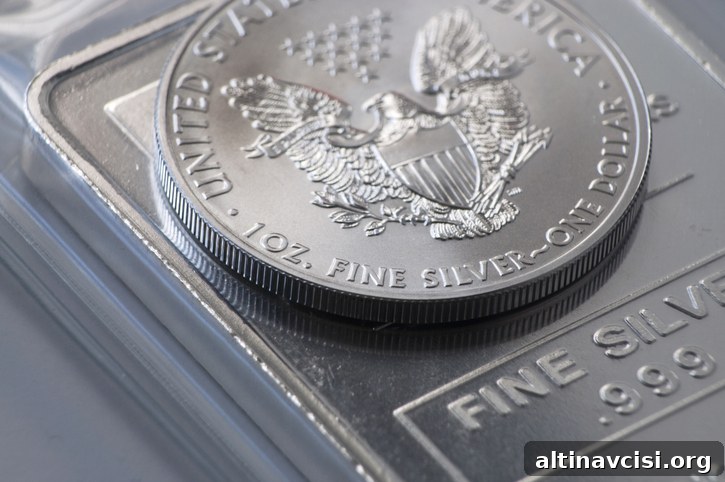
Silver fell sharply today, losing more ground than gold as selling pressure swept across metals markets. The decline wasn’t driven by changes in supply or industrial demand but by sentiment: when broader markets wobble, investors trim exposure to assets viewed as volatile or leveraged. Silver — with both precious-metal and industrial characteristics — often bears the brunt of those moves first.
What stood out was how quickly prices moved. After a strong rally over the past year, crowded positioning left little room for error. When liquidity tightens, silver’s higher volatility magnifies downside moves. Small shifts in risk appetite can trigger outsized reactions when many participants are similarly positioned.
For long-term holders, this pullback reflects positioning more than a change in fundamentals. Industrial demand tied to electrification and solar installations remains intact. Still, episodes like this are a clear reminder that silver is not gold: in times of stress it tends to behave more like a risk asset than a safe haven.
The Edge Every Investor Needs
Smarter precious metals investing starts here. The Nuggets Newsletter brings essential market insights, Fed updates, global trends, educational videos, and more.
Bitcoin Drops Below $70,000 as Deleveraging Accelerates
Bitcoin slid under $70,000 as forced selling rippled through crypto markets. The decline was driven largely by deleveraging: as prices fell, margin calls and automatic liquidations amplified the move, creating a feedback loop of selling rather than reflecting new negative fundamentals.
This dynamic is familiar to crypto traders. Bitcoin rallies on optimism but can sell off sharply when liquidity tightens. What’s different now is the broader environment: restrictive interest rates and lower tolerance for extreme volatility mean there’s less of a safety net for highly leveraged positions.
Comparing bitcoin and gold highlights contrasting roles. Both are often described as alternatives, but bitcoin trades like a high-beta risk asset that amplifies market swings. Gold, by contrast, tends to attract capital when leverage is withdrawn and uncertainty rises, rather than during speculative upswings.
Layoff Plans Surge to Worst January Since 2009
U.S. companies reported the largest number of January layoff plans since 2009, led by technology, retail, and financial services. Firms pointed to cost pressures, slowing demand, and growing uncertainty as reasons for cuts. January announcements often reflect strategic planning decisions made weeks or months earlier, making the data especially noteworthy.
Because January is a common time for companies to reset budgets and staffing plans, these announcements may indicate executives are bracing for weaker growth rather than expecting an upswing. Other indicators already suggest cooling momentum in the labor market.
For investors, a rise in layoff plans raises a key question: is the economy bending or starting to break? Labor-market weakness typically emerges later in the cycle but can accelerate quickly. Historically, gold has tended to gain as confidence in growth and corporate earnings diminishes, reinforcing its role as a portfolio hedge.

Markets Show Classic “Risk-Off” Behavior
Today’s trading exhibited familiar risk-off characteristics: high-beta assets sold off, cryptocurrencies fell, and silver weakened alongside broader market unease. Such synchronized moves typically reflect a change in risk perception rather than a response to a single headline.
In risk-off episodes, correlations rise and assets that usually move for different reasons begin to trade together. Investors de-risk: they raise cash, reduce leverage, and rebalance portfolios. Volatility spikes especially where positioning is crowded.
Gold’s relative resilience in these episodes often brings it back into focus. It may not surge immediately, but it tends to hold value while more speculative assets swing widely. That behavior helps explain gold’s distinct role in portfolios during periods of tightening financial conditions and waning risk appetite.
Uncertainty, Not Crisis, Is Driving the Selloff
It’s important to distinguish panic from uncertainty. The recent moves do not yet indicate a systemic crisis. Rather, markets are wrestling with how to price the next phase of the cycle: rates remain elevated and growth is slowing, so investors are reassessing which assets offer genuine protection.
This environment disfavors assets driven primarily by momentum, leverage, or optimistic narratives and rewards assets supported by strong balance sheets and long-term purchasing power. Investors are prioritizing resilience over upside stories.
Gold and silver won’t move in straight lines, and volatile days are part of the adjustment process. But periods of heightened uncertainty often clarify their role as anchors in a diversified portfolio. Markets aren’t collapsing; they are recalibrating, and that process tends to be uneven and sometimes abrupt.
You May Also Like
- Gold Rebounds as Fed Risk, Weak Jobs, and Crypto Stress Collide
- Gold (+6%) and Silver (+10%) Stage Dramatic Comeback
- JP Morgan Sees $6,300 Gold After Historic Crash
- Gold’s Week: $9T Swing, Trump’s Fed Pick, and Record Premiums
- Gold Breaks $5,500 as Metals Rally Accelerates