Insurance vs Upside: How Gold and Silver Balance Your Portfolio

Gold and silver play distinct but complementary roles in a diversified portfolio. Gold functions primarily as monetary insurance — a non-correlated store of value that protects against inflation, currency debasement, and systemic risk. Silver shares those monetary characteristics but adds a significant industrial dimension, making it more cyclical, more volatile, and more sensitive to economic and technological growth. For many long-term investors, holding both metals — gold as the stable foundation and silver as the higher-beta complement — is the most effective approach.
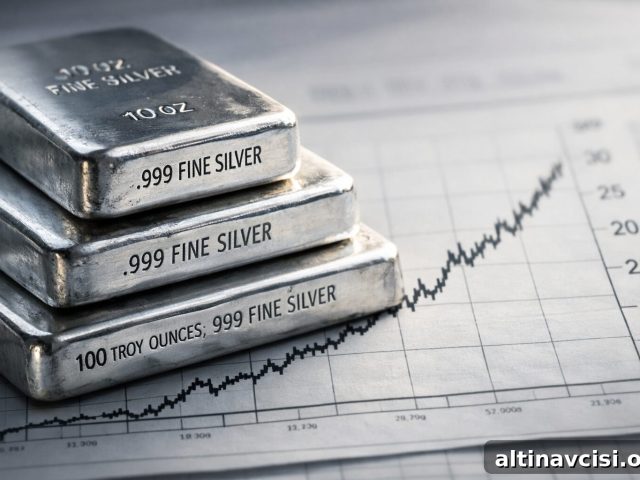
As of late April 2026, gold was trading near $4,638 per ounce, roughly 17% below its January all-time high of $5,589. Silver was trading around $74 per ounce, well below its own record above $121. The central question for most investors is no longer whether to own precious metals; it is how to allocate between them — how much of each metal to hold, why, and in what proportion. The right answer comes from understanding what gold and silver are doing inside your portfolio.
Why Do Gold and Silver Play Different Roles in a Portfolio?
Both metals are forms of hard money: finite, without counterparty risk, and not another party’s liability. However, their market drivers diverge. Gold is overwhelmingly monetary in nature. Nearly half of annual gold demand comes from investment and central-bank purchases, with jewelry making up most of the remainder. Because gold’s primary use is monetary, it is insulated from a sudden collapse in industrial demand.
Silver is a hybrid asset. Today more than half of silver demand stems from industrial uses — solar photovoltaic panels, electric vehicle components, and data-center and electronics applications that support AI infrastructure. That industrial exposure gives silver notable upside in periods of economic expansion and technological adoption, but it also increases downside risk in economic slowdowns.
In short, the metals are complementary rather than interchangeable. Gold provides portfolio stability and downside protection, while silver offers amplified upside linked to industrial growth. Holding just one is to miss the benefits the other brings.
Your Gold Buying GuideMost investors overpay when they buy gold and again when they sell. This guide explains what to own and why, helping you avoid common mistakes.
What Makes Gold the Ultimate Portfolio Insurance?
Gold has never become worthless. It has not defaulted and has preserved purchasing power across centuries and through multiple currency failures. That long-term record, not marketing, underpins gold’s role as insurance.
The recent cycle reinforces that role. Central banks continued to buy significant quantities of gold in 2025 — adding hundreds of tonnes to reserves for the sixteenth consecutive year — a trend driven by the desire to hedge inflation, dollar debasement, and geopolitical risk (World Gold Council). Institutional demand and central-bank buying are powerful structural supports.
Forecasts from major banks in 2026 expected ongoing demand from central banks and investors, highlighting continued institutional appetite for gold as a reserve asset. Think of gold like insurance on a home you cannot afford to lose: you buy it to protect against catastrophic outcomes, not because you expect to use it every day.
Beyond protection, gold can appreciate. The metal delivered strong gains in the prior 12 months, but those gains should be seen as secondary to its primary purpose: preserving value when broader markets or currencies falter.
Why Does Silver Offer More Upside — and More Risk?
Silver’s recent price action has been more dramatic than gold’s. It reached a nominal high in January 2026 after more than doubling over a twelve-month span, then pulled back — demonstrating both its growth potential and its volatility.
The key driver is industrial demand. In 2025 the global silver market posted another supply deficit, with consumption outpacing mine production. Much of this industrial demand comes from solar panel manufacturing, electric vehicles, and electronics — sectors that are expanding rapidly and that rely on silver’s unique electrical and conductive properties (Silver Institute).
Supply dynamics amplify silver’s price sensitivity. A significant share of mined silver is produced as a byproduct of copper, zinc, and gold mining, which limits the responsiveness of mine supply to rising demand. That structural mismatch between demand and primary supply can magnify price moves in both directions.
Because silver combines monetary and industrial roles, it tends to outperform during extended bull markets but also falls harder in corrections. This behavior makes it an effective complement to gold in a metals allocation.
How Much Gold and Silver Should You Hold?
There is no one-size-fits-all allocation, but some consistent principles apply.
Many advisors recommend allotting 10–20% of investable assets to precious metals. Within that metals allocation, gold commonly constitutes 60–75% as the insurance component, while silver fills the remaining 25–40% to capture higher-beta industrial exposure. The exact split depends on your time horizon, existing exposure to paper assets, and assessment of systemic risk.
Some investors use the gold-to-silver ratio to guide adjustments: when the ratio is high (silver cheap relative to gold), tilt toward silver; when it compresses, rotate back to gold to lock in gains. This rebalancing approach can increase physical ounce holdings over time without adding new capital.
Together, gold and silver provide complementary benefits: gold anchors the portfolio against systemic shocks, while silver amplifies return potential and offers exposure to structural trends in clean energy and electrification.
How Do You Use the Gold-to-Silver Ratio to Decide Your Mix?
The gold-to-silver ratio shows how many ounces of silver buy one ounce of gold. As of late April 2026, the ratio was near 63 — above the modern free-market era average of roughly 55–60 — suggesting silver was relatively inexpensive versus gold (Trading Economics).
Use the ratio as a rebalancing framework, not a short-term trading signal. Decide your metals allocation as a percentage of total investable assets, check the ratio, and adjust the internal split between gold and silver accordingly. Start with a gold-heavy allocation for protection and maintain a meaningful silver position for upside; let the ratio tell you when to tilt heavier toward silver or rotate back into gold.
Stay On Top of Gold & Silver Prices
Receive concise market alerts and price updates delivered to your inbox.
People Also Ask
What is the difference between gold and silver as investments?
Gold is primarily monetary and a long-term store of value with limited industrial use, making it the more stable metal. Silver has substantial industrial demand — now more than half of annual consumption — which creates greater upside in growth periods but also higher volatility. This dual nature makes silver a complementary asset to gold rather than a substitute.
How much of my portfolio should be in precious metals?
A common recommendation is 10–20% of investable assets in precious metals. Within that allocation, gold usually serves as the core (around 60–75%) as the insurance layer, while silver provides a 25–40% allocation for higher-beta growth exposure. The final split should reflect your time horizon, risk tolerance, and other holdings.
Is gold or silver a better investment right now?
The right choice depends on the objective. For protecting wealth and hedging systemic risk, gold is typically preferable. For amplified upside tied to industrial and technological growth, silver adds value. For most investors, holding both metals delivers balanced protection and participation in growth themes.
What is the gold-to-silver ratio and why does it matter?
The gold-to-silver ratio indicates how many ounces of silver are required to buy one ounce of gold. When the ratio is higher than its modern-era average (roughly 55–60), silver is often considered undervalued relative to gold. Investors use the ratio to guide rebalancing decisions between the two metals.
Does silver outperform gold in a bull market?
In extended precious-metal bull markets, silver typically outperforms gold once the cycle matures. Silver’s industrial exposure and higher beta mean it can rise faster than gold in bullish conditions, but it also tends to decline more sharply in corrections.
The Smartest Portfolio Move Isn’t Picking One — It’s Knowing How to Hold Both
The debate should not be gold versus silver — it should be how to size each metal for your objectives and the current macro environment. Gold continues to serve as protection: it remained substantially higher year-over-year even after a pullback. Silver, facing structural supply deficits and strong industrial demand, offers enhanced upside when growth accelerates. Use the gold-to-silver ratio and a clear metals allocation plan to determine when to tilt between the two.
Gold preserves what you have built; silver amplifies what might be possible. Building a balanced allocation that reflects both roles will typically serve investors better than choosing one metal exclusively.
SOURCES
1. World Gold Council — Gold Demand Trends: Full Year 2025
2. World Gold Council — Central Banks: Gold Demand Trends Full Year 2025
3. Silver Institute — The Silver Market Is on Course for Fifth Successive Structural Market Deficit
4. Silver Institute — Silver Demand Forecast to Expand Across Key Technology Sectors
5. J.P. Morgan Global Research — Gold price commentary and forecasts
6. Trading Economics — Gold price chart and historical data
7. Investing News Network — Coverage of precious metal price records
Disclaimer: This article is for informational and educational purposes only. It does not constitute investment advice. Consult a qualified financial adviser before making investment decisions.
You may also like:
- Gold Bullion vs. Jewelry: Why Serious Investors Choose the Bar
- Gold & Silver IRA: Why Starting Early Costs You Less
- Silver Fair Value: What the Data and History Show
- Gold or Silver Price Dip: Temporary Correction or Trend Reversal?
- What Switzerland’s Gold Freeze Means for Investors
- What History Shows About Buying Gold After a Pullback
- Should You Sell Gold During a Bull Market Pullback?
- Silver Bullion Buying Guide 2026: Coins, Bars, and Rounds Compared
Popular Topics
Picked from the archive
-
01
 Topics
Gold Prices Rise on Fed Policy, Debt Concerns and Asian Demand
-
02
Topics
How Gold and Silver Reduce Losses and Boost Portfolio Returns
-
03
Topics
U.S. Eyes Pakistan’s $6T Mineral Wealth in Economic Partnership
-
04
Topics
Silver Price Forecast 2026-2027: Bull and Bear Scenarios
-
05
Topics
Gold Price Surges Past $5,000 Amid Bond Market Turmoil
-
06
Topics
Paper Gold vs Physical Gold: Safety and Investment Risks
-
07
Topics
Record Gold Floods Shanghai as Traders Exploit Futures Arbitrage
-
08
Topics
Gold Price: What Could Drive It to $6,300?