Gold Prices Rise on Fed Policy, Debt Concerns and Asian Demand

Daily News Nuggets | Today’s top stories for gold and silver investors
September 19th, 2025
Gold Notches Fifth Straight Weekly Win
Gold continues its impressive run, poised to close out a fifth consecutive week of gains after the Federal Reserve’s recent rate cut. The metal has surged roughly 39% year-to-date, outpacing both stocks and bonds as investors weigh shifting monetary policy and rising economic uncertainty. With real yields still negative and recession risks on the rise, gold’s appeal as portfolio protection has strengthened. Traders are closely watching how aggressive the Fed’s future cuts will be—each easing step tends to reduce the opportunity cost of holding non-yielding bullion, a central driver behind gold’s momentum.
The Triple Threat Pushing Gold to Records
Three factors are combining to push gold toward record territory: trade-driven tariffs, persistent inflation, and a more dovish Federal Reserve. Rising tariffs are adding upward pressure to input costs and consumer prices, while inflation remains stickier than many analysts expected. At the same time, the Fed’s pivot to rate cuts to support a weakening economy is creating an environment often described as stagflationary—low growth with elevated inflation—which historically favors hard assets like gold and silver.
In such a landscape, traditional financial assets can struggle. Equities and fixed income face conflicting pressures from slower growth and looser monetary policy, whereas gold benefits from both inflation hedging and lower real yields. Institutional and retail investors alike have been increasing exposure to precious metals as a defensive allocation against policy uncertainty and currency risk.
India’s Wedding Season Sparks Gold Buying Spree
India’s seasonal demand is supporting the global gold market. As Dussehra and Diwali approach, jewelers report premiums at a 10-month high while consumers prepare for the country’s peak buying season. This cultural demand remains a powerful force: when the world’s second-largest consumer of gold starts shopping amid already tight supplies, it tends to establish a strong price floor.
Meanwhile, the situation in China presents a contrast—some dealers there are offering discounts—which highlights regional divergence in demand across Asia’s two largest markets. For global price dynamics, India’s robust seasonal demand is especially meaningful and can offset localized softness elsewhere.
Consumer Confidence Takes a Dive
Consumer sentiment slipped sharply in September, falling to 55.4 from 58.2 in August. That decline—the lowest reading in six months—caught many economists off guard and underscored a growing disconnect between headline macro data and household-level experiences. Middle-income Americans cited concerns over job security and the ongoing squeeze of inflation on real wages, factors that typically translate into more defensive investment behavior.
Image showing consumer sentiment trends and the rising appeal of safe-haven assets:
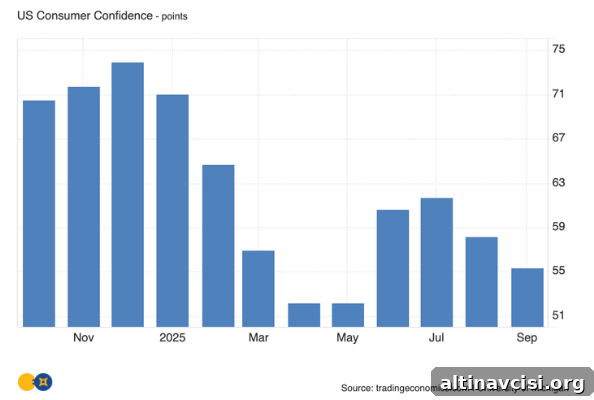
When Main Street grows pessimistic, demand for physical assets such as gold and silver historically rises. Retail investors, worried about purchasing power and economic resilience, often shift a portion of their savings into tangible stores of value—supporting prices even as financial markets react to central bank policy moves.
Ray Dalio’s Gold Warning Goes Mainstream
Hedge fund founder Ray Dalio has reiterated a familiar warning: rising U.S. debt levels and a continued reliance on monetary easing make hard assets attractive. Dalio highlighted the mounting national debt—now exceeding $33 trillion—and argued that without clear fiscal restraint, investors should expect policies that erode the value of paper currency. That view aligns with long-standing investment theses favoring gold and other physical assets when governments resort to expansive monetary measures to manage debt burdens.
Institutional interest in gold has grown as market participants weigh currency depreciation risk against uncertain growth prospects. For investors seeking protection from inflation, currency weakness, and policy missteps, increased exposure to precious metals is a common risk-management response.
Summary: Strong seasonal demand in India, a string of Fed easing actions, sticky inflation, and geopolitical trade pressures are all reinforcing gold’s case as a defensive asset. Consumer caution and high-profile warnings from major investors are further supporting bullion’s recent rally, suggesting that gold and silver will remain central to many portfolios as hedges against uncertainty.
Popular Topics
Picked from the archive
-
01
 Topics
June CPI Jumps 2.7 Percent as Tariffs Push Up Consumer Prices
-
02
Topics
Gold Prices Slide as Rate-Cut Hopes Meet Reality
-
03
Topics
Tariff Uncertainty and Fed Outlook Keep Gold Prices Volatile
-
04
Topics
Powell Warns Tariffs and Immigration Curbs Threaten US Economy
-
05
Topics
Tariffs vs Treasuries: What’s Driving Gold Prices Now
-
06
Topics
Why Wealthy Investors Allocate 11% of Portfolios to Gold
-
07
Topics
Greenland Resources Wins 30-Year Permit for Defense Molybdenum
-
08
Topics
Silver Spot vs Retail Price: Understanding Dealer Premiums