How Rising Factory Costs Are Driving Gold and Silver Prices

Factory price pressures rose even as the Philadelphia Fed’s regional manufacturing survey showed weaker new orders. For investors who hold gold and silver with a multi-year horizon, that mix of data offers useful context for long-term planning rather than a basis for short-term trading.
What the survey shows
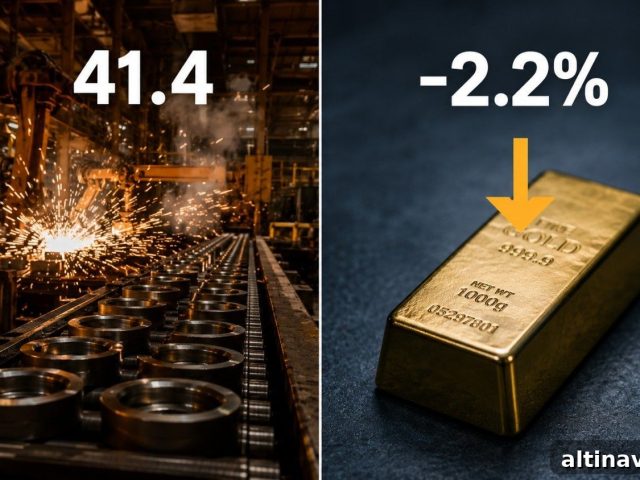
The Federal Reserve Bank of Philadelphia released its November regional manufacturing survey using responses collected mid-month. In that report, the general activity diffusion index moved lower from the prior month, and the new orders index slipped into marginally negative territory. At the same time, measures that track input costs and prices received rose noticeably—prices paid pushed to their highest reading in more than a year, and prices received reached levels not seen in several years. Shipment and employment components also ticked higher in the regional sample.
These are seasonally adjusted diffusion indexes that capture the balance of firms reporting increases versus decreases on each component. They reflect the breadth of change among manufacturers in the Philadelphia region and should not be read as direct measures of national inflation or aggregate output. Instead, they provide timely, regional insight into manufacturing momentum and the direction of price pressures at a particular point in time.

The Edge Every Investor Needs
Smarter precious metals investing starts with reliable market insight. Our newsletter delivers Fed updates, market trends, educational content and timely analysis to help long-term investors make clearer choices.
Gold can support a diversified portfolio
Gold remains an asset many investors consider for portfolio diversification rather than short-term speculation. Research from major industry groups highlights gold’s role alongside stocks and bonds: it often responds to different economic drivers and sources of demand, which can help it behave differently from traditional financial assets during some market cycles. Physical ownership also means holding a tangible asset that does not depend on an issuer’s promise to pay interest or principal.
That said, interest rates and real yields matter for gold’s price path. Academic and central bank research has explored historical links between gold and real interest rates, inflation expectations, and broader economic sentiment. If expected inflation rises faster than nominal yields, real yields can fall, which historically has provided support for gold prices. Conversely, rising real yields can create headwinds for bullion. These dynamics are part of why many long-term owners watch inflation, yields, and macro expectations as inputs to an ongoing plan rather than triggers for sudden changes.
No metal is guaranteed to rise in value. Gold’s potential contribution is best evaluated within the context of an investor’s full portfolio, time horizon, and risk tolerance. A single regional manufacturing report adds useful information but does not overturn a considered long-term allocation decision.
Silver combines investment demand with everyday uses
Silver offers a blend of investment interest and industrial demand. Beyond monetary and collector demand, silver has well-established applications in electronics, electrical contacts, and solar panels because of its excellent conductivity. Those practical uses create a baseline industrial component of demand that can evolve with technological adoption and manufacturing trends.
Industry updates note that investor flows and industrial consumption together shape silver’s market. Manufacturing slowdowns can reduce industrial fabrications, and substitution or efficiency gains can change usage patterns in specific applications. At the same time, investment demand—coins, bars, exchange-traded products and other holdings—can act independently of short-term factory activity and provide additional support in certain market conditions.
As with gold, established uses and mixed demand drivers do not guarantee rising prices. They do, however, form part of a reasoned case for considering silver as a long-term holding when it fits an investor’s objectives.
Keep the focus on lasting ownership
Short-term economic surveys are valuable for context but should not replace a clear ownership plan. Long-term holders benefit from defining the purpose of each metal in their portfolio, setting realistic expectations for volatility, and establishing practical arrangements for custody and documentation. Regularly reviewing inflation trends, real yields and industrial demand can inform adjustments, but decisions made for short-term noise risk undermining longer-term objectives.
Practical measures that support a long-term approach include maintaining clear ownership records, choosing suitable storage or vaulting solutions, and aligning allocations with overall financial goals and liquidity needs. When an allocation is consistent with an investor’s objectives and constraints, patient ownership can remain a constructive choice even as monthly economic indicators fluctuate.
Stay On Top of Gold & Silver Prices
Get important market alerts sent straight to your inbox.
SOURCES
1. Federal Reserve Bank of Philadelphia — November 2026 Manufacturing Business Outlook Survey; Manufacturing Business Outlook Survey Historical Diffusion Indexes; Manufacturing Business Outlook Survey Methodology
2. Federal Reserve Bank of Chicago — What Drives Gold Prices?
3. Federal Reserve Bank of St. Louis — Adjusting for Inflation
4. U.S. Department of the Treasury — Interest Rate Statistics
5. The Silver Institute — Silver in Electronics; Silver and Solar Technology; Silver Market Set for Sixth Consecutive Annual Deficit in 2026
6. GoldSilver — Gold Price Charts; Silver Price Charts
7. World Gold Council — Gold as a Strategic Asset 2026 Edition
Disclaimer: This article is for informational purposes only and does not constitute investment advice. Past performance is not indicative of future results. Always consult a qualified financial advisor before making investment decisions.
You May Also Like:
- Why Is Gold Falling With Stocks? Two Forces, Six Sessions
- How Low Can Gold Go After Falling Below $3,700?
- Silver Buy Signal: Why Gareth Soloway Likes Bearish Talk
- Why Gold Fell Below $3,800 After Nvidia’s Record Quarter
- Why Is Christopher Whalen Still Buying Gold as It Falls?
- Gold Fell After Hot CPI. What Does Trey Reik Watch Instead?
- Physical Gold vs. Gold ETF vs. Mining Stocks: Which Fits You?
- Michael Oliver: Is Gold’s 29% Drop Just Like 2008?
Popular Topics
Picked from the archive
-
01
 Topics
Manufacturing Hits Strongest Month of 2026 as Gold Plunges
-
02
Topics
Why Gold Should Watch the World’s Last Zero-Rate Anchor
-
03
Topics
IMF: Treasuries Are No Longer Safe, Gold Reacted First
-
04
Topics
Silver Outperformed Gold in August: Few Investors Noticed
-
05
Topics
Institutions Are Buying as Bond Yields Rise: What It Means
-
06
Topics
China Gold Imports via Hong Kong Surge 28% Amid Mixed Demand
-
07
Topics
2026 Silver Deficit Forecast Shrinks as Market Tightness Eases
-
08
Topics
Gold Hits 3-Month High, Silver 2-Month High: What’s the Link?