Gold Rises After Core PCE Cools, Overshadowing ADP Jobs Beat

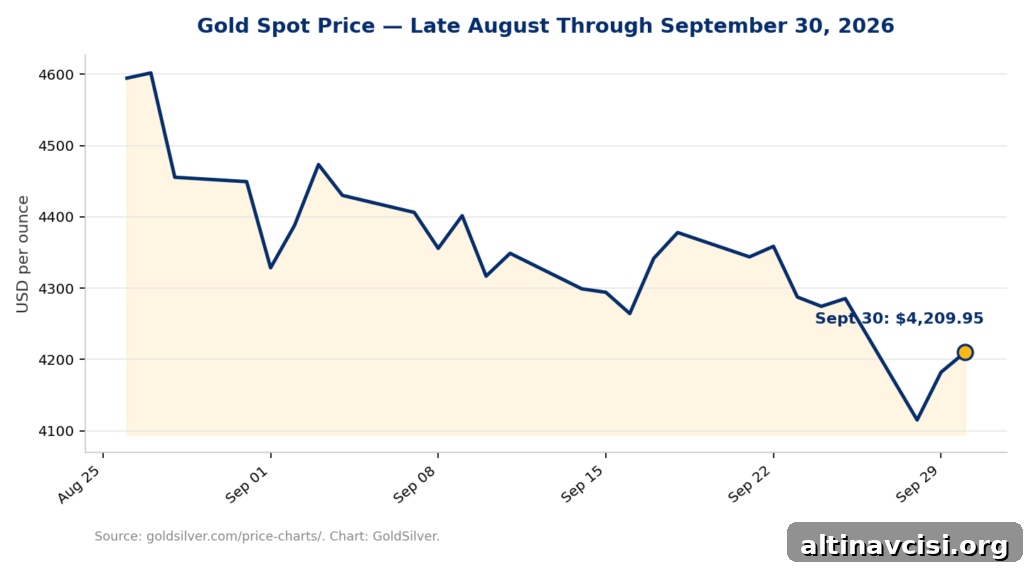
Gold rallied to $4,209.95 per ounce on Wednesday, rising 0.67% on the day. Silver underperformed, slipping to $61.13, down 0.54%. Two major economic releases arrived within minutes of each other this morning; the core inflation reading had the larger market impact. Core PCE came in noticeably cooler than expected, and that surprise drove the move in gold more than the stronger-than-forecast private payrolls number.
Key takeaways:
- September ADP private payrolls rose by 90,000, above the 70,000 consensus and marking the first hiring pickup since May.
- August core PCE inflation, the Federal Reserve’s preferred gauge, rose 3.0% year-over-year, cooler than the 3.3% consensus and softer on the monthly read as well.
- Gold rose because the inflation surprise outweighed the jobs beat; silver lagged behind gold’s move due to its industrial demand exposure and a steeper prior decline.
What Did Today’s ADP Jobs Report Show?
The ADP National Employment Report showed private-sector employment rising by 90,000 in September, a meaningful beat versus the roughly 70,000 consensus. This was the first month-to-month pickup in hiring since May, although ADP also revised August slightly lower, trimming that month’s total by a couple of thousand jobs. The gains in September were concentrated in education and health care, which added the largest share of positions, followed by leisure and hospitality. Financial activities and professional and business services recorded modest declines. Overall, the ADP report signaled steady but not overheating private-sector payroll growth.
What Did the Core PCE Inflation Report Actually Show?
Fifteen minutes after the ADP release, the Bureau of Economic Analysis published August’s Personal Consumption Expenditures (PCE) price indexes. Core PCE, which excludes food and energy and is the Fed’s preferred inflation gauge, increased 3.0% year-over-year—well below the roughly 3.3% consensus. On a month-over-month basis core PCE rose 0.2% versus a 0.3% expectation. Headline PCE printed similarly softer than forecast. The report also included annual benchmark revisions that lowered July’s core reading from its previously released level, and even after those revisions the August reading still missed expectations. That combination of a miss and downward benchmarking caught markets’ attention.
Why Did Gold Jump Instead of Staying Flat?
Markets reacted more to the inflation surprise than to the stronger jobs print. Gold’s price is sensitive to real yields—the difference between nominal Treasury yields and expected inflation. A stronger employment figure would normally push real yields higher by increasing expectations for tighter Federal Reserve policy. But the notably cooler core PCE reading reduced the odds of another rate hike, cutting into the case for higher real yields. Within minutes of the release the dollar and Treasury yields moved lower, creating a supportive environment for gold. Traders chose to emphasize the disinflation signal, and gold captured the bid as a result.
Why Is Silver Lagging Gold’s Move?
Silver has similar sensitivity to real yields but also carries an industrial-demand component that gold does not. Earlier this week silver experienced a sharper multi-day decline than gold, so today’s bounce is partly just a recovery from a lower intraday low. While the same disinflation-driven downward pressure on yields helped both metals, silver’s heavier linkage to industrial activity and a deeper recent sell-off meant it has not yet joined gold in positive territory for the day.
What Should Investors Watch Next?
The softer-than-expected core PCE print has materially lowered the case for another Fed rate increase in October as priced before the data. However, one report does not settle the outlook. Investors should focus on incoming data that can confirm or reverse today’s disinflation signal. Key items to watch include the upcoming ISM Manufacturing survey, weekly and monthly employment indicators including the official nonfarm payrolls release, and continuing movement in the dollar and Treasury yields. If Friday’s payrolls confirm ADP’s strength while other inflation prints remain soft, markets may settle into a lower-for-longer narrative for policy. Conversely, persistent strength in labor-market metrics or an unexpected rise in inflation readings would keep rate-hike risk alive and could push real yields back up, pressuring precious metals.
Stay On Top of Gold & Silver Prices
Receive timely market alerts and concise analysis delivered to your inbox.
SOURCES
1. ADP Research Institute — ADP National Employment Report: Private-Sector Employment Increased by 90,000 Jobs in September
2. U.S. Bureau of Economic Analysis — Personal Consumption Expenditures Price Index, Excluding Food and Energy
3. Federal Reserve — October 2026 Meeting and Events Calendar
Disclaimer: This article is informational only and does not constitute investment advice. Past performance is not indicative of future results. Consult a qualified financial advisor before making investment decisions.
You May Also Like:
- Job Openings Missed Today. That’s Exactly Why Gold Caught a Bid.
- Gold Fell Again. Five Wall Street Desks Can’t Agree on Why.
- Gold Just Hit a Two-Month Low. Yields, Not Geopolitics, Were the Driver.
- Gold’s Seven-Week Low: What the Chart Suggests Next
- Gold Sank 4% in a Day. Other Market Signals Point to a More Stable Backdrop.
Popular Topics
Picked from the archive
-
01
 Topics
Why Investors Choose the Vienna Philharmonic Gold Coin
-
02
Topics
Stablecoin Issuer Outspent Central Banks on Gold Last Year
-
03
Topics
Why Gold Prices Are Falling Amid the Oil War
-
04
Topics
How to Buy Gold in 2026: Step-by-Step Guide for Beginners
-
05
Topics
Silver Appears Weak, Silver-to-Gold Ratio Signals Accumulation
-
06
Topics
Why Gold Prices Are Falling: What Most Investors Get Wrong
-
07
Topics
Should You Still Hold Gold in Your Portfolio?
-
08
Topics
Gold Bars vs Jewelry: Why Investors Choose Bullion