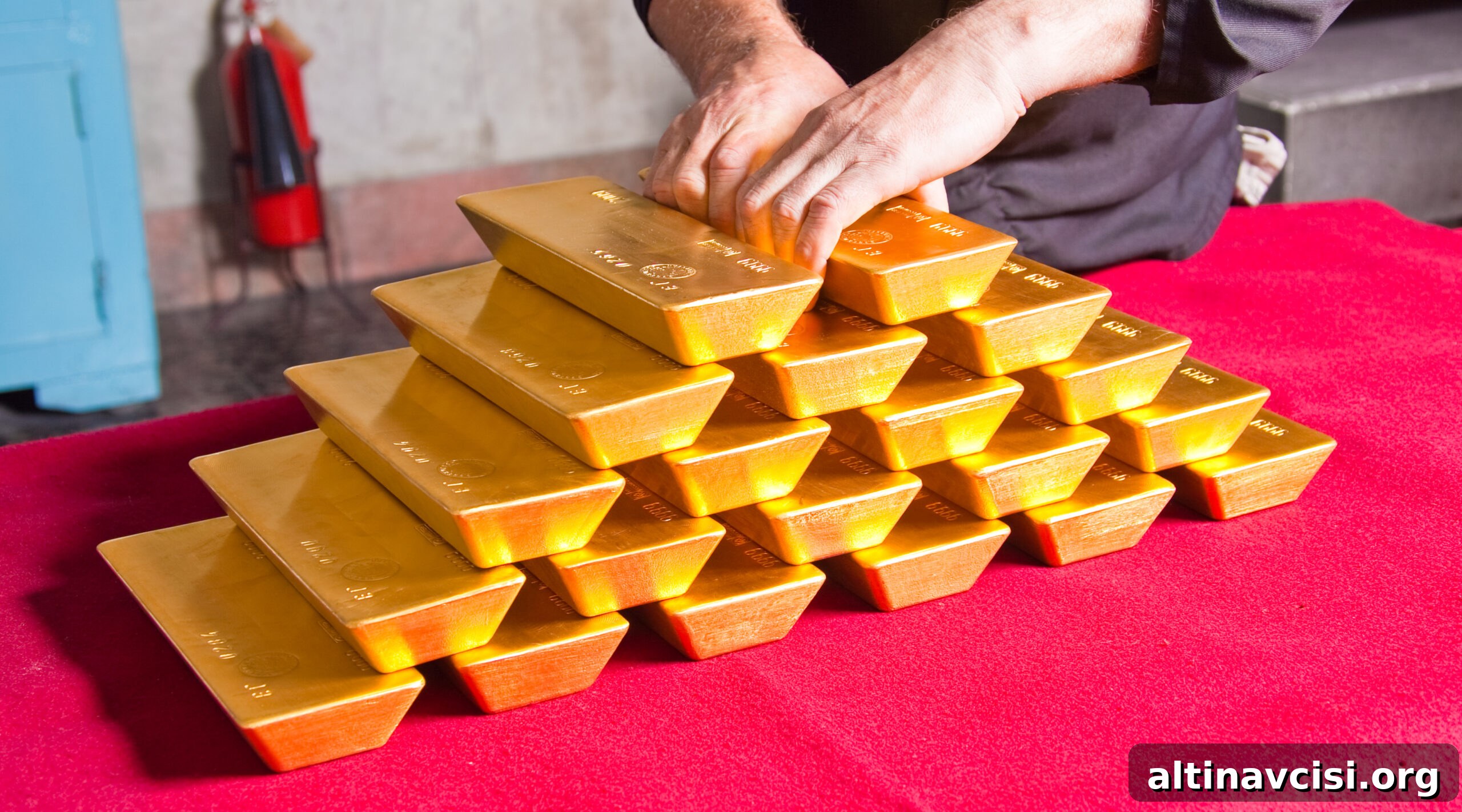
Gold pulled back on Tuesday after reaching its highest level since May 8, sliding 0.7% to $3,356.75 per ounce as the U.S. dollar recovered from a one-month low. The stronger dollar makes bullion more expensive for buyers using other currencies and removed some immediate upward pressure on prices.
Market participants cited growing caution amid shifting U.S. trade policy signals. Recent comments from President Trump alleging that China had violated parts of a trade agreement, combined with proposals to raise tariffs on steel and aluminum to 50%, have added uncertainty to the outlook for global trade and growth. Those developments can influence risk sentiment and safe-haven demand for gold, creating short-term volatility.
The wider economic picture is also weighing on investor decisions. The OECD recently revised down its global growth projections to 2.9% for 2025–2026, a reminder of persistent headwinds for the world economy. Slower growth can support demand for safe-haven assets such as gold, but the interplay with central bank policy—especially expectations for U.S. interest rates—remains the dominant driver for the precious metal.
Traders are closely watching upcoming U.S. nonfarm payroll data and commentary from Federal Reserve officials for fresh clues on the future direction of interest rates. Gold does not pay interest, so its attractiveness tends to fall when markets expect higher real yields; conversely, weaker growth or dovish central bank signals can boost gold’s appeal. That dynamic helps explain why gold’s path has been sensitive to both macroeconomic releases and geopolitical developments.
Other precious metals moved lower alongside gold. Silver fell about 1.5%, underperforming bullion as a tighter US dollar and risk-off headlines pushed traders to reassess near-term positions. Platinum dropped roughly 0.6%, with its price similarly pressured by the combination of trade uncertainty and shifting expectations for industrial demand. These declines reflect both metals’ exposure to global growth concerns and investor positioning ahead of key economic data.
Looking ahead, market watchers expect volatility to persist while traders digest geopolitical headlines and economic data that will shape rate expectations. If upcoming labor reports or Fed remarks signal a stronger economy and higher rates, gold and other non-yielding metals could come under renewed pressure. Conversely, signs of slowing growth or a more dovish Fed stance would likely revive demand for safe havens and could push prices higher again.
In this environment, investors are balancing multiple inputs: trade policy developments that influence global growth and supply chains, macroeconomic indicators that affect interest rate outlooks, and technical factors in the metals markets themselves. With these forces in play, short-term price swings are likely, and market participants may remain cautious until clearer signals emerge from economic data and policy makers.