

For most of recorded history, gold has functioned as money — a durable store of value recognized across cultures and civilizations. It has outlasted empires, currencies, and financial crises, preserving purchasing power when fiat systems faltered.
Compared with that long span, today’s fiat currency system is a recent chapter in monetary history.
That perspective helps explain a persistent question during uncertain times: how do I buy gold?
With inflation eroding purchasing power, stock markets reacting to headlines, and geopolitical tensions reshaping global dynamics, the case for holding gold often becomes more compelling. For newcomers the process can feel overwhelming: coins or bars? Physical gold or ETFs? And once you own it, where should you store it?
This guide answers those questions step by step in clear, practical terms so you can make informed choices without jargon or hype.
Why Do Investors Buy Gold?
Before you buy, it helps to understand what you’re buying and why. Gold typically fills three roles in a well-constructed portfolio.
- An inflation hedge. When the purchasing power of paper money falls, gold has historically held value. Over long periods it has preserved wealth through inflationary cycles that eroded savings accounts, bonds, and cash.
- A portfolio diversifier. Gold does not move in lockstep with stocks or bonds. Its price is shaped by real demand, monetary conditions, and investor sentiment, which gives it independent behavior that can reduce overall portfolio volatility.
- A safe-haven asset. During banking crises, geopolitical shocks, and market panics, investors often move into gold as a defensive position. It is one of the few assets that can perform when many other holdings are falling.
Because of these roles, many advisors recommend holding roughly 5–10% of a portfolio in precious metals. Viewed this way, gold is insurance rather than speculation.
Should I Buy Physical Gold or a Gold ETF?
There are two basic ways to get exposure to gold: owning the metal itself or owning a financial instrument that tracks its price.
Physical gold refers to coins, bars, or rounds you can hold. Physical ownership exists outside the banking system and carries no counterparty risk — it cannot be diluted, defaulted on, or frozen. When banks or financial markets are under stress, physical metal remains a tangible asset.
Paper gold, primarily in the form of gold ETFs, gives you price exposure through a brokerage account. ETFs are convenient and liquid and can be appropriate for some investors. But ETF shares represent a financial claim managed by an institution within the financial system, which is a meaningful trade-off for those seeking protection from that same system.
If your objective is the full set of benefits gold offers — direct, independent, tangible ownership — physical bullion delivers that most completely. That said, both options have valid uses depending on your goals, liquidity needs, and comfort with institutional exposure.
Should I Buy Gold Coins or Gold Bars?
If you choose physical gold, the next decision is which form to buy.
Gold coins are minted by sovereign governments and carry official weight and purity guarantees that make them widely accepted. Well-known examples include the American Gold Eagle, Canadian Gold Maple Leaf, and South African Krugerrand. These coins are easy to verify and sell, and many are available in fractional sizes for smaller purchases. Coins offer liquidity and flexibility: you can sell individual pieces without liquidating a larger holding.
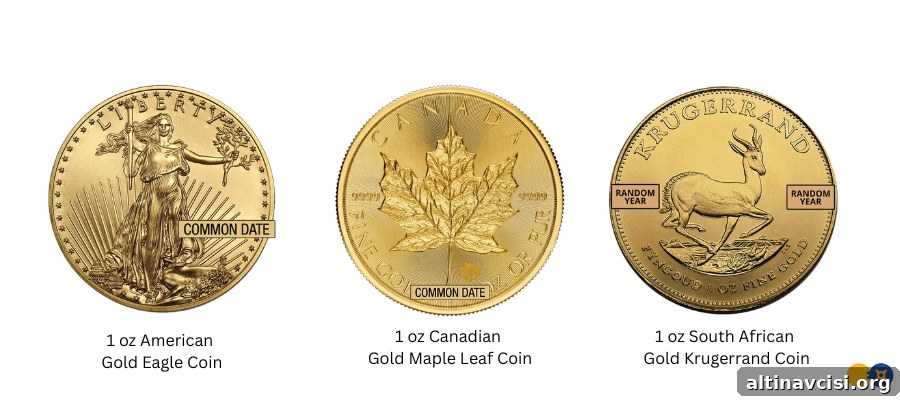
Gold bars are produced by private refineries and range from one gram to large institutional sizes. Bars often carry lower premiums over spot price because they are simpler to manufacture. For buyers accumulating larger holdings, bars can be more cost-effective.

Many investors hold a mix: coins for liquidity and bars for efficient accumulation. If you’re starting out, coins typically provide the most flexibility.
How Do I Choose a Reputable Gold Dealer?
The precious metals market is global, but dealers vary in transparency and reliability. Choosing a reputable seller is essential.
Look for dealers that clearly disclose pricing and premiums above spot, offer widely recognized bullion products, publish delivery and return policies, and maintain buyback programs. Verify a dealer’s track record through customer reviews tied to real transactions and clear communications about policies. Be wary of prices that look unusually low; gold trades in an efficient global market, and deeply discounted offers can signal hidden risks.
Where Should I Store Physical Gold?
After you buy physical gold, you must decide where to store it. The main options are home storage, bank safe-deposit boxes, or professional vaulting.
Home storage gives you direct control and immediate access, but it requires a quality safe, security measures, and adequate insurance. The responsibility for protection and secrecy rests entirely with you.
For larger holdings, many investors prefer professional vault storage. Reputable vault services offer insured, allocated storage, where specific bars or coins are segregated and held in your name. This removes the burden of physical security while keeping your ownership tangible and accessible through verified procedures.
Common Mistakes New Gold Buyers Make
Buying gold is straightforward, but buying wisely means avoiding a few common errors.
New investors often chase the lowest premium, try to time the exact market bottom, or buy collectible coins whose value is driven by rarity rather than metal content.
- Paying numismatic premiums for investment gold. Rare coins can carry premiums based on collectibility. Investors focused on financial hedging should prioritize bullion coins and bars for metal content.
- Ignoring the dealer’s reputation. Transparency in pricing, clear policies, and a reliable track record are worth paying for. Small upfront savings are rarely worth the uncertainty of dealing with an unknown seller.
- Trying to time the market perfectly. Short-term price movements are hard to predict. Many successful investors build positions gradually rather than attempting precise timing.
If timing the market is a trap, ask instead whether you want to own more gold over the next decade and plan purchases accordingly.
When Is the Right Time to Buy Gold?
Waiting for the perfect price usually leads to missed opportunities—perfect prices are often visible only in hindsight. Gold reacts to interest rates, currencies, inflation expectations, and global risk, and these factors can be unpredictable in the short term.
Over the long term, gold tends to perform well during monetary instability, rising inflation, and geopolitical tension. Many investors treat gold as a long-term position rather than a short-term trade and focus on gradually increasing the number of ounces they hold over time.
Those who benefit most historically were already positioned in gold when conditions shifted.
How Much Gold Should You Own?
There’s no universal allocation that suits every investor. The right amount depends on your portfolio size, risk tolerance, and financial goals.
Many investors start with 5–10% in precious metals. Research from industry bodies suggests that this range can improve portfolio resilience and risk-adjusted returns. Some increase their allocation when inflation risk rises; others build positions gradually. The specific percentage matters less than the commitment to accumulate over time.
The Bigger Picture
For most of recorded history, gold served as money — a durable store of value across civilizations. By contrast, the era of global fiat currencies is relatively recent.
For modern investors facing inflation, market volatility, and uncertainty about the financial system, physical gold provides direct ownership of a tangible asset that exists outside banks and monetary policy. That separation is what gives gold its enduring appeal as part of a diversified plan.
If you’re ready to move forward, consider which form of gold fits your objectives, choose a reputable dealer, and decide whether home storage or professional vaulting suits your needs.
Stay On Top of Gold & Silver Prices
Get important market alerts sent straight to your inbox.
People Also Ask
What is the best way for beginners to buy gold?
Beginners often find widely recognized bullion coins like the American Gold Eagle or Canadian Maple Leaf to be the most practical starting point. These coins are easy to verify, easy to sell, and available in fractional sizes for smaller investments. Start with a trusted dealer that provides transparent pricing and clear guidance for first-time buyers.
Is it better to buy gold coins or gold bars?
Coins are typically better for smaller investors because they are recognizable and easy to sell in small increments. Bars usually have lower premiums per ounce and are better for efficient accumulation. Many investors use a mix of both to balance liquidity and cost efficiency.
Should I buy physical gold or a gold ETF?
Physical gold provides direct ownership of the metal and removes reliance on financial institutions. Gold ETFs are easier to trade and more liquid but represent paper exposure rather than specific bars you own. Investors prioritizing protection often choose physical metal held through reputable channels.
How much gold should I own in my portfolio?
A common guideline is to allocate about 5–10% of a portfolio to gold or other precious metals to enhance diversification and reduce risk during inflationary periods. The exact allocation should reflect your goals, timeline, and risk tolerance.
Where should I store gold after buying it?
Options include home safes, bank safe-deposit boxes, or professional insured vault storage. Professional vaulting provides high security and allocated ownership and is a common choice for larger holdings.
Disclaimer: This article is for informational purposes only and does not constitute investment advice. Past performance does not guarantee future results. Consult a qualified financial advisor before making investment decisions.
You May Also Like:
- Silver Bars vs. Silver Coins: Which Is the Better Investment?
- Gold vs. Silver: Roles, Risks, and Portfolio Strategy
- Gold & Silver Prices: Short-Term Noise, Long-Term Signal
- Silver Canadian Maple Leaf: Why It’s One of the World’s Top Bullion Coins
- Gold Portfolio Allocation 2026: What Forecasts Mean for Investors
- How Government Debt Affects Gold and Silver