Can AI-Powered Gold Mining Boost Global Gold Supply?
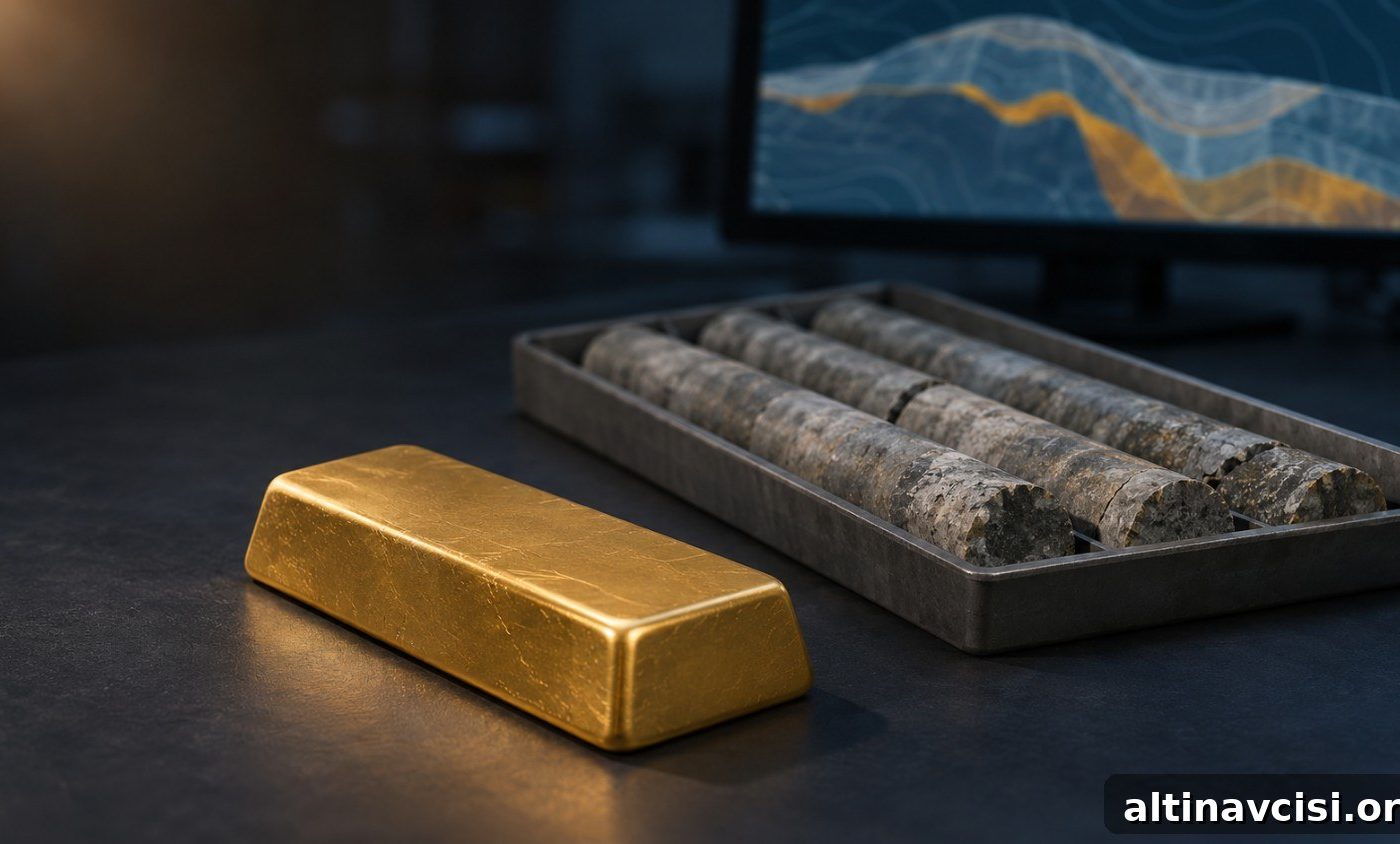
Artificial intelligence applied to gold mining encompasses software and data-driven tools used to locate promising exploration targets and to optimize mine operations. In many cases these technologies make previously uneconomic deposits more viable, but the important test for physical gold holders is whether AI actually leads to additional gold entering the market. In short: promising targets and improved processes are meaningful only if they translate into measurable extra production.
The World Gold Council (WGC) noted on November 23, 2026 that AI has the potential to lower costs and modestly boost future supply. That assessment is an outlook rather than a quantified projection: the WGC did not publish a specific estimate of global production gains directly attributable to AI.
Key takeaways
- Miners already deploy AI across exploration and operations, but adoption alone does not guarantee additional output.
- A successful discovery still requires drilling, technical studies, permits, financing and development before it becomes producing ounces.
- Any increase in mined production adds to a large above-ground stock of gold; recycling, demand trends and macro-financial conditions also determine price and availability.
What can AI gold mining change?
The WGC highlights several practical AI applications: exploration targeting, ore-body modelling, predictive maintenance and autonomous operations. These tools improve specific tasks—finding higher-probability drill targets, refining geological models, predicting equipment failures to reduce downtime, and automating repetitive processes. While each can boost efficiency, none by itself guarantees that AI will independently operate an entire mine or instantly increase global supply.
For example, Agnico Eagle described in July 2023 how AI combined with core-scanning technologies can sharpen geological models and focus exploration efforts. Such uses can reduce wasted drilling and speed understanding of a deposit, yet the company’s account did not quantify how many extra ounces resulted directly from those tools.
To evaluate claims of higher production from AI, look for hard changes in ore grade, processed tonnage and recovery rates—and for documentation that isolates AI’s unique contribution from other operational improvements or investments.
The Knowledge That Changes Everything

Two essential guides — yours free. Learn why gold matters, how it functions as a store of value, and why fiat currencies face long-term structural risks.
How does a new find turn into gold for sale?
Initial drilling establishes a deposit’s size, grade and geological continuity. Subsequent engineering studies, metallurgical testing and economic modelling determine the best extraction method, expected recovery rates and overall project viability. These technical and economic steps are required before a discovery can be converted into a declared resource or reserve and, ultimately, into production.
Under U.S. disclosure rules, a mineral resource must demonstrate reasonable prospects for economic extraction before it can be reported. A reserve is the portion of a measured or indicated resource that is economically mineable after factoring in technical, legal and financial considerations. A predictive model or AI-derived target alone is insufficient to declare resources or reserves.
A new project also needs permits, financing and development work—often years of preparation—before producing saleable ounces. In contrast, existing mines can sometimes implement operational improvements more quickly. Note also that production and sales are distinct: inventory changes at producers can mean ounces mined are not immediately sold.
Could more mine output end gold’s scarcity?
Advances in technology, including AI, can reduce economic scarcity by making lower-grade or more complex deposits worth mining. However, the scale and timing of any supply uplift attributable to AI remain uncertain. Technology improves economics, but commercial production still depends on finance, permitting and project execution.
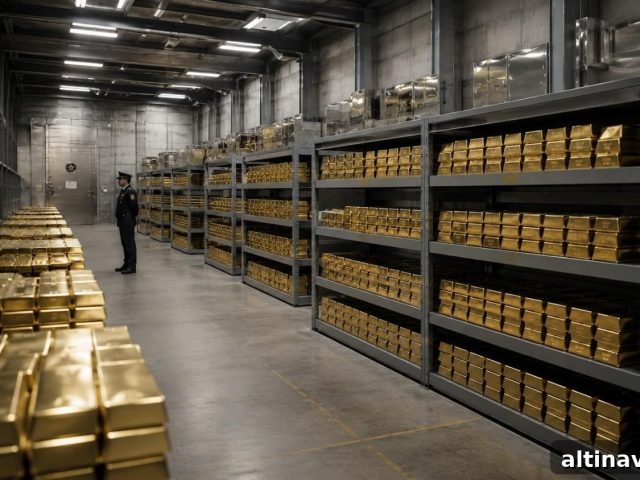
Mine production adds to a large above-ground stock of gold that the WGC estimates at more than 200,000 tonnes. That existing stock—made up of jewelry, investment holdings and central-bank reserves—is not all immediately available for market sale, so mined ounces enter a broader, long-lived supply base.
In its November 3, 2026 report the WGC estimated Q3 mine production at 1,070.9 tonnes, up from 1,040.7 tonnes a year earlier. Despite that rise, total supply for the quarter fell to 1,368.6 tonnes from 1,383.2 tonnes as lower recycling and producer de-hedging offset the mining increase. Those figures do not separately identify any AI-driven effect and are subject to revision.
What does this mean if you hold physical gold?
Announcements about AI-assisted discoveries should not be taken as automatic proof of an imminent supply surge. Even if mining output grows slowly, prices may not fall if demand and macro conditions remain supportive. Conversely, rising real interest rates or stronger currencies can pressure gold prices, although other factors—geopolitical risk, central bank buying, investor demand—may counterbalance that effect.
Holding physical gold means owning the metal directly, with the benefits and costs that entails: price volatility, dealer spreads, storage and insurance. The CFTC/FINRA joint advisory from March 20, 2024 outlines typical dealer spreads and potential storage fees that buyers should consider.
Coverage of China’s AI-mining targets describes policy ambitions rather than concrete evidence that AI is already producing measurable additional mine output. Separate analyses on laboratory-created gold address the distinct scientific question of synthesizing the element rather than recovering natural deposits.
Stay On Top of Gold & Silver Prices
Get important market alerts sent straight to your inbox.
People Also Ask
AI tools assist in locating and extracting naturally occurring gold; they do not synthesize the element. What AI can do is make previously uneconomic deposits potentially recoverable by improving targeting, modelling and operational efficiency. Any mapped target still needs geological validation and technical studies before it can feed into a mine plan.
Possibly. Extending operating hours, improving throughput or reducing downtime can raise total output even if recovery percentages stay constant. When evaluating claims, request production figures, ore grade, processing volumes and recovery rates, along with evidence separating AI’s impact from other operational changes.
There is no universal timetable. A new discovery typically requires additional exploration, feasibility studies, permitting, financing and construction. Historically, the WGC has noted multi-year lags between price signals and production changes, but that relationship varies by project and region and is not a guaranteed schedule for any AI-assisted find.
Not automatically. Greater supply can exert downward pressure on prices if demand and other factors remain unchanged, but actual market prices reflect a mix of supply, recycling, investment demand, central-bank activity and macroeconomic conditions. Neither constrained mining nor a single new discovery guarantees a particular price outcome.
SOURCES
1. World Gold Council — Gold’s Role in an AI-Driven Economy: Direct and Indirect Effects; How Gold Is Mined: The Lifecycle of a Gold Mine; Above-ground Stock; Gold Demand Trends Q3 2026: Supply; Gold Demand Trends Q3 2026: Notes and Definitions; You Asked, We Answered: Is Mined Gold Production Peaking?
2. Agnico Eagle — A New Geological Era (July 2023)
3. U.S. Securities and Exchange Commission — 17 CFR 229.1300: Definitions
4. Newmont — 2025 Form 10-K
5. CFTC and FINRA — 10 Things to Ask Before Buying Physical Gold, Silver, or Other Metals; Joint effort launches to warn retirees about precious metals fraud
6. China’s Ministry of Industry and Information Technology — Gold Industry Plan 2025-2027: Official Explanation
Disclaimer: This article is for informational purposes only and does not constitute investment advice. Past performance is not indicative of future results. Always consult a qualified financial advisor before making investment decisions.
You May Also Like:
- Gold as Emergency Fund: Pros, Cons and Liquidity
- Gold Price Outlook November 2026: Yields, Fed and Floors
- Gold to Copper Ratio: Does It Predict Gold or Yields?
- Gold in Retirement: Can It Reduce Sequence Risk?
- Gold and Silver Outlook 2027: Forecasts and Risks
- Gold Vault Storage: Inside a Brink’s Vault
- What Backs the US Dollar Today?
Popular Topics
Picked from the archive
-
01
 Topics
Gold Price Support Shifts After Ceasefire Violation
-
02
Topics
Why Gold Held Steady After Trump’s Economic Pressure on Iran
-
03
Topics
How Kevin Warsh as Fed Chair Could Affect Gold Prices
-
04
Topics
Why the SLV ETF Holds Your Silver but Won’t Return It
-
05
Topics
Fed Rate Hike Odds Flip After Swings From 54% to 26% to 58%
-
06
Topics
Why Central Banks Nearly Doubled Their Gold Reserves
-
07
Topics
Silver Price Spikes to $69.85, FOMC Erases Gains
-
08
Topics
Iran Deal: Oil Falls, PM Ousted, Gold Tops $4,100