Bank of England Rate Hike to 4%: Two Forces Shaping Gold
Last verified November 2026.
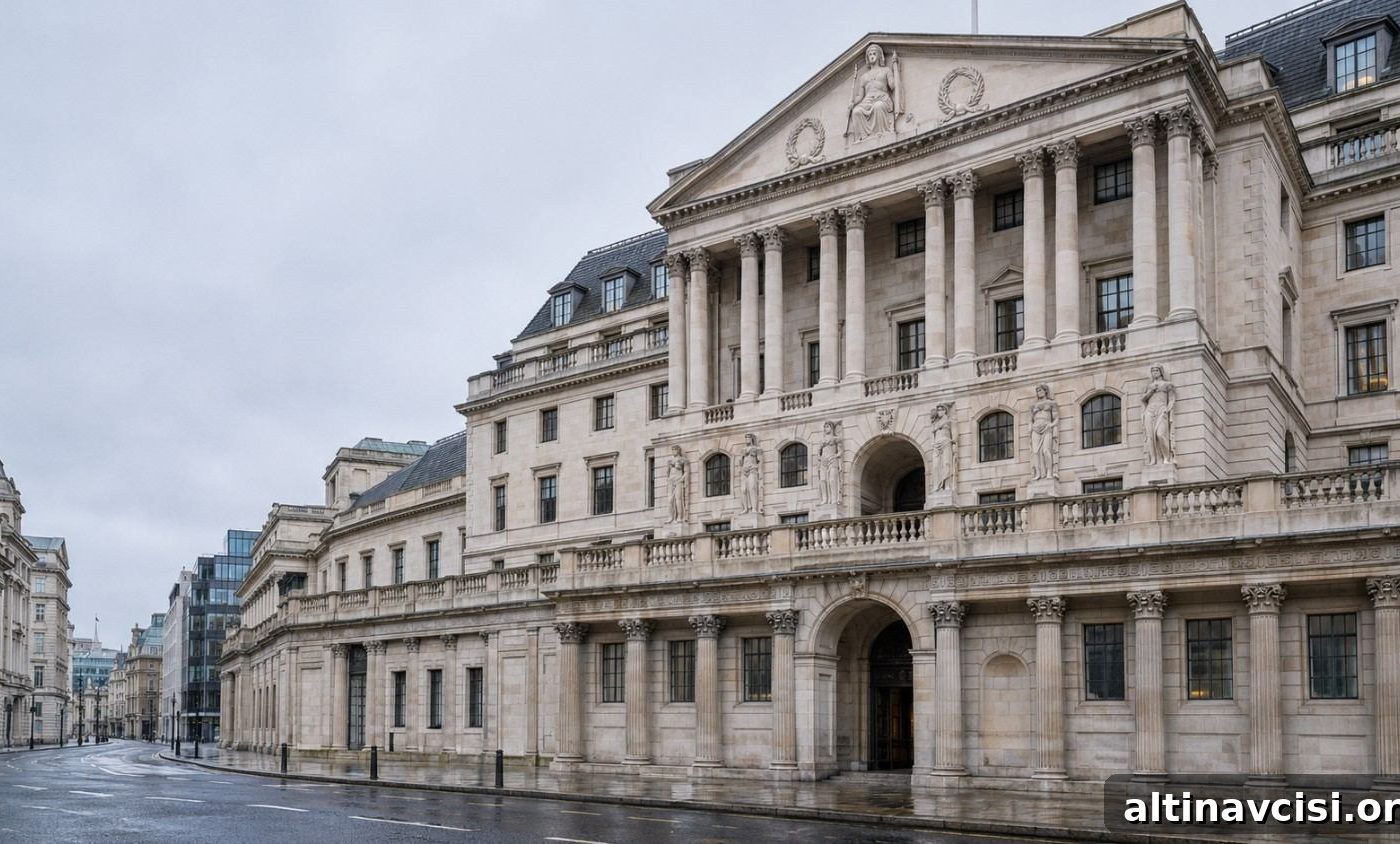
On November 5, 2026, the Bank of England raised its Bank Rate by a quarter point to 4% in an 8–1 vote. The sole dissenter supported a larger increase to 4.25%. The Bank’s statement and minutes highlighted a near-term inflation outlook that could reach about 5% by mid‑2027, driven in part by earlier energy price data. For U.S. investors in gold, the decision underscores two opposing forces: the erosion of sterling’s purchasing power from higher inflation and the potential for higher real returns on bonds — either of which can influence demand for gold.
Key takeaways
- On November 5 the Bank of England increased the Bank Rate from 3.75% to 4.00% by an 8–1 vote; one member preferred a 4.25% rate.
- Official UK inflation was 3.5% in September; Bank staff project roughly 4.5% in early 2027 and around 5% in the second quarter, based on energy prices averaged through late October.
- Inflation risk can support interest in gold, while higher expected bond returns after inflation can work against it. Which effect dominates depends on how inflation and real yields evolve.
What changed in the Bank of England’s vote?
The November minutes show the meeting concluded on November 4 and that eight members supported the quarter-point rise while one member, Catherine L. Mann, preferred a half-point move. That makes clear the decision was about the size of the hike rather than whether to act at all. This contrasts with the Bank’s September minutes, when the committee voted 6–3 to hold the rate at 3.75% while three members had preferred a rise. In short, between September and November the committee shifted toward somewhat tighter policy, reflecting staff forecasts and recent economic activity.

The Edge Every Investor Needs
Smarter precious metals investing starts with clear, timely insight. Regular market updates can help you weigh inflation risk, rate moves and safe-haven demand.
Why raise rates if inflation is set to rise?
The Bank reported UK inflation at 3.5% in September and noted that direct energy costs accounted for roughly one percentage point of that reading. Staff then used energy prices averaged over a window of working days through October 27 to form near-term projections, which show inflation climbing further into early and mid‑2027. Those projections reflect an earlier snapshot of energy markets rather than the precise prices on the November meeting date.
Higher interest rates do not directly lower global energy prices. What they can do is slow domestic borrowing and demand, making it less likely that an initial spike in energy bills feeds through into broader wages and prices. If demand weakens enough, that can limit persistent inflation. The Bank also cited stronger-than-expected recent economic activity as a reason to tighten policy a touch, aiming to act preemptively against a risk that could strengthen if left unchecked.
What does the Bank of England rate hike mean for gold owners?
Gold often attracts interest when inflation threatens to erode the purchasing power of a currency such as sterling. Physical gold is a tangible asset that can act as a hedge against currency depreciation and elevated inflation expectations. However, gold does not pay interest, so when bonds offer higher expected real returns (that is, expected returns after accounting for inflation), the opportunity cost of holding gold rises.
Industry observers, including the World Gold Council, point out that higher interest rates, rising bond yields and a stronger dollar can all weigh on gold demand. At the same time, persistent inflation and fiscal risks can sustain interest in the metal. Importantly, fund flows into gold ETFs and other vehicles can remain strong even when yields rise, so rising yields are a headwind but not an automatic determinant of gold prices.
What remains unknown for a U.S. gold owner?
UK inflation and UK policy rates are not the same as U.S. inflation or U.S. bond yields. A U.S.-based investor considering gold must judge how inflation expectations and real yields behave in dollar terms. Real yields — the difference between nominal yields and expected inflation — are particularly important when comparing bonds and gold. If real yields rise in the U.S., gold tends to face more competition from fixed income; if real yields fall or remain low while inflation expectations rise, gold can look more attractive.
Physical gold offers the advantage of reducing reliance on financial promises, but its dollar price can still decline if inflation expectations fall or bond yields rise enough to improve real returns on alternatives. Other practical factors also matter: storage and insurance costs, dealer markups and the bid‑ask spread affect net returns. For a dollar-based saver, a 4% Bank Rate in the U.K. is a signal, not a direct answer. The key questions are whether inflation risk is persistent and whether competing assets’ real returns improve over time.
SOURCES
1. Bank of England — November 2026 Monetary Policy Summary and Minutes (Bank Rate increased to 4%).
2. Bank of England — September 2026 Monetary Policy Summary and Minutes (Bank Rate maintained at 3.75%).
3. World Gold Council — Gold Demand Trends: Q3 2026 — Outlook (discusses drivers of gold demand and fund inflows).
4. GoldSilver — Coverage of Fed and Bank of England policy discussions in September 2026.
5. GoldSilver — Guide on real yields versus nominal rates and their relationship to gold.
Disclaimer: This article is informational only and is not investment advice. Past performance does not guarantee future results. Consult a qualified financial advisor before making investment decisions.
You May Also Like:
- Gold Climbs as Treasury Yields Slide
- Gold and Silver Rally After Midterm Election Results
- Gold Nears Key Resistance as Markets Weigh Fed Policy
- Central Bank Gold Buying Rises in Q3 2026
- Why Precious Metals Rebounded as Oil Fell
- The October Selloff in Gold and Silver: What Changed
- Silver’s Recent Moves Compared with Gold
- China’s Gold Imports via Hong Kong: Trends and Implications
- World Bank Outlook: Precious Metals and 2027 Forecasts
Popular Topics
Picked from the archive
-
01
 Topics
Why Investors Choose the Vienna Philharmonic Gold Coin
-
02
Topics
Stablecoin Issuer Outspent Central Banks on Gold Last Year
-
03
Topics
Why Gold Prices Are Falling Amid the Oil War
-
04
Topics
How to Buy Gold in 2026: Step-by-Step Guide for Beginners
-
05
Topics
Silver Appears Weak, Silver-to-Gold Ratio Signals Accumulation
-
06
Topics
Why Gold Prices Are Falling: What Most Investors Get Wrong
-
07
Topics
Should You Still Hold Gold in Your Portfolio?
-
08
Topics
Gold Bars vs Jewelry: Why Investors Choose Bullion