Gold Price Drops to Two-Month Low, Rebounds by Lunch

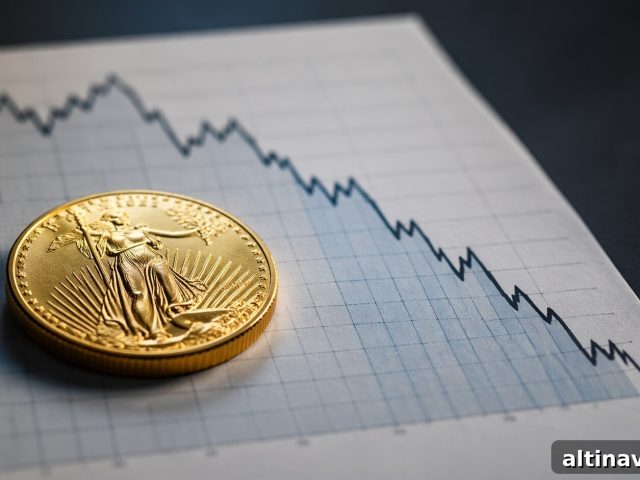
Gold dipped to an intraday low of $4,104 per ounce in Asian trade today, marking its weakest level in roughly two months. By the start of the U.S. session it had recovered to trade above $4,163. Silver remained comparatively steady, rising 0.28% to $61.25 and pushing the gold-silver ratio to about 67.97. The full decline-and-rebound occurred within a single trading day, but that rapid reversal speaks more to what markets expect next than to the significance of today’s move.
Key Takeaways:
- Gold hit $4,104 overnight, a two-month low, then rebounded to roughly $4,163 during the U.S. session.
- The recovery followed a pullback in the 10-year Treasury yield, which eased to about 5.27% from Monday’s 5.349% — a 24-year high — relieving some pressure on the non-yielding metal.
- A fresh same-day data point helped shift sentiment: ADP’s four-week average of private payroll gains edged up to 23.75K from 22.5K.
- Markets are waiting for the Federal Reserve minutes due Wednesday, October 7, which are likely to determine the next leg for yields, the dollar, and precious metals.
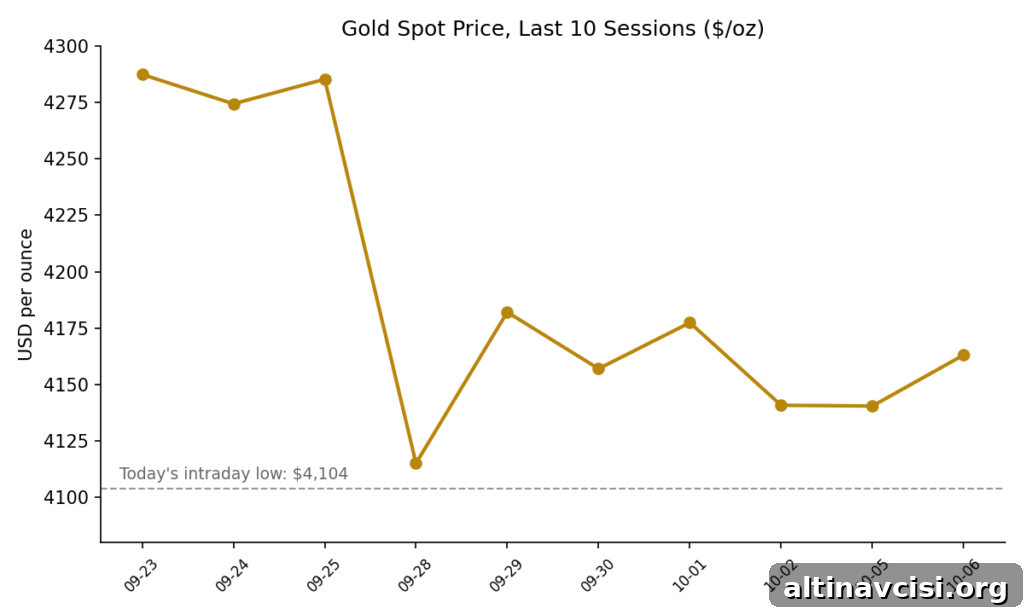
This desk described the broader tug-of-war earlier today: when jobs data looks soft, the Federal Reserve is more likely to pause, which supports gold; when bond markets demand higher yields, that raises the opportunity cost of holding gold. Today’s mini round-trip was a condensed example of that dynamic. The 10-year Treasury’s retreat from Monday’s 24-year high gave gold room to climb back. A slightly softer U.S. Dollar Index — moving down from a recent year-to-date high near 102.53 toward about 101.80 — also helped the rebound.
What New Data Pushed Yields and the Dollar Lower Today?
The immediate catalyst was ADP’s four-week average of weekly private-sector job gains, which nudged up to 23.75K from 22.5K on the latest release. The number itself is modest, but markets are parsing every data point as a potential signal about the Fed’s options for its October 27–28 meeting. Even a small softening in labor-market momentum can reduce pressure on long-term yields and, in turn, support gold. According to CME’s FedWatch measures, traders still assign roughly a 78% probability that the Fed will hold rates at its October meeting — a probability that has been relatively stable through the day.

The Edge Every Investor Needs
Smarter precious metals investing starts with consistent market information. The Nuggets Newsletter offers timely market insight, Fed updates, macro trends, and educational resources to help you stay informed.
What Happens at Wednesday’s FOMC Minutes?
The pattern we saw today — gold weakening as yields climb, then recovering when yields pause — has repeated several times over recent weeks. The Federal Open Market Committee minutes due Wednesday are the next scheduled event that could push the balance. If the minutes suggest officials are more worried about slowing growth than rising inflation, dovish interpretations could extend today’s bounce. If the minutes emphasize persistent inflation risks and the need for restrictive policy, bond-market pressure could return and cap gold’s recovery. In short, the minutes will be read for tone on both growth and inflation guidance, and their interpretation will likely move yields and the dollar before they move metals.
What Should Investors Watch Next?
Short-term swings like today’s rarely change the longer-term case for owning precious metals. Daily volatility mainly reflects shifts in real yields, nominal Treasury yields, and the U.S. dollar. The more persistent drivers of gold demand remain fiscal trends and the broader interest-rate environment: government borrowing is rising, and the bond market has been demanding higher yields to hold that supply. The Fed sits at the intersection of those forces. One set of meeting minutes won’t resolve the tension between fiscal dynamics and monetary policy. For investors looking beyond speculative intraday moves, owning physical metal or long-duration allocations that hedge against rising real yields and fiscal risk remains a strategic consideration.
Stay On Top of Gold & Silver Prices
Receive concise market alerts and analysis delivered to your inbox.
People Also Asked
Gold slipped overnight as the 10-year Treasury yield remained near multi-decade highs, increasing the opportunity cost of holding a non-yielding asset. When yields eased during the U.S. session, gold recovered some of its losses.
The Fed’s minutes, released Wednesday, October 7, are the immediate catalyst. Markets will look for guidance on officials’ views about growth versus inflation and whether policymakers are positioning to hold rates steady or change course later in the year.
Not by itself. Single-day moves are usually reactions to shifts in yields, dollar strength, or short-term news. The longer-term outlook for gold depends on structural factors such as fiscal deficits, real yields, and central bank behavior.
SOURCES
1. FXStreet — Gold Rebounds From Two-Month Lows as US Dollar, Treasury Yields Retreat (October 6, 2026)
2. Federal Reserve Economic Data (FRED), Federal Reserve Bank of St. Louis — 10-Year Treasury Constant Maturity Rate (DGS10)
3. CME Group — FedWatch Tool, October 2026 FOMC Probabilities
Disclaimer: This article is for informational purposes only and does not constitute investment advice. Past performance is not indicative of future results. Consult a qualified financial advisor before making investment decisions.
You May Also Like:
- Five Moves Are Quietly Rebuilding Gold’s Entire Market Structure
- Gold Is Rising Today. A 24-Year-High Bond Yield Says It Shouldn’t Be.
- Gold’s Share of Central Bank Reserves Nearly Doubled. A Top Banker Just Explained Why.
- Treasury Yields Are Tightening: What It Means for Gold
- Who’s Actually Right About Gold Right Now? Five Signals, Five Answers
- Gold and Silver Are Rising Today. So Is the Dollar. That’s Rare.
- When Should a Central Bank Sell Its Gold? One Just Did. Most Won’t.
- September Payrolls Just Missed by 70,000. Gold and Silver Didn’t Wait to React.
- The ISM Number Barely Moved. The One Underneath It Just Jumped.
Popular Topics
Picked from the archive
-
01
 Topics
Why Investors Choose the Vienna Philharmonic Gold Coin
-
02
Topics
Stablecoin Issuer Outspent Central Banks on Gold Last Year
-
03
Topics
Why Gold Prices Are Falling Amid the Oil War
-
04
Topics
How to Buy Gold in 2026: Step-by-Step Guide for Beginners
-
05
Topics
Silver Appears Weak, Silver-to-Gold Ratio Signals Accumulation
-
06
Topics
Why Gold Prices Are Falling: What Most Investors Get Wrong
-
07
Topics
Should You Still Hold Gold in Your Portfolio?
-
08
Topics
Gold Bars vs Jewelry: Why Investors Choose Bullion