5 Moves Reshaping Gold’s Market Structure

Gold rebounded this morning on renewed chatter about Federal Reserve policy — a familiar short-term driver of precious metals. But the more consequential stories are structural and quieter: five developments this week (early October 2026) show institutions reshaping how gold and silver trade, settle, and are analyzed. These shifts alter the market’s plumbing and the assumptions investors use to value metal exposure. A major exchange introduced physically settled futures in London. Hong Kong is building a yuan-priced settlement link to China. Wall Street forecasters disagree on whether gold’s next major move will target roughly $3,500 or exceed $5,250. A leading bank strategist says gold’s long-standing correlation with oil has weakened. And bond-market signals tied to rising government debt continue to underpin the case for bullion as an alternative monetary asset. None of these changes appears in a single daily candlestick, so below is why each matters for traders and longer-term investors.
Did a Major Exchange Just Launch New Gold Futures in London?
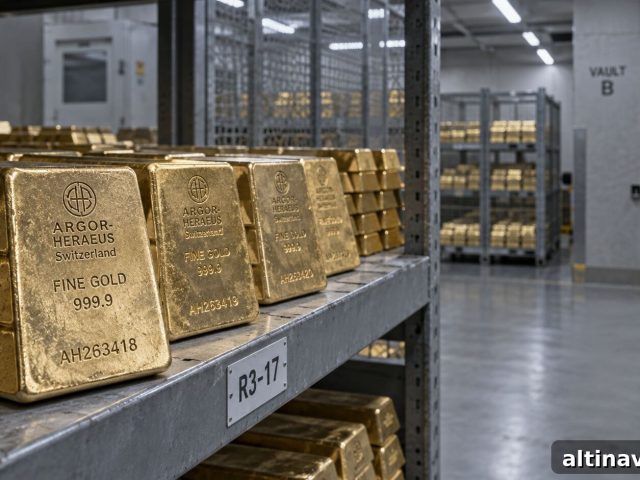
Intercontinental Exchange (ICE), the parent company of the New York Stock Exchange, this week launched physically settled futures for gold, silver, platinum, and palladium in London. These contracts are settled against the LBMA Gold Price, the daily London auction ICE has administered since 2015. The London market remains the world’s largest center for private physical gold trading, routinely handling hundreds of billions in trades and vaulting over a trillion dollars in bullion. By offering regulated, exchange-traded contracts that settle to the LBMA auction, ICE is providing a formalized bridge between London’s deep physical market and exchange-traded liquidity. That linkage can tighten the relationship between paper and physical prices, improve transparency around settlement, and give institutional players an additional tool to manage delivery and hedging risk.
The Edge Every Investor Needs
Smarter precious metals investing starts with clarity: essential market insight, central bank moves, macro trends, and practical education.
Why Is Hong Kong Building a “Bridge of Gold” to China?
Hong Kong is positioning itself as the settlement, vaulting, and delivery hub that supports Beijing’s effort to internationalize the yuan. Under the emerging arrangement, Shanghai would set onshore prices while Hong Kong would serve offshore counterparties with storage and physical delivery. After gold flows into Hong Kong collapsed in 2020 and then rebounded—rising from about 67 tonnes in 2020 to roughly 942 tonnes in 2025—officials are planning a substantial expansion of vault capacity. The proposed build-out targets as much as 2,000 tonnes by 2028. Beyond the tonnage, the critical change is in how gold could be used: foreign counterparties could hold gold in Hong Kong and use it as collateral to borrow yuan. That arrangement effectively reduces currency risk for trading partners and strengthens the utility of yuan-denominated settlement for commodities and trade.
Why Can’t Wall Street Agree on Gold’s Next $1,750 Move?
Wall Street forecasters currently paint sharply different outcomes for 2026. Natixis analyst Bernard Dahdah outlines three distinct scenarios: a base case near $4,100 if the Fed keeps policy steady; a bearish outcome near $3,500 if geopolitical conflict escalates and central banks sell metal; and a bullish path above $5,250 if oil prices fall sharply and inflation cools enough to prompt a Fed pivot. That base case itself is a notable retreat from Dahdah’s $5,000 year-end projection in late August. Meanwhile, StoneX offers a cautiously optimistic technical view: a decisive move above $4,400 could pave the way to $4,700 and $5,000, while a failure beneath a summer low near $3,942 could send prices toward $3,500. Both forecasts rely on observable market drivers, yet they produce materially different price targets—illustrating how quickly macro assumptions about growth, inflation, oil, and central bank behavior can change the gold equation.
Has Gold Actually Stopped Tracking Oil Prices?
HSBC’s chief precious metals analyst, James Steel, argues that gold’s historical correlation with oil has weakened substantially. For decades the two moved together—both rising through the inflationary 1970s and falling in the 1980s—but that relationship has eroded as oil’s share of the global economy diminished. Current correlation measures sit near 0.15 and can turn negative, meaning recent oil spikes tied to Middle East tensions have not produced the same immediate gold rallies investors once assumed. Instead, oil shocks now influence gold indirectly through their impact on yields and the dollar, not through a simple one-to-one price link. The takeaway: treating gold as an automatic hedge against oil is increasingly unreliable.
Does Rising Government Debt Still Make the Bull Case for Gold?
Bond-market signals continue to support the debt-driven bull case for gold. Term premia—the extra yield investors demand to hold long-term government bonds—have risen in major markets (the US, UK, France, and Germany) to levels not seen since around 2011. Investment managers interpret that rise as a risk premium related to fiscal and inflation uncertainty rather than stronger growth. In the United States, total public debt passed $40 trillion in August 2026, and official projections show the public debt burden rising further as a share of GDP over the coming decade. When bond markets price greater fiscal stress, owning gold—an asset governments cannot create at will—becomes an attractive portfolio diversifier and store of value for those concerned about currency dilution and long-term purchasing power.
SOURCES
1. TradingView, citing the Financial Times — NYSE Owner Starts Gold Futures in London, a Market Without One Since 2022
2. Investing.com — ICE Launches Precious Metals Futures in London This Week
3. ADVFN — ICE Launches Precious Metals Futures Contracts in London
4. South China Morning Post — Hong Kong’s Bridge of Gold Completes China’s Yuan Ambition
5. IndexBox, citing Natixis — Natixis Sees Gold Under Pressure Through 2026, With Paths From $3,500 to $5,250 an Ounce
6. StoneX — Gold Q4 2026 Outlook: Resilience in the Face of Rallying Dollar and Yields
7. HSBC Macro Brief (via Getscuttlebutt) — HSBC Gold Analyst: Central Banks’ Gold Is Now Worth More Than Their Treasuries
8. State Street Global Advisors — SPDR Monthly Gold Monitor
Disclaimer: This article is for informational purposes only and does not constitute investment advice. Past performance is not indicative of future results. Always consult a qualified financial advisor before making investment decisions.
You May Also Like:
- Gold Is Rising Today. A 24-Year-High Bond Yield Says It Shouldn’t Be.
- Gold’s Share of Central Bank Reserves Nearly Doubled. A Top Banker Just Explained Why.
- Treasury Yields Are Tightening: What It Means for Gold
- Who’s Actually Right About Gold Right Now? Five Signals, Five Answers
- Gold and Silver Are Rising Today. So Is the Dollar. That’s Rare.
- When Should a Central Bank Sell Its Gold? One Just Did. Most Won’t.
- September Payrolls Just Missed by 70,000. Gold and Silver Didn’t Wait to React.
- The ISM Number Barely Moved. The One Underneath It Just Jumped.
- Morgan Stanley Just Named Gold’s Floor. Here’s the Number.
Popular Topics
Picked from the archive
-
01
 Topics
South Korea’s Central Bank Resumes Gold Purchases After 13 Years
-
02
Topics
Why Central Banks No Longer Trust Foreign Vaults
-
03
Topics
Gold-to-Oil Ratio: How It Impacts the Economy and Portfolios
-
04
Topics
Gold and Silver Prices Jump After Iran Peace Deal, Then Retreat
-
05
Topics
When to Sell Gold During a Bull Market Pullback
-
06
Topics
Silver Price Falls Below $50: Why It’s Dropping Faster Than Gold
-
07
Topics
How Gold Is Used in Dentistry, Surgery and Pharmaceuticals
-
08
Topics
Why Missed Job Openings Sparked a Rally in Gold Prices