
South Korea’s central bank had not added any gold to its reserves for 13 years. On August 3, that changed.
The Bank of Korea (BOK) announced it has started purchasing overseas-listed spot gold ETFs and has created a framework to buy domestically produced physical gold for the first time since 2013. The bank formed a domestic acquisition channel in coordination with copper smelter LS MnM, the Korea Exchange, and the Korea Securities Depository.
“Interest in safe‑haven assets, such as gold, has increased significantly due to the recent escalation of geopolitical risks,” said Jung Hee‑sup, director‑general of the BOK’s Reserve Management Group.
Why Did the Bank of Korea Stop Buying Gold in the First Place?
Between 2011 and 2013 the BOK acquired sizeable amounts of bullion — 40 tonnes in 2011, 30 tonnes in 2012 and 20 tonnes in 2013 — and then halted purchases entirely. The immediate cause was practical: gold prices fell after those purchases and the bank faced domestic criticism for buying close to a price peak.
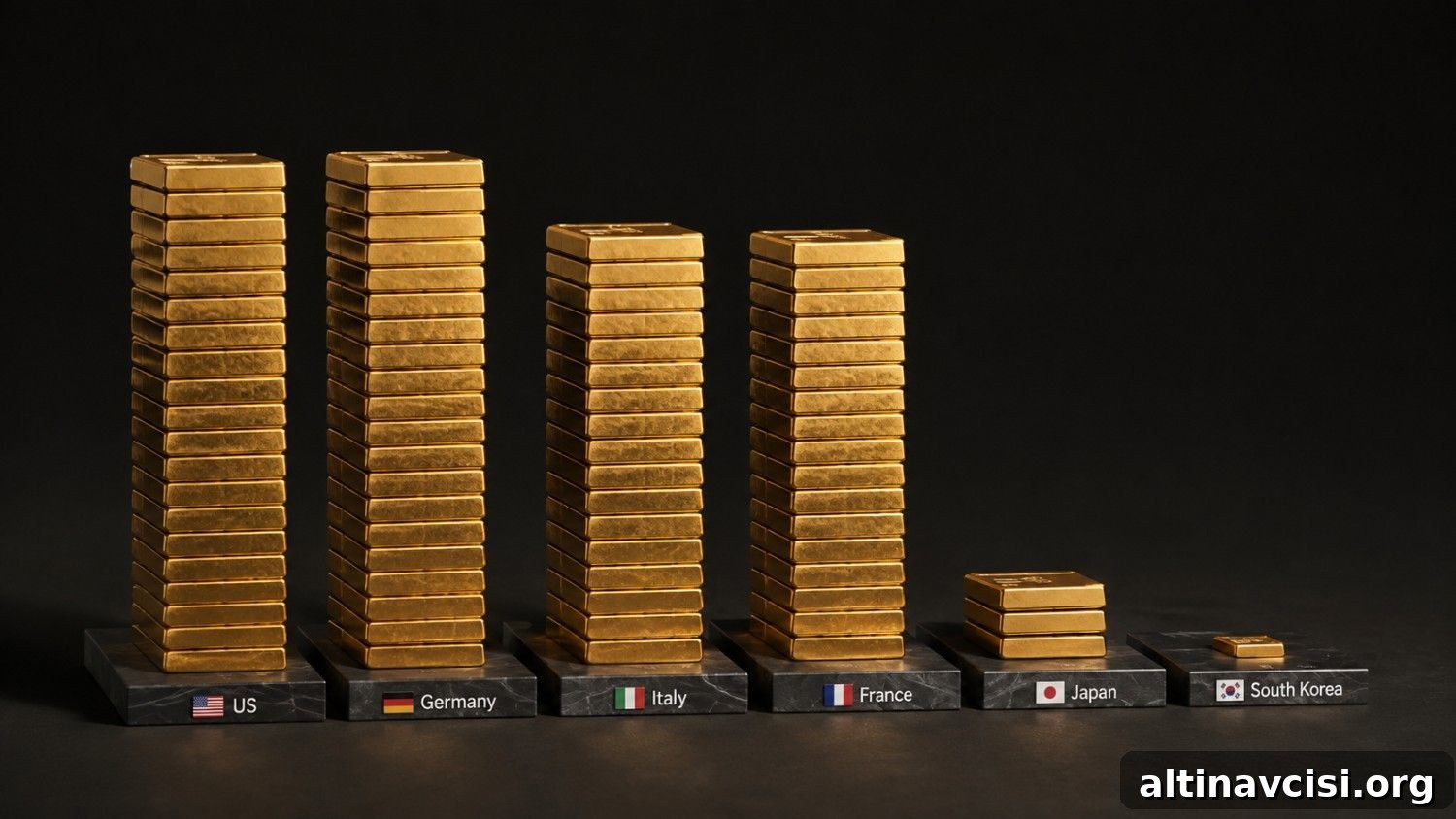
For 13 years the BOK left its gold holdings unchanged. As of June 2026 the bank’s holdings stood at 104.4 tonnes, valued at roughly $4.79 billion, which represented about 1.1% of its $427.36 billion in total foreign exchange reserves.
That 1.1% allocation is the key statistic. It places South Korea far below many advanced‑economy peers and explains why the recent policy shift is notable: the bank is addressing a long period of political inertia that followed a poorly timed entry into the market.
The Edge Every Investor Needs
Smarter precious metals investing starts here. The Nuggets Newsletter brings essential market insights, Fed updates, global trends, educational videos, and more.
What Does South Korea’s Gold Reserve Level Actually Tell You?
Among advanced economies, central bank allocations to gold commonly range from roughly 10% to 20% of foreign exchange reserves. The United States and Germany each hold a large portion of reserves in gold, historically around two thirds of their official reserve mix, while Japan’s allocation has been smaller but still materially higher than South Korea’s.
At approximately 1.1% of reserves, South Korea’s gold allocation is well below comparable peers. This is not primarily an ideological rejection of gold as a reserve asset but the result of a long hiatus triggered by political backlash after purchases that coincided with a price decline. The recent move by the BOK cites growing geopolitical risk and the desire to diversify away from dollar‑denominated assets. In short, the bank shifted from avoiding gold to accepting the cost of staying underweight.
How Does the New Purchase Framework Actually Work?
The BOK will acquire domestically produced physical gold — specifically metal that firms such as LS MnM and Korea Zinc would otherwise export — via negotiated block trades on the Korea Exchange. The Korea Securities Depository will manage settlement and custody.
Two details make the structure noteworthy. First, purchases through the domestic channel are settled in Korean won rather than U.S. dollars, which avoids drawing down foreign exchange reserves to pay for bullion. Second, the bullion bought through this channel will remain within Korea rather than being transferred to overseas custody like the Bank of England, where the BOK has historically stored a portion of its gold. Together these choices reduce exposure to dollar concentration and foreign custody arrangements.
The BOK expects to acquire roughly 4 to 5 tonnes annually through the domestic channel. That amount is small relative to total reserves, but the bank has also begun buying overseas‑listed spot gold ETFs. Officials emphasize a measured, long‑term approach rather than a single, large adjustment.
Why Does This Matter for Gold’s Structural Demand Case?
The Bank of Korea is not the world’s largest central bank buyer, but its return to the market matters because it ends a long holdout among a major developed economy. Since 2022 global central banks have been net buyers of gold in meaningful volumes, with many emerging‑market central banks building holdings to reduce dollar dependence. Those buyers have driven annual central bank net purchases to levels well above historical averages.
South Korea’s re‑entry is distinct because it is a developed, G20 economy and a close U.S. partner that explicitly avoided gold for more than a decade. The decision reflects a pragmatic reassessment of reserve diversification rather than a geopolitical break with the United States. That rationale is potentially persuasive to other developed central banks that remain underweight in gold.
When large, late‑arriving buyers decide to increase allocations, they often accelerate existing trends. The significance of the BOK’s move is therefore less about immediate volume and more about the signal it sends to other central banks that have yet to act.
At the time this article was prepared, gold prices were being tracked around $4,084 per ounce on common market price charts.
Stay On Top of Gold & Silver Prices
Get important market alerts sent straight to your inbox.
SOURCES
1. Korea Times — BOK to buy domestically produced gold for 1st time in 13 years, August 3, 2026
2. Korea JoongAng Daily — Bank of Korea resumes buying gold after 13‑year pause with ETFs and domestic purchases, August 3, 2026
3. UPI — Bank of Korea prepares first physical gold purchase since 2013, August 3, 2026
4. Mining.com / Reuters — South Korea’s central bank to buy gold from domestic producers, August 3, 2026
5. The Deep Dive — Bank of Korea to buy gold again after 13 years, August 4, 2026
6. World Gold Council — Gold Demand Trends Q2 2026, July 30, 2026
7. GoldSilver — Live Gold and Silver Spot Prices
Disclaimer: This article is for informational purposes only and does not constitute investment advice. Past performance is not indicative of future results. Always consult a qualified financial advisor before making investment decisions.
You May Also Like:
- Gold and Silver Hold As Bessent Promises a Hormuz Deal, a Vessel Gets Hit, and JOLTS Drops
- Why Gold Is Holding Near $4,067 Ahead of a Jobs Week That Could Trigger a Rate Hike
- Manufacturing Hit a Four‑Year High Today. Gold Didn’t Move. Here’s Why That’s the Story.
- Gold Is Caught Between a Structural Bull Case and a Policy Ceiling. Something Has to Give by Thursday.
- The Same Force That Crushed Gold All Year Just Flipped
- Gold ETFs Lost 45 Tonnes Last Quarter. Central Banks Bought 289. Here’s What That Split Means.
- Gold Had Every Reason to Rally Today. It Didn’t. Five Reasons Why.