Why Are Proof Gold Coins Pricier Than Bullion?
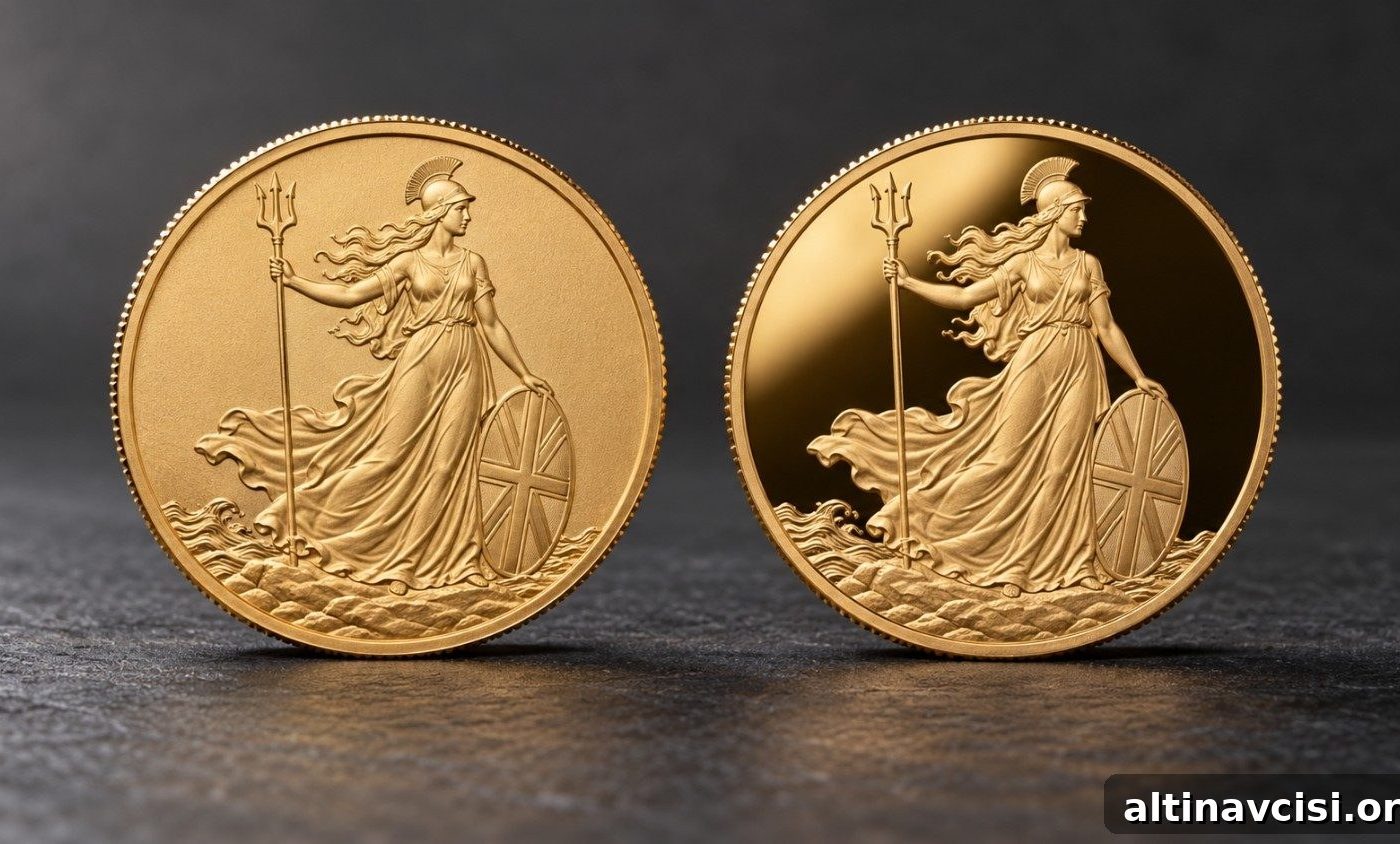
Every gold coin a dealer offers carries a finish label — bullion, uncirculated, or proof — and that label affects both pricing and grading. When comparing coins, separate the metal value from the numismatic value. Confusing the two can easily lead to overpaying for the wrong coin.
Key Takeaways
- “Proof” refers to a specific production process, not a higher gold content. Proof planchets are burnished and hand-fed into presses with polished dies, and each proof is struck multiple times to produce a frosted design set against mirror-like fields.
- A proof coin and its bullion counterpart contain the same amount of gold. For example, a one-ounce proof American Gold Eagle and a one-ounce bullion American Gold Eagle both contain one troy ounce of 22-karat (.9167 fine) gold.
- The higher price of a proof coin pays for its finish and the collector market behind it, not extra metal. Bullion coins trade close to spot plus a modest dealer markup; proof coins carry wider premiums because the Mint prices and limits them differently.
- After the Mint sells proof coins, independent grading services such as PCGS and NGC apply the 1–70 Sheldon scale. That grade strongly influences a proof coin’s resale value, often more than its gold content does.
- Melt value remains the price floor for both bullion and proof coins. Only collector demand keeps a proof’s market price above melt; if collector interest weakens, the premium can fall even while the gold price holds.
What Makes a Coin a “Proof” Instead of a Bullion Strike?
The difference begins in production. Proof coins are produced with extra care: blanks are burnished, hand-fed into presses equipped with highly polished dies, and struck more than once at slower speeds and higher pressure. Those steps bring out sharp design detail and create the frosted devices that contrast with mirror-like fields.
Bullion coins are made for volume. They receive a single strike from standard dies at high speed, producing a brilliant-uncirculated finish suitable for investors. Bullion pieces remain legal tender and retain their stated gold content, but they lack the cameo contrast and refined finish of proofs.
The Knowledge That Changes Everything
Two essential guides — yours free. Learn why gold matters and how fiat currency dynamics affect long-term purchasing power.
How Does the Mint Price Proof Coins Differently From Bullion Coins?
Bullion coins move through the Mint’s Authorized Purchaser channels, where wholesalers buy large quantities near spot price plus a modest Mint premium and then distribute to dealers with small additional markups. Because bullion production is scalable and uncapped, premiums over spot remain relatively narrow and predictable.
Proof coins follow a different path. They are often struck at a single facility on a scheduled release date and priced according to the Mint’s numismatic price list rather than a simple spot-plus-markup formula. The Mint typically sets a mintage cap in advance. That fixed supply creates an immediate scarcity premium when the coins go on sale, even before collectors begin trading them in secondary markets.
Why Do Proof Coins Carry Such a Large Premium Over Bullion?
Three factors combine to raise proof prices. First, production is costlier: hand-selected planchets and multiple slow strikes reduce throughput, and the Mint charges more to cover those costs. Second, a capped mintage can create genuine scarcity. Third, a vibrant grading and collector market can push prices far above melt value as buyers compete for top-condition pieces.
However, scarcity alone doesn’t guarantee sustained premiums. If collector interest diminishes, demand for a proof issue can fall and its premium may compress toward melt value even if the underlying gold price stays steady. The numismatic market’s appetite is the key variable.
What Actually Determines a Proof Coin’s Collector Value?
Independent grading by PCGS and NGC applies the 1–70 Sheldon scale, where 70 means a perfect coin with no observable post-production flaws under magnification. For proofs, graders also evaluate cameo contrast — the frosted devices against the mirrored field. Coins that show strong, uniform contrast may receive Deep Cameo (DCAM) or Ultra Cameo (UCAM) designations, which can enhance value.
Rarity further amplifies value. Tight original mintages, a low number of surviving coins at top grades, or unusual production variants can all boost price independent of gold content. Ultimately these premiums reflect how many other examples exist in comparable condition, not additional metal.
Proof or Bullion: Which One Fits Your Reason for Buying Gold?
Choose based on your objective. If you want direct exposure to gold’s price and long-term purchasing power, bullion coins or bars usually deliver more ounces per dollar because markups over melt are smaller and more predictable. If you value the finish, mintage story, and potential collector-grade upside, proof coins offer a different kind of exposure: part metal, part collectible.
Neither option is inherently wrong, but they answer different questions. Bullion solves “how do I own physical gold at the lowest cost per ounce.” Proofs answer “do I want a collector piece with enhanced aesthetics and potential numismatic upside.” Proofs raise the risk that you’re paying a collector premium for metal exposure that a bullion coin would provide more efficiently.
Storage practices differ accordingly. Bullion held for spot exposure usually goes into allocated vault storage with other investment metal. Proofs retain more of their value when kept in original mint packaging with certificates intact and are often stored sealed rather than pooled in bulk vaults.
Stay On Top of Gold & Silver Prices
Get important market alerts sent straight to your inbox.
People Also Ask
No. A one-ounce proof American Gold Eagle and a one-ounce bullion American Gold Eagle each contain one troy ounce of 22-karat (.9167 fine) gold. The proof’s added cost covers finish and collectibility, not extra metal.
Yes. Certain U.S. laws explicitly allow American Eagle coins to qualify for IRAs; custodians typically require proof coins to remain in their original government packaging with any certificate of authenticity preserved.
Not automatically. Tax treatment depends on jurisdiction and circumstances. In the U.S., some collectible coins may be subject to a higher capital gains rate; consult a qualified tax advisor for current rules before selling.
Those are grading designations applied when a proof shows strong, consistent contrast between frosted devices and mirrored fields. A high numeric grade combined with Deep Cameo or Ultra Cameo typically commands the highest premiums for a given issue.
No. Melt value is the floor determined by the coin’s gold content at spot price. Collector demand determines the premium above that floor and can decline, allowing price to approach melt even if gold itself remains steady.
SOURCES
1. United States Mint, coin finishes glossary (Anatomy of a Coin).
2. United States Mint product and press release information on American Eagle proof releases.
3. PCGS grading standards and the Sheldon scale.
4. U.S. Code and IRS guidance on coin specifications and retirement account eligibility.
5. Editorial tax and precious-metals guidance consistent with current practice.
Disclaimer: This article is for informational purposes only and does not constitute investment advice. Past performance is not indicative of future results. Always consult a qualified financial advisor and tax professional before making investment decisions.
You May Also Like:
- Silver Fell Harder Than Gold in September. The Solar Thrifting Story Isn’t Why.
- K-Shaped Economy: Why Asset Owners Win and Wage Earners Don’t
- Gold in Medicine: Dental, Surgical, and Pharmaceutical Uses Explained
- What Is Gold Backwardation? The Rare Signal That Struck 3 Times in 2025
- A Bank Just Said the Fed Isn’t Done Hiking. Here’s the Math on What That Does to Gold.
- Gold Fell 23% This Year. One Number Explains Why.
- What Is the Debt-to-GDP Ratio, and What the US Number Tells You About Gold
- The World’s Last Zero-Rate Anchor Is Rising, and Gold Should Care
Popular Topics
Picked from the archive
-
01
 Topics
Why Investors Choose the Vienna Philharmonic Gold Coin
-
02
Topics
Stablecoin Issuer Outspent Central Banks on Gold Last Year
-
03
Topics
Why Gold Prices Are Falling Amid the Oil War
-
04
Topics
How to Buy Gold in 2026: Step-by-Step Guide for Beginners
-
05
Topics
Silver Appears Weak, Silver-to-Gold Ratio Signals Accumulation
-
06
Topics
Why Gold Prices Are Falling: What Most Investors Get Wrong
-
07
Topics
Should You Still Hold Gold in Your Portfolio?
-
08
Topics
Gold Bars vs Jewelry: Why Investors Choose Bullion