This One Metric Explains Gold’s 23% Drop This Year

The federal funds rate influences gold primarily through its effect on real yields and the U.S. dollar. When the Federal Reserve raises the policy rate, yields on safe assets such as Treasury securities generally climb, increasing the opportunity cost of holding non-yielding gold. When the Fed eases policy and cuts rates, that opportunity cost falls and gold often becomes a more attractive place to store value.
Key Takeaways
- The federal funds rate is the overnight rate that banks use to lend to one another. It affects a wide range of borrowing and saving rates across the economy.
- Gold reacts to the real yield—the nominal yield minus expected inflation—rather than the Fed’s headline nominal rate. Real yields capture the true cost of holding a non-yielding asset like gold.
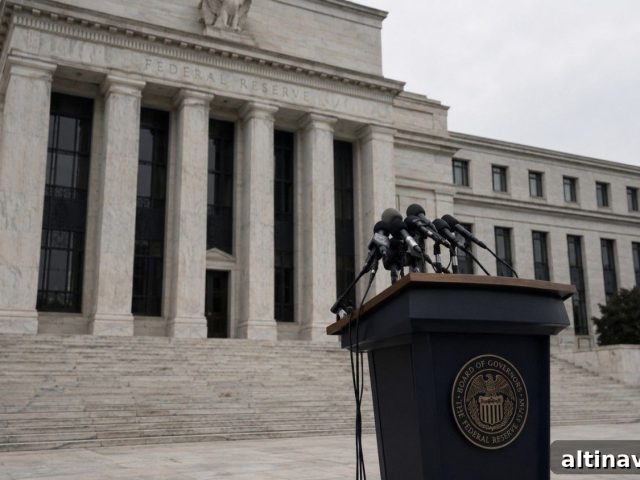
- On September 16, 2026, the Federal Open Market Committee (FOMC) raised the federal funds target by 25 basis points to a 3.75%–4.00% range. That hike came after a period in which rising real yields had already pushed gold substantially below its January peak.
- A weaker dollar and falling real yields tend to support gold in a Fed cutting cycle. Conversely, a stronger dollar and rising real yields often cap gold rallies in tightening cycles.
- This relationship is a tendency rather than a strict rule: inflation expectations, central bank demand, and geopolitical events can override it for extended periods.
What Is the Federal Funds Rate?
The federal funds rate is the interest rate at which depository institutions lend reserve balances to each other overnight. The Federal Open Market Committee (FOMC) sets a target range for that rate and reviews it regularly. Changes in the federal funds rate influence mortgage rates, credit-card rates, savings returns and Treasury yields.
Investors sometimes assume gold moves directly against the Fed’s headline rate. In reality, gold prices respond mainly to what the policy rate does to real returns elsewhere in the economy.
The Knowledge That Changes Everything
Two concise guides, free to download. Learn why gold matters and how fiat currencies can lose value over time.
Why Does Gold React to Real Yields, Not the Headline Rate?
Gold produces no interest, coupon or dividend. The cost of holding gold is the return an investor forgoes by not owning a Treasury or another yield-bearing asset. Economists call this the opportunity cost of holding gold.
That cost is best measured by the real yield—the nominal yield after subtracting expected inflation—because it shows the actual purchasing-power return on safe assets. For example, a 10-year Treasury with a 5.18% nominal yield and inflation expectations around 2.3% implies a real yield near 2.85%. As real yields rise, holding gold looks more expensive compared with Treasuries; as real yields fall, gold’s lack of yield is less of a disadvantage.
This distinction explains why market participants can interpret the same Fed announcement differently. The nominal policy move only matters through its impact on real yields. A rate increase paired with rising inflation expectations can leave real yields—and therefore gold prices—largely unchanged.
How Does a Rate Hike Usually Affect Gold?
When the Fed tightens policy and real yields climb, three effects commonly appear together: higher opportunity cost for holding gold, a stronger U.S. dollar that makes dollar-priced gold more expensive overseas, and reduced hedging demand from institutions that size positions around the real-yield gap. Those forces tend to weigh on gold prices.
A recent example: gold reached an all-time nominal high in January 2026, then declined significantly through the summer and into September as expectations of rate hikes lifted real yields. The decline illustrated how rising real-yield expectations, more than any single Fed announcement, can drive gold prices lower.
How Does a Rate Cut Usually Affect Gold?
Rate cuts typically lead to falling real yields and a weaker dollar, which reduce the opportunity cost of holding gold and often support higher prices. Historically, easing cycles have coincided with strong gold rallies. However, if a cut reflects weakening growth and falling inflation expectations, real yields may remain steady and gold’s response can be muted.
In short: the direction of policy signals intent, but real yields—the inflation-adjusted return on alternatives—are what actually move gold.
Why Doesn’t Gold Always Follow the “Textbook” Reaction?
Several factors can override the rate–gold relationship for extended periods. Inflation expectations can move independently of policy; central banks may buy gold for reserves on their own timetable (notably large purchases were recorded in recent years); and geopolitical shocks—wars, financial crises or sudden currency stress—can surge safe-haven demand for gold. Any of these forces can dominate market moves for weeks or months.
That doesn’t invalidate the real-yield mechanism; it means that mechanism is one important input among several. When interpreting Fed decisions, focus on how they are likely to affect real yields and the dollar rather than only the nominal rate change.
What Should Long-Term Owners of Gold Take From This?
Rate cycles are not a reliable trigger for timing purchases or sales of bullion. Policy cycles can last years; the rationale for owning physical gold and silver as a store of value and a hedge against monetary and political risks is a multi-decade proposition. Understanding the real-yield channel helps you read headlines without overreacting, but it does not replace long-term planning.
If you already own precious metals, the practical priorities are security and custody: hold metal in insured, audited storage outside the banking system or in a properly structured precious-metals retirement account to preserve purchasing power over time.
Stay On Top of Gold & Silver Prices
Get timely market alerts delivered to your inbox.
People Also Ask
As of the September 16, 2026 FOMC meeting, the target range was 3.75%–4.00%. The Fed revises its target range at scheduled meetings; check the Federal Reserve’s official releases for the latest rate.
Gold often faces headwinds when rates rise because higher rates typically push real yields upward. That is a common tendency, not a guarantee—other factors can counteract or amplify the impact of rate moves.
A real yield equals a bond’s nominal yield minus expected inflation. Because gold pays no yield, its opportunity cost is measured against that inflation-adjusted return rather than the Fed’s nominal policy rate.
Gold set a nominal record in January 2026, then declined as inflation remained elevated and markets priced in tighter policy. Rising real-yield expectations reduced gold’s appeal, contributing to a notable decline through September 2026.
Daily price moves reflect many inputs—the dollar, Treasury yields, geopolitical headlines, ETF flows and central bank activity. The federal funds rate is a multi-year driver of price direction rather than a reliable day-to-day predictor.
For most long-term investors, gold is a store of purchasing power rather than a short-term trade. Use changes in real yields to interpret market news, but avoid trying to time purchases or sales solely around single FOMC meetings.
SOURCES
1. Federal Reserve — FOMC statements and public releases, September 16, 2026; Treasury inflation-protected and nominal Treasury yield series.
2. J.P. Morgan Asset Management — commentary on FOMC statements and rate outlook.
3. CNBC — coverage of the September 2026 rate decision.
4. Charles Schwab — analysis of Fed policy and market reaction.
5. StreetStats — Fed funds rate forecasts and FOMC timeline.
6. World Gold Council — annual central bank gold demand data (reported purchases in recent years).
Disclaimer: This article is informational only and is not investment advice. Past performance is not indicative of future results. Consult a qualified financial advisor before making investment decisions.
You May Also Like:
- What Is the Debt-to-GDP Ratio, and What the US Number Tells You About Gold
- The World’s Last Zero-Rate Anchor Is Rising, and Gold Should Care
- What Is a FOMC Meeting? What the Fed Decides and How Gold Reacts
- Gold in Your Phone: How Much Gold Is in Electronics and What It Means for Demand
- Real Yields vs. Nominal Rates: The Number That Actually Moves Gold
- How to Read a Gold Spot Price Chart: The Four Things That Actually Matter
- Central Banks Hold the Bulk of Official Gold Reserves; Sovereign Wealth Funds’ Allocations Vary
- You Don’t Need to Take Physical Delivery to Sell Gold — How Market Transactions Work
Popular Topics
Picked from the archive
-
01
 Topics
Silver Eagle vs Maple Leaf vs Britannia: Which Has More Silver?
-
02
Topics
Why the Fed’s Dot Plot Shows 18 Dots and the Chair Withheld His
-
03
Topics
Gold Down 26%, Silver Down 51%: What Should Bullion Stackers Do?
-
04
Topics
Why Investors Choose the Vienna Philharmonic Gold Coin
-
05
Topics
Federal Reserve Goes Silent: Why Gold Investors Don’t Need It
-
06
Topics
Gold Surges Past Wall Street Targets, 4 Banks Split on Outlook
-
07
Topics
Rising Gas Prices? How to Protect Your Savings
-
08
Topics
How Powell’s Press Conference Affects Gold Prices