India’s Gold Imports Drop 58% as Silver Imports Jump 127%

Last verified September 2026.
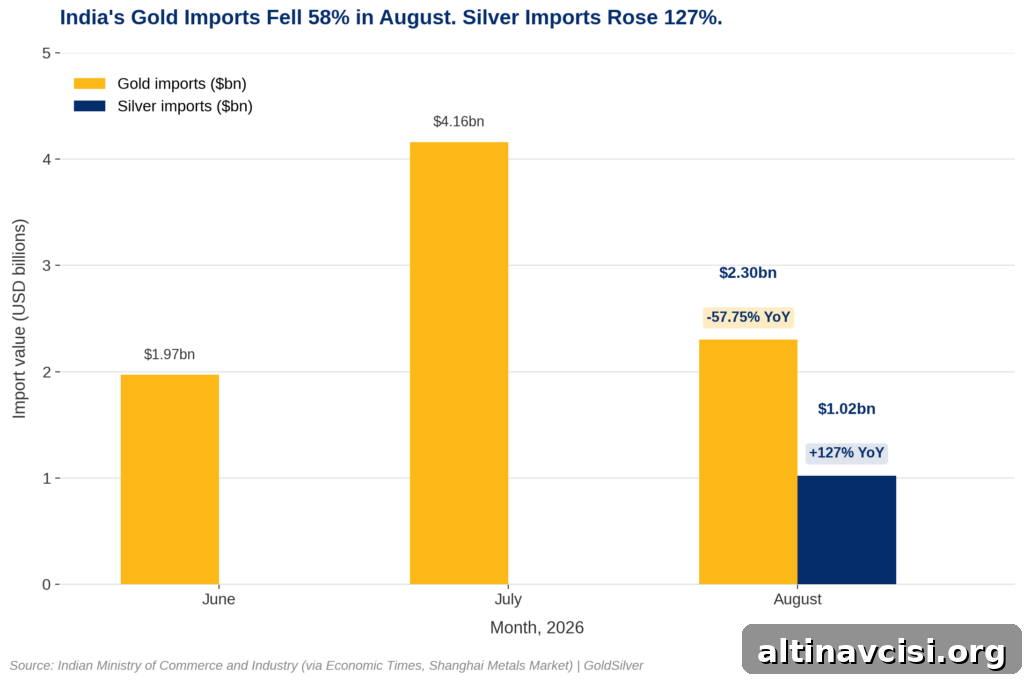
India’s gold imports didn’t merely slow in August — they plunged. Commerce Ministry figures reported by the Economic Times show gold imports fell 57.75% year-over-year to $2.3 billion, while silver imports surged 127% to $1.02 billion. That contrast marks one of the clearest divergences between the two metals seen this year in the world’s largest gold-consuming nation.
International prices put gold near $4,303 per ounce today, up roughly 0.65% as tensions in the Strait of Hormuz eased and markets stabilized. Silver also ticked higher, trading around $64.81, up about 1.53%. But these price moves are secondary to what the trade figures reveal: policy changes in New Delhi are reshaping how Indian savers buy precious metals.
Key takeaways
- India’s gold imports fell 57.75% year-over-year in August to $2.3 billion, while silver imports rose 127% to $1.02 billion in the same month.
- Analysts at Kotak Institutional Equities offered three explanations for the sudden drop; only one would be clearly positive for India’s economy.
- Gold imports for April–August are still up 3.38% year-over-year, meaning August’s decline is a sharp one-month signal rather than confirmation of a sustained trend.
Why did India’s gold imports collapse in August?
The main driver is policy rather than a sudden change in sentiment. On May 13, 2026, India raised import duties on gold and silver from 6% to 15%. August represented the first full month when that higher duty was fully reflected in landed costs, and those higher costs coincided with gold trading above $4,300 per ounce. July imports had already bounced back to $4.16 billion, so August’s near-halving of that amount reflects the combined impact of higher duties and elevated market prices.
Kotak Institutional Equities outlined three possible explanations for the sharp drop. First, households could be buying less gold because the duty and high prices make it more expensive—an outcome that would reduce pressure on India’s trade balance. Second, buyers might be postponing purchases, planning to buy ahead of Diwali and the wedding season when demand traditionally rises. Third, formal trade could be shifting into informal, untaxed channels, meaning official import figures would understate true demand.
What happens to demand that a duty can’t kill?
The third explanation appears to be the most plausible mechanism. A 15% duty is unlikely to eliminate demand for gold, an asset millions of Indian families hold as a form of savings and cultural wealth. Instead, the higher tariff creates a clear price gap between taxed imports and goods moving through unofficial channels. Historically, when controls or taxes pushed official prices higher, a parallel unofficial market emerged to fill the gap: India ran a substantial black-market trade in gold during the 1962 Gold Control Act era, and smuggling persisted at various points until controls were fully liberalized in 1990.
Recent evidence supports this pattern: customs seizures of smuggled gold nearly doubled in the six weeks after the May duty hike, according to data presented in Parliament. That suggests real household demand may have fallen far less than official, duty-paid import numbers imply — demand may simply have shifted away from formal reporting channels.
Does China show the same pattern?
Similar dynamics have been observed in China. Reports show China imported more than 1,000 tonnes of gold in eight months of 2026, with its central bank accounting for only a fraction of that flow. This parallel underscores a broader point: official headline import numbers capture only part of how savers allocate their wealth. The gap between reported flows and actual consumer behavior often contains the most meaningful signal.
For individual savers tracking prices, the path is straightforward: start by understanding the spot price chart for gold, then calculate how an import duty like India’s changes the cost of owning physical metal. International spot prices in U.S. dollars remain unaffected by national import duties and are tracked in real time by market price services.
Why did silver imports rise while gold imports fell?
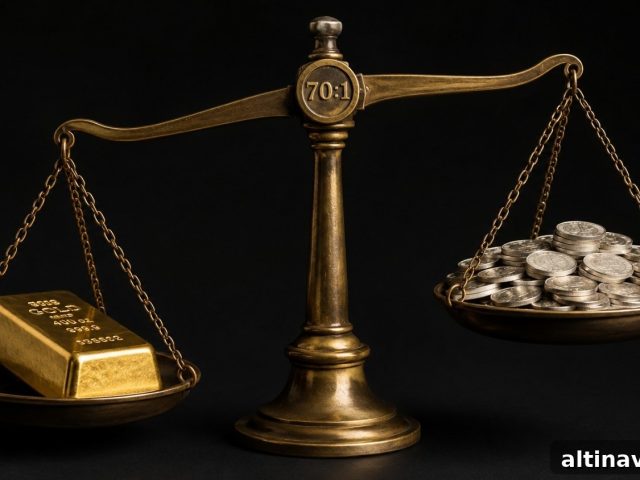
The sharp divergence between gold and silver imports — roughly a 185-percentage-point swing under the same 15% tax — highlights divergent price sensitivities. At around $4,300 per ounce, the additional 15% cost meaningfully deters household purchases of gold jewelry. At roughly $65 per ounce for silver, the same tax is less likely to price ordinary buyers out of the market. In other words, amid higher duties, Indian households appear to have quietly shifted toward the precious metal they can still afford.
The next data points to watch are September and October trade figures. If imports rebound through Diwali and the wedding season, that will support the “postponement” explanation advocated by Kotak. If official imports remain depressed and reports surface of rising gray-market premiums, that will strengthen the “demand moved underground” interpretation. Either way, the duty hike has not eradicated India’s appetite for gold and silver; it has weakened the ability of government import statistics to fully reflect that appetite.
Sources
1. Angel One – “India’s Gold Imports Plunge 57.75% to $2.3 Billion in August 2026; Silver Imports Rise 127%.”
2. CNBC – “India Hikes Bullion Import Duties as the World’s Second-Largest Gold Market Faces a Declining Rupee.”
3. Business Standard – “India’s Gold Imports Fall Sharply: Kotak Sees ‘Good, Bad and Ugly’ Outcomes.”
4. IBTimes India – “India’s Gold Imports Plunge 57.7% to $2.3 Billion in August as Overall Imports Rise 14.1%.”
5. GoldSilver – “China Imported 1,000+ Tonnes of Gold in Eight Months. Its Central Bank Bought Only a Small Share.”
6. World Gold Council – “Bullion Trade: India Gold Market Series.”
7. The Print – “India Gold Duty Changed 8 Times in 14 Years. What This Did to Smuggling.”
Disclaimer: This article is for informational purposes only and does not constitute investment advice. Past performance is not indicative of future results. Always consult a qualified financial advisor before making investment decisions.
You may also like:
- Municipal Bonds Just Broke a 15-Year Record. Gold Doesn’t Have This Problem.
- Washington Sold $70 Billion in Debt. Wall Street Only Wanted Part of It.
- Gold’s Price Barely Moved. Five Institutions Repositioned Anyway.
- Iran Repeated Its Hormuz Demand at the UN. The Market Already Priced It In.
- Today’s PMI Beat Cuts Gold Two Ways. Only One Side Has Been Priced In.
- Gold Fell 1.7% Today. Silver Fell 3.6%. Five Signals Point at the Dollar, Not Demand.
- Xi Lands in Washington. Gold and Silver Both Retreat, and Silver Falls Harder.
- UBS Holds Its Silver Target. The Market Already Got There First.
Popular Topics
Picked from the archive
-
01
 Topics
Why Silver Rose Despite JPMorgan’s Demand Warning
-
02
Topics
Why Gold Prices Fell After War Spread to New Shipping Lane
-
03
Topics
What Drives Gold Prices? 6 Key Factors Explained
-
04
Topics
Silver Drops 1.4% as Gold Holds; Ratio Reaches 70:1
-
05
Topics
Why Gold Is Decoupling From Geopolitics (New Evidence)
-
06
Topics
Gold Surges Past $4,130: What It Means for Investors
-
07
Topics
Gold Prices Fall to Seven-Month Low as Geopolitical Fear Fades
-
08
Topics
Purchasing Power Explained: How Inflation Erodes Your Savings