How the Jobs Report Moves Gold and Silver Prices: 5-Step Chain

Key Takeaways
- Gold and silver typically move inversely to Nonfarm Payroll (NFP) surprises — a miss tends to lift metals, while a beat tends to push them lower.
- The reaction runs through a five-step chain: NFP surprise → Federal Reserve rate expectations → real yields → U.S. dollar → opportunity cost of holding metals.
- Gold tends to react more strongly to weak prints than to strong ones. Intraday correlation weakens within a few hours of the release.
- Silver follows the same chain but with higher beta and an industrial-demand component — a mild miss can be better for silver than a catastrophic one.
- When fiscal constraints limit the Fed’s flexibility, the NFP-to-metals correlation can weaken — a dynamic that reinforces the long-term case for physical metals.
- For long-term holders, NFP provides useful context but is not a reliable short-term trading signal. Sound money is decided by structural forces, not a monthly data point.
When the U.S. jobs report misses expectations, gold and silver prices typically rise; when payrolls beat expectations, they usually fall. That captures the core of the gold–silver–jobs report relationship. The mechanism follows five steps: the NFP surprise, how the Federal Reserve’s rate expectations reprice, movement in real yields, changes in the U.S. dollar, and the resulting opportunity cost of holding non-yielding metals. Understanding that chain makes the monthly reaction straightforward rather than mysterious.
What Exactly Is the Jobs Report — and Why Do Precious Metals Traders Watch It?
The U.S. Bureau of Labor Statistics publishes the Nonfarm Payrolls report on the first Friday of each month at 8:30 a.m. ET. It measures jobs added across non-agricultural sectors during the prior month and is by convention the most closely watched monthly economic release in the United States.
Why does it influence precious metals? The Federal Reserve’s dual mandate — price stability and maximum employment — ties monetary policy to labor-market strength. Strong hiring gives the Fed cover to keep rates higher or to tighten; weak hiring gives reason to pause or cut. Fed policy drives nominal rates, which combined with inflation expectations determine real yields. Real yields are the dominant driver of gold prices: when real yields fall, the opportunity cost of holding non-yielding gold declines, and bullion becomes more attractive.
A caveat: NFP measures formal payroll hiring and excludes the self-employed, agricultural workers, and some part-time workers. That distinction matters when interpreting what a headline print implies for the broader labor market and monetary policy.
The Knowledge That Changes Everything

Two essential guides — yours free. Understand why gold matters and why fiat currencies tend to erode over time.
How Does a Weak Jobs Report Push Gold Higher?
The chain from a weak jobs report to higher precious metals is direct and traceable. Consider the June 2026 Nonfarm Payrolls example: the report showed 57,000 jobs added, well below consensus. The sequence that followed illustrates the mechanism:
- NFP misses: The headline came in far below expectations and included downward revisions to prior months.
- Rate expectations reprice: Markets lowered the probability of near-term Fed tightening, reducing expected policy rates.
- Real yields compress: With inflation expectations steady, falling nominal yields reduced real yields — the inflation-adjusted return on government bonds.
- Dollar weakens: Lower rate expectations made dollar assets less attractive to foreign capital, weighing on the U.S. dollar.
- Gold and silver rise: The opportunity cost of holding non-yielding metals declined, producing upward pressure on gold and silver prices.
Key point: Gold does not react to the jobs number itself; it reacts to what that number implies for Fed policy and real yields, which determine the cost of holding gold.
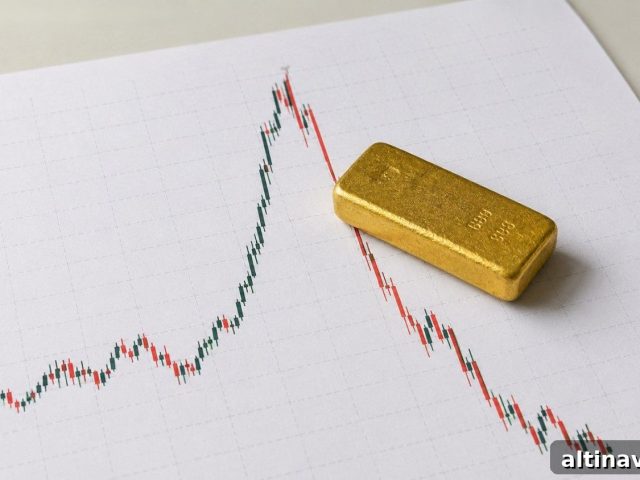
Chart summary: In the June 2026 example, gold rose from roughly $4,025 before the NFP release to about $4,168 within a week as the odds of a September rate hike declined sharply. The price move reflected repricing of Fed expectations and a fall in real yields, which lowered the opportunity cost of holding gold.
Why Does Gold React More Strongly to a Weak NFP Than a Strong One?
Analysis of multiple NFP releases shows an asymmetric response: disappointing prints tend to move gold more than upbeat ones. There are two main structural reasons for this asymmetry.
First, weak jobs data signals recession risk and triggers risk-off behavior. Investors reduce equity exposure and increase demand for monetary reserves and safe-haven assets, adding to the rate-repricing effect.
Second, a strong jobs print only hurts gold if markets believe the Fed will act on it. When fiscal constraints or elevated inflation limit the Fed’s ability to hike aggressively, strong employment alone may not lead to significantly higher real yields. That caps upside for the dollar and real yields, and therefore limits the downside for gold.
Intraday, the initial reaction to NFP is often the most pronounced and can overshoot. Within a few hours the correlation typically weakens as the market digests the full release, including wages and revisions.
How Is Silver’s Response to NFP Different from Gold’s?
Silver follows the same five-step chain as gold but typically exhibits higher volatility and an added industrial-demand component. Unlike gold, silver serves both as an investment and as an industrial commodity.
Approximately three in five ounces of silver are consumed for industrial uses such as solar panels, electronics, and medical technologies. That split means NFP reactions can have two countervailing effects on silver: a weaker jobs print can lower rate-hike bets (positive for silver) but a very weak print that signals a contraction can reduce industrial demand (negative for silver). Mild misses that nudge down hike odds without threatening industrial activity are generally silver’s ideal environment.
Why Does the NFP–Gold Correlation Sometimes Break Down?
The link between NFP and gold is conditional on the Fed’s freedom to respond to labor data. If fiscal or structural constraints limit policy flexibility, the correlation can weaken. For example, when debt dynamics and fiscal sustainability become dominant concerns, the Fed may be less able or willing to move rates in response to each employment print.
In that environment, strong employment prints may not translate into higher real yields because the central bank’s policy options are constrained. That weakens the immediate NFP-to-gold signal, but it strengthens the longer-term case for physical metals because a constrained monetary authority is less able to defend purchasing power.
Investor implication: When fiscal pressures limit central-bank flexibility, monthly employment surprises matter less for short-term price moves but reinforce the structural rationale for owning physical gold and silver.
Why Do Prior Revisions Sometimes Matter More Than the Headline Number?
Every NFP release revises the prior two months, and those revisions can change the narrative. A headline beat paired with large negative revisions can leave the two-month net unchanged or weak, muting market reactions. Conversely, downward revisions combined with a weak headline amplify the message to the Fed and markets.
Practical rule: read three numbers together — payrolls, average hourly earnings, and prior revisions. The combination gives a clearer signal about labor-market momentum and monetary policy implications than the headline alone.
What Does Any of This Mean for a Long-Term Physical Gold and Silver Holder?
Most NFP coverage focuses on short-term moves, but long-term holders should focus on structural forces. The intraday correlation between NFP surprises and gold weakens within hours; the immediate moves are often noise for multi-year holders.
Over the twelve months through mid-2026, gold appreciated materially for reasons unrelated to any single payroll print: central-bank accumulation, fiscal constraints that limit policy options, and persistent supply deficits in silver. These structural drivers matter far more to long-term holders than the price at 8:35 a.m. on any given first Friday.
If the Fed’s ability to hike is constrained by fiscal realities, that strengthens the case for physical metals as protection against monetary debasement over time. In short: watch NFP as informative context about labor-market direction and Fed optionality, but avoid treating monthly prints as a basis for frequent trading in physical holdings.
Stay On Top of Gold & Silver Prices
Get important market alerts sent straight to your inbox.
People Also Ask
Does gold always go up when NFP is weak?
No. The correlation is conditional. For gold to rise, the data usually needs to be weak enough to change Fed rate expectations and real yields. If those expectations are already priced in, or if inflation prevents the Fed from cutting, the reaction may be muted or absent. The most pronounced moves occur when the headline, revisions, and wage data all point in the same direction.
What is real yield and why does it drive gold prices?
Real yield is the nominal bond yield minus expected inflation. When real yields rise, yield-bearing assets look relatively more attractive, increasing the opportunity cost of holding gold. When real yields fall toward zero or turn negative, the opportunity cost declines and gold becomes more attractive. Market participants monitor this relationship through TIPS and real-yield measures.
When is the next NFP report released?
The Bureau of Labor Statistics publishes Nonfarm Payrolls on the first Friday of each month at 8:30 a.m. ET. Markets watch whether the prior surprises represent one-off noise or the start of a trend that changes Fed optionality.
Does silver react the same way as gold to jobs data?
Silver follows the same causal chain but often moves more in percentage terms and is sensitive to industrial demand. A mild jobs miss that lowers rate-hike odds without threatening industrial activity tends to be the most favorable scenario for silver.
Should long-term precious metals holders trade around NFP?
Generally no. Intraday reactions are often noise for long-term holders. Trading physical metal around a monthly release usually incurs transaction costs, premiums, and storage friction that outweigh short-term gains. Long-term allocations should be based on structural factors rather than monthly data volatility.
Sources (titles only)
1. Bureau of Labor Statistics — The Employment Situation, June 2026
2. Bureau of Labor Statistics — The Employment Situation, February 2024
3. CME Group — FedWatch Tool, Federal Funds Futures, July 2026
4. Trading Economics — Silver Spot Price, July 2026 data points referenced
5. Yahoo Finance — Gold prices, July 2–7, 2026 reporting referenced
6. CNBC — Coverage of the June 2026 jobs report and market commentary
7. FXStreet — Analysis of gold price reactions to NFP surprises (2024–2026 series)
8. J.P. Morgan Global Research — Gold price outlook and structural research, 2026
9. Silver Institute — World Silver Survey 2026 (consumption and supply data)
10. ADP Research Institute — ADP National Employment Report, May 2026
11. U.S. Treasury Fiscal Data — Debt figures and fiscal context
12. Federal Reserve Bank of St. Louis — FRED: real interest-rate data and series
Disclaimer: This article is for informational purposes only and does not constitute financial or investment advice. Consult a qualified financial adviser before making investment decisions.
You May Also Like:
- What Is Profit Booking in Gold and Silver? The Mechanism Explained
- Gold Technical Analysis: A Complete Investor’s Guide
- The Anatomy of a Premium: Why Gold and Silver Never Trade at Spot
- Peak Gold: Why Can’t Gold Mine Supply Keep Up With Demand?
- How Is Gold Taxed When You Sell It? The 28% Collectibles Rule Explained
- Most Gold Storage Isn’t Allocated. How to Check Yours.
- Garner Calls a $3,600 Floor. Is Gold Going Lower?
Popular Topics
Picked from the archive
-
01
 Topics
Why Fed Rate Hike Odds Reached 85% and Gold Climbed
-
02
Topics
Gold Holds Steady as Central Banks Delay Rate Cuts
-
03
Topics
How Profit Booking Works in Gold and Silver
-
04
Topics
Optimize Portfolio with the 80/60 Gold-Silver Rule
-
05
Topics
Why Gold Is Outperforming Nvidia in 2025
-
06
Topics
Gold, Silver Prices Drop as Central Banks Hold Steady
-
07
Topics
How Silver Pricing Works: Spot Price, Premium and Dealer Markup
-
08
Topics
Gold Prices Fall to Seven-Month Low as Geopolitical Fear Fades